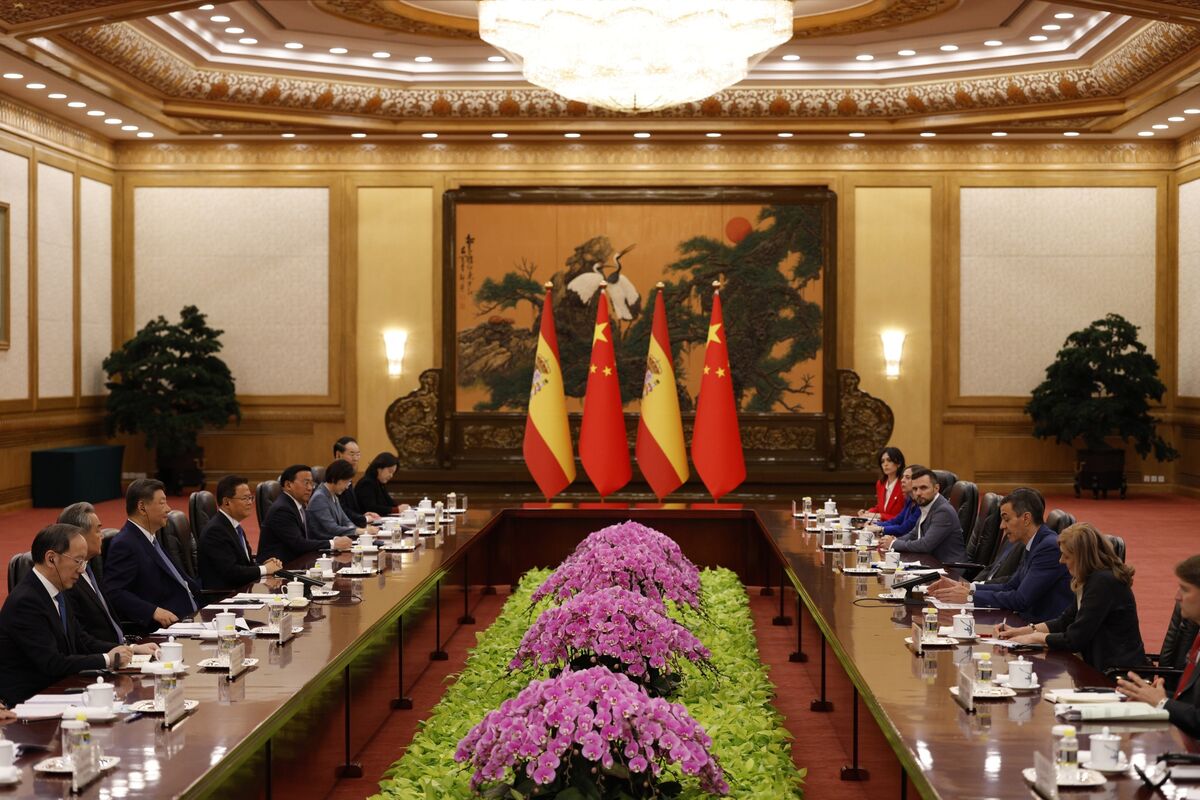
China is pressuring Spain to help block EU measures designed to make European companies more competitive, raising the risk of friction between China and the bloc. Chinese officials warned that the EU’s policies could damage trade and political ties, following Prime Minister Pedro Sánchez’s meeting with Xi Jinping in Beijing. The article points to elevated policy and trade tensions, but does not describe an immediate market-moving event.
This is less about Spain and more about Beijing exploiting the EU’s internal veto map: a single member state can dilute or delay bloc-wide industrial policy, especially when the ask is framed as “protectionism” versus “competitiveness.” The market implication is that Europe’s industrial policy premium gets harder to underwrite in the near term, while Chinese exporters preserve access to a fragmented regulatory process. The second-order effect is that companies exposed to EU subsidy, local-content, or anti-dumping regimes face a longer policy gestation period, which is bearish for near-term capex commitments and bullish for price competition in exposed sectors.
The likely losers are European industrials and mid-cap manufacturers that are counting on a more coherent EU defense of strategic sectors; the winners are Chinese incumbents with scale and excess capacity, plus European importers that benefit from lower input prices. Over a 3-12 month horizon, the bigger signal is not bilateral trade friction but policy uncertainty: delayed investment decisions, wider dispersion between protected and unprotected supply chains, and more volatility in names tied to EU green-tech, autos, batteries, and machinery. That uncertainty also raises the odds of asymmetric retaliation later, which tends to hit sentiment before it shows up in earnings.
The contrarian view is that this may ultimately accelerate the EU’s move toward more hard-nosed industrial policy rather than derail it. If the bloc concludes that consensus-building is being gamed externally, the eventual response could be broader anti-subsidy action, screening of strategic imports, or faster localization incentives — all negative for Chinese market share but positive for selected domestic suppliers. In that sense, the immediate signal is bearish for Europe’s policy cohesion, but the medium-term setup may be bullish for companies positioned as domestic substitutes once the political response arrives.
AI-powered research, real-time alerts, and portfolio analytics for institutional investors.
Request DemoOverall Sentiment
mildly negative
Sentiment Score
-0.20
