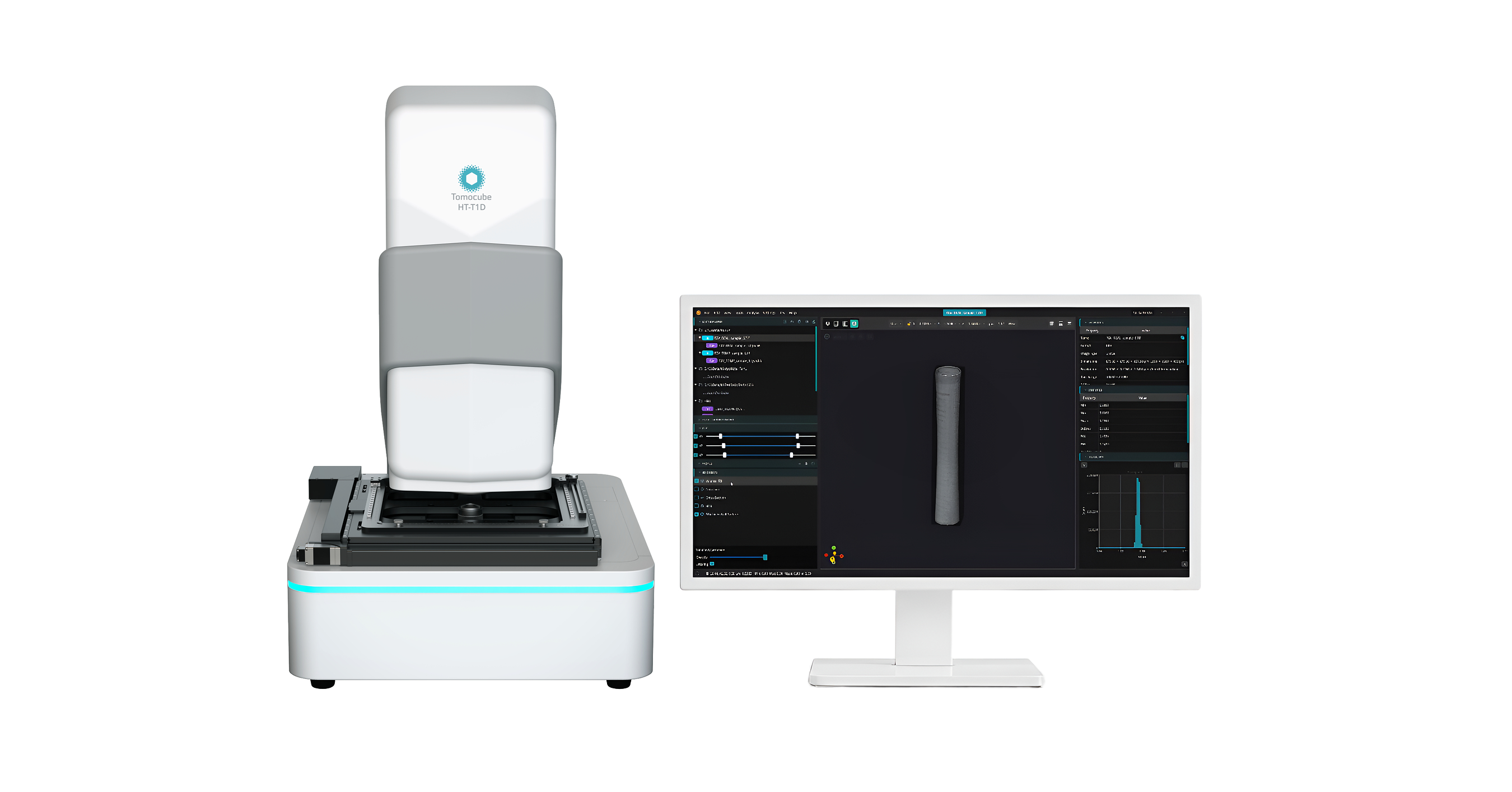
Tomocube a lancé le HT‑T1 Desktop (HT‑T1D), un système d’holotomographie pour analyser en 3D des micro‑défauts de substrats de verre utilisés dans le packaging avancé des semi‑conducteurs. Le HT‑T1D vise une sensibilité annoncée de 10^-4 et permet une analyse non destructive répétée, réduisant les cycles de diagnostic de plusieurs jours/semaines à quelques minutes. La société a aussi présenté TAMI (TomoAnalysis MI) pour générer des rapports et accélérer le yield learning, depuis la R&D jusqu’à l’inspection en ligne.
The real signal is not the launch itself, but the migration of metrology spend from post-mortem failure analysis to in-line process control. If volumetric inspection becomes standard, the economic winner is the vendor that can sit inside the yield-learning loop and capture recurring software/service revenue, not the substrate maker that simply ships more units. That argues for a broader read-through to advanced packaging equipment stacks where data integration matters as much as optics.
The second-order effect is a higher barrier to entry for lower-scale glass-substrate producers: faster root-cause isolation should reward fabs with better process discipline and punish those relying on brute-force scrap-and-rework. Over 1-3 months, the trade is likely more about sentiment around HBM/AI packaging capex than near-term financial impact; over 6-18 months, successful adoption could support a step-up in inspection content per line and a more durable attach rate for metrology software. The press-release risk is obvious: pilot interest is not the same as qualified design wins.
Contrarian view: investors may be overpaying for the idea that glass-core substrates are a demand unlock when the near-term bottleneck is actually yield. If defect learning remains slow, substrate ASPs can stay pressured even as the market gets excited about AI packaging volume. The thesis is falsified if substrate makers fail to show measurable yield improvement or if capex commentary from packaging leaders does not inflect within the next 2 quarters.
AI-powered research, real-time alerts, and portfolio analytics for institutional investors.
Overall Sentiment
mildly positive
Sentiment Score
0.25
