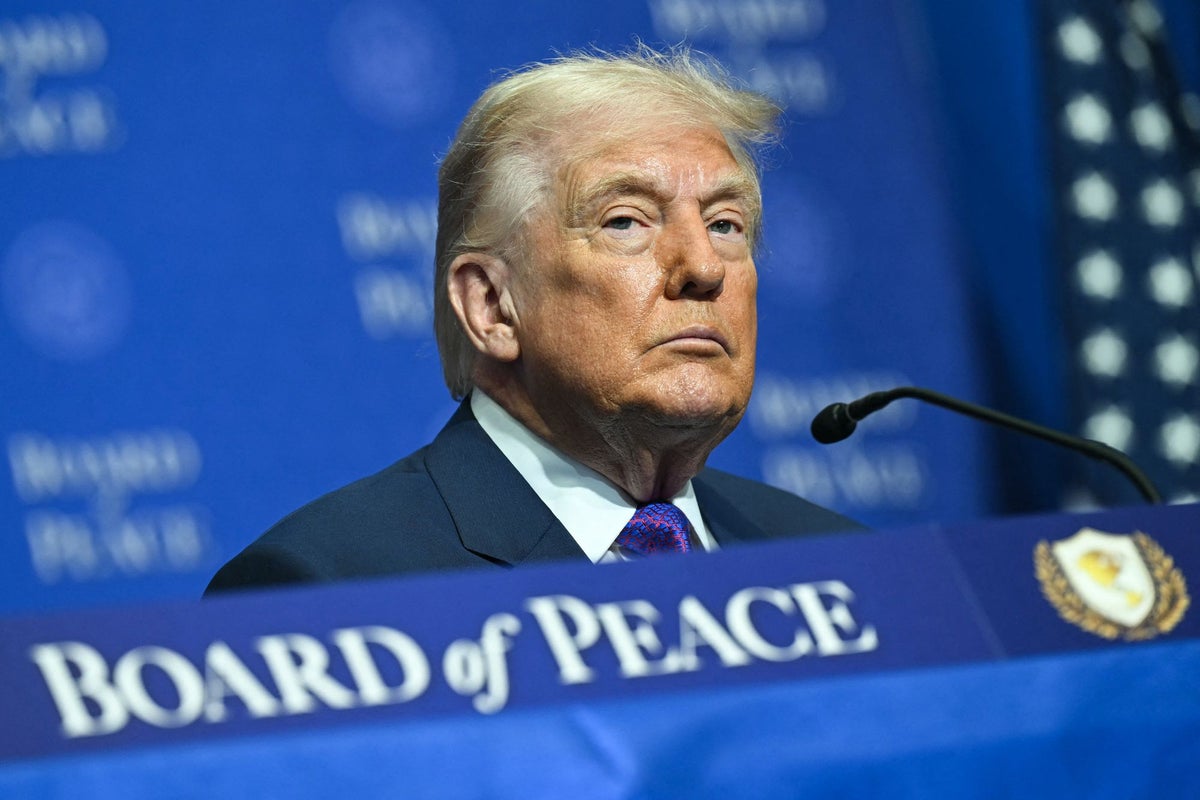
Trump’s Gaza-focused Board of Peace appears stalled, with the article saying zero funds have been deposited into the official World Bank-administered fund and promised US funding has not materialized. Roughly $7 billion was pledged by states and $10 billion was promised by Trump, but donations routed through a JP Morgan account lack independent transparency and some reported allocations, including $100 million from the UAE, are frozen. The piece frames the initiative as a broader pattern of Trump prioritizing high-profile diplomacy over implementation, adding uncertainty to already fragile Gaza and Iran peace efforts.
The market implication is less about Middle East headlines themselves and more about the credibility discount now attached to any Trump-branded deal architecture. When a peace process lacks enforceable funding, sequencing, and institutional ownership, the likely outcome is not a clean reversal but a long period of headline volatility with little delivery — a setup that benefits lawyers, consultants, and banks with advisory fees, while penalizing counterparties exposed to real implementation risk. In practice, that means the path to monetization is delayed by months, not days, and the probability of “announce now, fix later” policy slippage rises materially. For JPM, the key second-order effect is reputational and operational rather than direct earnings. A named account tied to politically sensitive, low-transparency flows can create a small but non-zero tail risk around AML/compliance scrutiny, de-risking pressure from correspondent banks, and negative headlines that force management to tighten controls even if ultimate financial exposure is immaterial. The stock likely won’t re-rate on this alone, but in a market that is already less forgiving of governance noise, it adds a modest multiple headwind versus domestically focused money-center peers. The broader tradeable risk is that investor attention shifts from the Gaza/peace narrative to the more material fiscal and geopolitical overhang: if promised public funding stays frozen, the burden migrates to quasi-private channels and allied sovereigns, making execution more fragile and more vulnerable to any U.S. political reset. That creates a tactical window where consensus is underpricing the duration of non-delivery. The contrarian angle is that the absence of actual disbursements means the near-term downside to JPM and broader risk assets is probably overdone; the real market impact should emerge only if a concrete audit, sanctions, or congressional inquiry attaches costs to the banking rail.
AI-powered research, real-time alerts, and portfolio analytics for institutional investors.
Request DemoOverall Sentiment
moderately negative
Sentiment Score
-0.45
Ticker Sentiment
