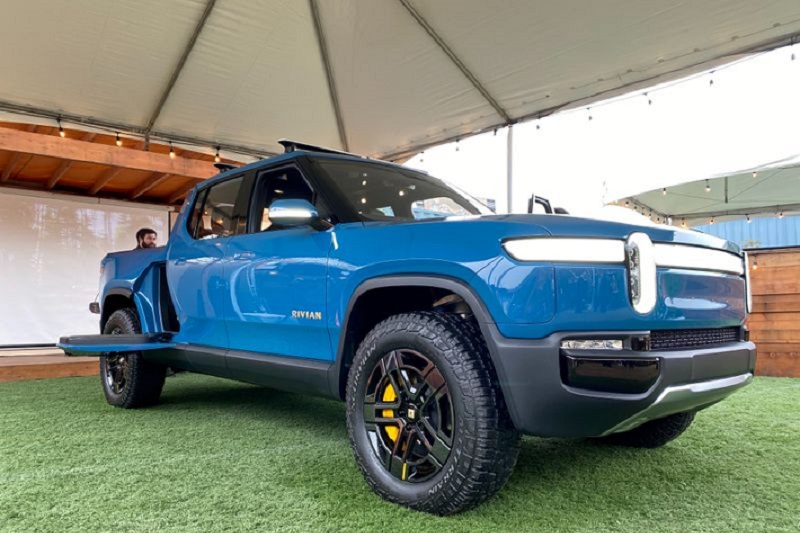
Cantor Fitzgerald reiterated a Neutral rating on Rivian with an $18 price target, just above the $16.41 share price. Rivian’s Q1 deliveries of 10,365 vehicles topped Cantor’s 9,856 estimate and the 9,678 Visible Alpha consensus, though Baird still flagged a 4% miss versus consensus while keeping an Outperform rating and $23 target. The company also announced a Redwood Materials battery energy storage project at its Illinois plant using over 100 second-life battery packs to provide 10 MWh of power and reduce peak-load costs.
RIVN’s setup is less about a single quarter and more about whether it can keep converting operational novelty into financing durability. The Amazon relationship and charging-network angle matter because they create a credibility floor with logistics and fleet buyers, but the bigger second-order effect is procurement leverage: any sustained volume step-up should improve battery, software, and parts purchasing economics faster than headline unit growth alone implies. That said, the market is likely already paying for a lot of the “execution improving” story, so upside from here needs evidence of margin inflection, not just better deliveries.
The Redwood energy-storage project is strategically relevant because it attacks a hidden cost center: peak-power exposure at the plant level. If this scales, it could modestly compress manufacturing overhead and reduce utility volatility, which matters more in a high-rate environment where every basis point of gross margin and capex efficiency is punished. The second-order read-through is that EV manufacturers with weaker balance sheets will struggle to fund similar grid-resilience initiatives, widening the operating gap between capitalized incumbents and subscale peers over the next 12-24 months.
Contrarian take: the consensus may be overrating delivery growth as a clean demand signal. In EVs, better deliveries can reflect channel smoothing and fleet timing as much as end-demand acceleration, while the real equity driver is free cash flow visibility. If the market starts pricing RIVN as a “show me” story on margin and cash burn rather than units, near-term multiple expansion could stall even with respectable operational prints.
For AMZN, the read-through is incremental but real: a healthier Rivian reduces execution risk around any logistics/fleet roadmap, but it is not enough by itself to move the needle. TSLA gets a minor competitive signal from Rivian’s manufacturing efficiency moves, though the bigger implication is that EV cost curves continue to compress, which keeps pricing pressure alive across the segment.
AI-powered research, real-time alerts, and portfolio analytics for institutional investors.
Request DemoOverall Sentiment
mixed
Sentiment Score
0.15
Ticker Sentiment
