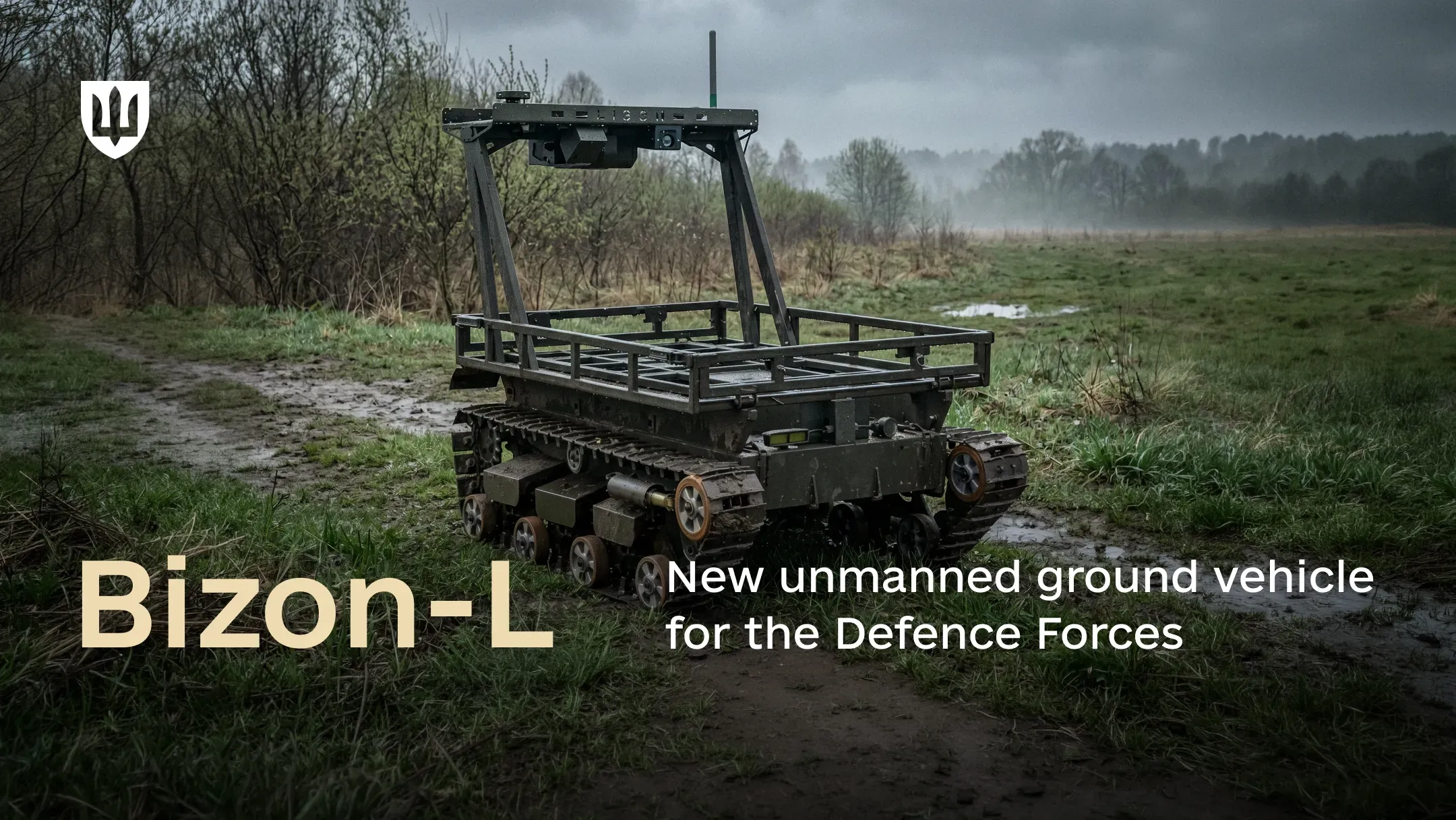
Ukraine’s Ministry of Defence has codified and authorized the Bizon-L unmanned ground vehicle for operational use, with payload capacity of up to 300 kg, speed up to 12 km/h, and range up to 50 km. The system is designed for frontline logistics, casualty evacuation, mining, and communications/EW support, with more than 22,000 UGV missions reported over the past three months. The Defence Procurement Agency has already signed 19 contracts totaling UAH 11 billion, and 25,000 robotic systems are expected to be contracted in 1H26.
This is a secular demand signal for battlefield autonomy, not just a one-off procurement headline. Once logistics are shifted to unmanned ground vehicles, the constraint moves from platform capability to throughput: power, spares, ruggedized comms, batteries, and depot-level maintenance become the bottlenecks that scale spend over years, not months. The highest-probability winners are the vendors embedded in the logistics stack rather than the prime mover platforms themselves, because every new UGV fielded implies recurring revenue in radios, mesh networking, thermal management, edge compute, and replacement components.
The second-order effect is a pull-forward in electronic warfare and counter-EW spend. A multi-channel control architecture that mixes cellular, satellite, and local wireless makes resilient comms the critical mission enabler, which should favor suppliers of hardened networking, tactical SATCOM, and RF filtering more than pure-play robotics names. On the defense side, the low-visibility and modular payload framing suggests a shift toward cheaper, distributed, semi-expendable systems, pressuring the value proposition of heavier manned logistics vehicles and some legacy armored support programs over a multi-year horizon.
Near term, the catalyst is budget authorization and contracting cadence over the next 1-2 quarters; the risk is execution at scale, not demand. If robotic logistics fail under winter conditions, jamming, or maintenance stress, adoption slows sharply and procurement becomes more selective. The contrarian view is that the market may overprice the glamour of autonomy while underappreciating the boring but larger TAM in batteries, rugged connectors, antennas, and software support contracts.
A key watch item is whether this becomes exportable doctrine to NATO-aligned buyers within 12-18 months. If so, the addressable market expands from wartime replacement to standing force modernization, which is materially more durable and less headline-dependent than a single theater of operations.
AI-powered research, real-time alerts, and portfolio analytics for institutional investors.
Request TrialOverall Sentiment
mildly positive
Sentiment Score
0.20
