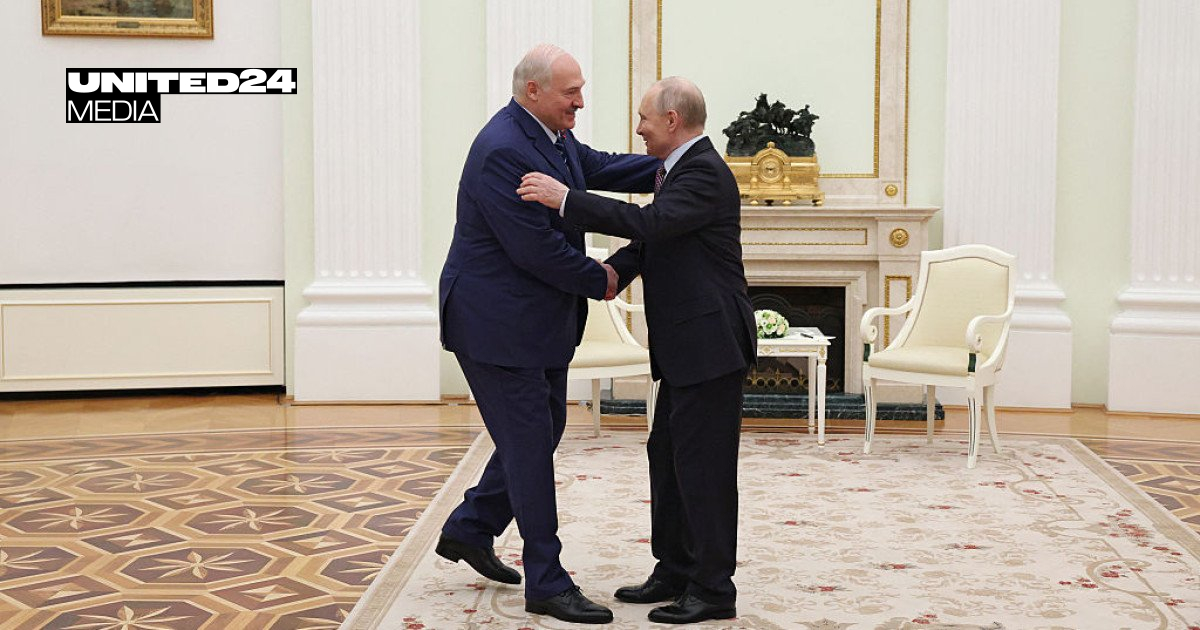
Lukashenko said Belarus would only formally join Russia’s war against Ukraine if Belarus is attacked first, while also offering direct talks with Zelenskyy. Kyiv dismissed the proposal and reiterated that Belarus has already enabled Russia’s invasion by serving as a staging ground in 2022. The article also notes heightened Ukrainian defenses and diplomatic pressure along the northern border amid renewed warnings of potential offensives from Belarusian territory.
The market implication is not a clean escalation premium; it is a persistence-of-uncertainty trade. Belarus is already functionally part of the northern threat architecture, so the marginal risk is less about a dramatic new front and more about forcing Ukraine to keep capital and manpower pinned along the border, which is a medium-term drag on offensive flexibility and air-defense density. That tends to support a higher floor for European defense budgets and a modest risk premium in NATO eastern-flank infrastructure, but it does not automatically translate into a broad commodity shock unless the rhetoric converts into kinetic disruption.
The second-order effect is on logistics and hardening spend across Poland, Lithuania, and western Ukraine. Even without direct Belarusian entry, recurring mobilization scares should accelerate procurement of border surveillance, drones, counter-UAS, engineering, and dispersed energy systems. The beneficiaries are the “picks and shovels” names with recurring revenue, not the platforms most exposed to one-off headline risk. Conversely, any assets tied to reconstruction in northern Ukraine may stay range-bound until the market believes the northern frontier is durable.
Catalyst timing matters: the next few days are mostly headline volatility, but the next 1-3 months could matter if Kyiv visibly reallocates troops or if Russia uses Belarusian territory for staging, which would raise perceived attack probability without formal Belarusian entry. The tail risk is a misread by markets that assumes this is purely rhetorical; if a border incident occurs, the downside to regional risk assets could be fast and nonlinear. Reversal would require either verifiable Belarusian restraint plus de-escalatory messaging from Moscow, or a clear Ukrainian success in fortifying the northern line that removes the threat premium.
The contrarian view is that the market may already be conditioned to treat Belarus as a bluff channel, so the incrementally bearish signal is more in defense procurement than in broad risk-off positioning. If consensus is overpricing immediate escalation, the better trade is to buy volatility in European defense and border-security names rather than shorting cyclicals indiscriminately. The opportunity is in timing the spend cycle, not in front-running a direct invasion scenario that still appears low-probability absent a triggering border event.
AI-powered research, real-time alerts, and portfolio analytics for institutional investors.
Request DemoOverall Sentiment
mildly negative
Sentiment Score
-0.35
