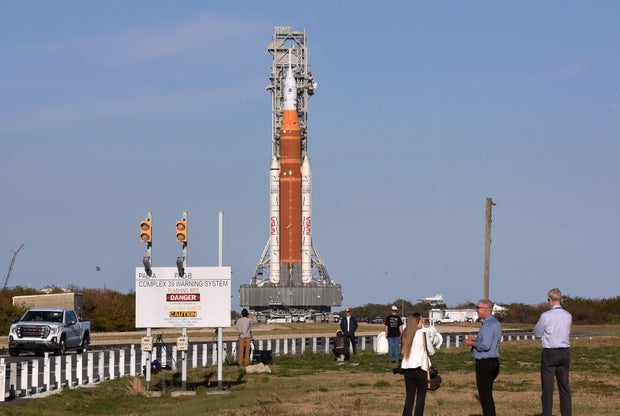
NASA has restructured the Artemis cadence, adding a 2027 crewed test flight (redefining Artemis III) to rendezvous and dock with commercial lunar landers in low Earth orbit to validate navigation, communications, propulsion and life‑support systems, before attempting lunar landings. The agency aims to follow with at least one and possibly two lunar landing missions in 2028 (Artemis IV and V), accelerate SLS launch cadence to roughly annual flights, halt development of the more powerful Exploration Upper Stage in favor of a standardized upper stage, and rely on commercial landers from SpaceX and Blue Origin while coordinating with prime contractors Boeing, ULA and Lockheed Martin. Operational delays (Artemis II now on hold until at least April 1) and workforce/management rebuilding are core to the risk‑reduction strategy, which reallocates technical and timeline risk rather than pursuing a single high‑risk leap to a crewed landing.
Market structure: NASA’s move to add a 2027 in‑orbit docking test and standardize the SLS upper stage shifts near‑term economic benefit to large prime contractors (BA, LMT) and commercial lander builders (SpaceX/Blue Origin). Moving from ~1 flight per 18 months to ~1 flight/year implies ~50% higher cadence target for SLS‑related work in 2027–28, increasing near‑term revenue visibility for Boeing (SLS first stage integration) and Lockheed (Orion/Avionics), while canceling EUS reduces one‑off engineering spend and gating points for smaller EUS suppliers.
Risk assessment: Key tail risks are (1) a high‑profile Artemis II/III failure that would cause multi-quarter reviews and funding risk (10–25% downside to program cashflows in stress), (2) Congressional funding volatility around FY2027–28 appropriations, and (3) contractor workforce/production shortfalls delaying cadence. Immediate (days) sensitivity centers on Artemis II slip/repair headlines (April window); short term (weeks–months) on uncrewed lander demos; long term (years) on who wins lander service share and whether commercial heavy‑lift (Starship) undercuts SLS economics.
Trade implications: Tactically favor large‑cap primes: establish modest core longs in BA and LMT (size guidance below). Use options to define risk: 12–18 month LEAP call exposure or 6–9 month call spreads targeting 10–20% OTM strikes to play multi‑quarter de‑risking. Rotate away from speculative small‑cap “lunar economy” names/ETFs (eg ARKX overweight names) and increase industrial/defense overweight by 150–200 bps. Entry: tranche into positions now (25% initial) and add 75% after Artemis II outcome within 30 days; use 12–15% stop or fundamental reassessment if Congress signals major cuts.
Contrarian angles: Consensus treats this as neutral program smoothing; the market is underpricing the operational risk premium if lander readiness slips — so downside to small caps is underdone. Conversely, sticking with a standardized SLS may be a multi‑year strategic mistake if Starship proves operational, creating a 3–5 year secular risk to BA’s SLS franchise — hedge long BA/LMT with small short exposure to commercial heavy‑lift beneficiaries if evidence of Starship cadence accelerates. Historical parallels: Apollo/Apollo‑era step tests de‑risked landings; Shuttle showed long cost creep—expect headline volatility, not linear share gains.
AI-powered research, real-time alerts, and portfolio analytics for institutional investors.
Request DemoOverall Sentiment
neutral
Sentiment Score
0.00
Ticker Sentiment
