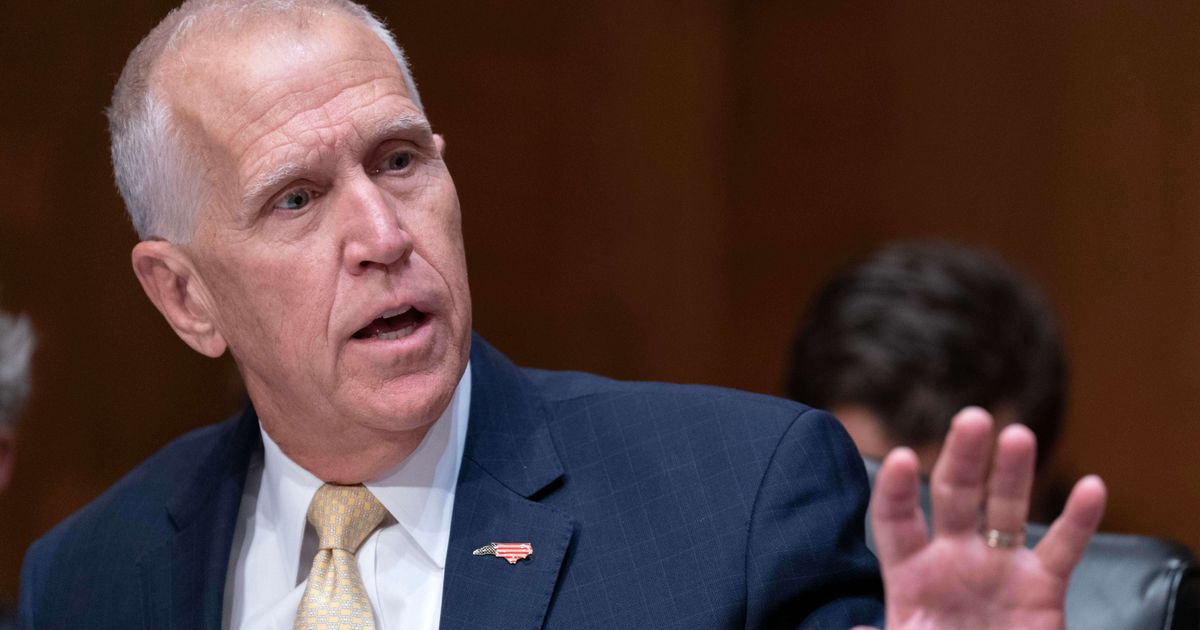
Sen. Thom Tillis dropped his opposition to Kevin Warsh’s Fed chair nomination after the DOJ ended its investigation into Jerome Powell and the Fed’s $2.5 billion headquarters renovation. The move removes a key Senate hurdle ahead of the Banking Committee vote on Wednesday, while the Fed is expected to leave rates unchanged this week. The article underscores ongoing political pressure on the Fed and the possibility of Powell staying on the board through January 2028.
The market impact is less about the nominee and more about the signaling effect: the White House is trying to convert personnel turnover at the Fed into a policy regime shift, but the near-term path still runs through a committee that is likely to hold rates steady. That creates a weird intermediate setup where front-end yields can stay anchored on data while the term premium becomes more vulnerable to political noise, especially if investors think the next chair is more tolerant of pressure to ease. The first-order winners are duration-sensitive assets if the market starts pricing a faster easing cycle; the hidden loser is the Fed's institutional credibility, which matters most in 2-10 year inflation breakevens rather than overnight rates.
Second-order, the legal off-ramp matters because it removes a tail risk that had kept some senators on the fence, but it does not remove the broader risk that the confirmation process becomes a proxy battle over Fed independence. If the nominee is perceived as politically constrained, long-end Treasuries may initially rally on dovish expectations but then underperform as investors demand a higher risk premium for policy reaction function uncertainty. That dynamic historically favors steepeners over outright duration longs: the market can price cuts at the front end while simultaneously selling the credibility risk farther out.
The contrarian angle is that the most important move may be in the dollar and financial conditions, not rates themselves. A credible path to easier policy would weaken the dollar and support EM carry, gold, and high-beta equities, but if the market concludes the Fed is becoming less independent, the immediate reaction could be a modest risk-off, with real rates staying sticky until the new chair proves otherwise. In that case, the trade is not “buy bonds”; it is “own curve steepeners and hedge policy credibility risk.”
AI-powered research, real-time alerts, and portfolio analytics for institutional investors.
Request DemoOverall Sentiment
neutral
Sentiment Score
0.05
