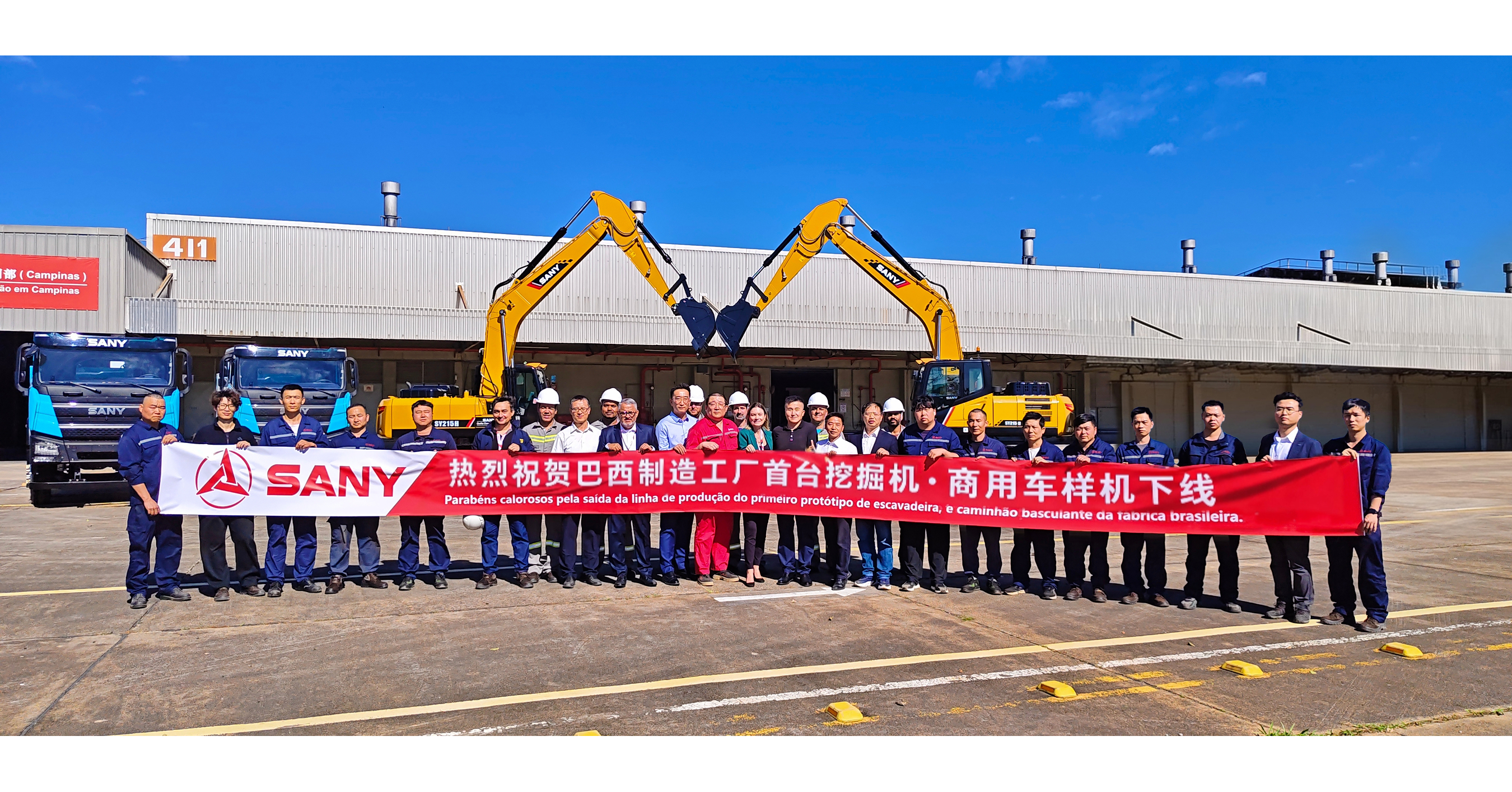
SANY a achevé l’assemblage et la mise en service de son usine de Campinas (350 000 m²), lançant ses premières pelles hydrauliques et ses premiers véhicules utilitaires. Le site vise une capacité annuelle de 3 500 unités (1 500 pelles + 2 000 utilitaires) et doit réduire les coûts logistiques et les délais via une production locale. L’entreprise indique ~200 emplois directs créés et prévoit d’autres embauches, tandis que sa filiale SANY Banco (agrément Banque centrale en 2025, démarrage début 2026) renforce l’offre de financement intégrée.
This is primarily a margin-and-distribution story for SANY, not a near-term demand shock for the market. Local assembly in Brazil should lower delivered cost, reduce lead times, and improve price agility versus imported equipment, which matters most in a high-rate EM market where customers care as much about financing terms and service uptime as about sticker price. The real competitive threat is to mid-tier incumbents with weaker captive finance and thinner dealer density: CNH and, to a lesser extent, Komatsu and Volvo CE in the region.
The second-order effect is the financing stack. If SANY can bundle equipment with local-currency credit and service, share gains can come faster than product quality alone would suggest, because equipment purchases are often a credit decision first and an engineering decision second. That said, Brazil’s credit cycle and FX volatility can turn this into a balance-sheet drain if receivables slip; the first thing to watch is whether the finance arm is buying growth or underwriting it.
Contrarian view: the market may be overreading the strategic importance of this milestone. A 3,500-unit plant is meaningful operationally but not yet large enough to move the global competitive map; the key falsifier is whether SANY shows up in Brazilian registration/share data over the next 1-3 quarters and whether local service levels hold. If the Brazil capex cycle softens or the real weakens sharply, the fixed-cost localization advantage shrinks and the press-release narrative becomes less actionable.
AI-powered research, real-time alerts, and portfolio analytics for institutional investors.
Overall Sentiment
moderately positive
Sentiment Score
0.35
