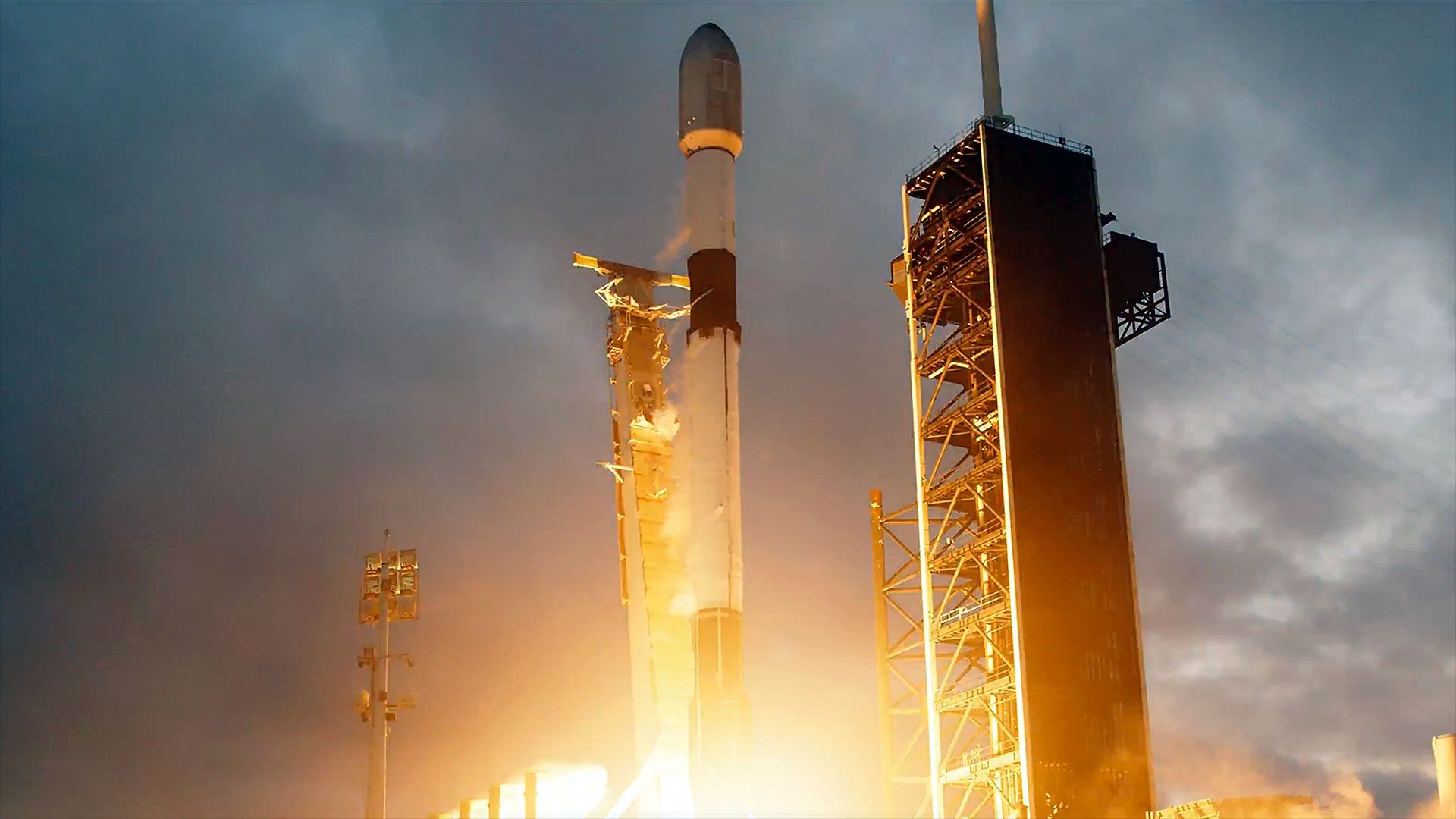
SpaceX on Dec. 8 launched 29 Starlink satellites from Kennedy Space Center using Falcon 9 Booster 1067, which returned to land on the droneship Just Read the Instructions for a record 32nd flight — a milestone toward the company’s 40-flight reuse target — with the upper stage deploying the payload about an hour after liftoff; the mission brings the operational Starlink constellation to more than 9,100 satellites. The launch, SpaceX’s 158th Falcon 9 mission of the year and the 510th reflight of a first stage since 2017, underscores ongoing gains in booster reusability and launch cadence that support Starlink’s global broadband, in-flight Wi‑Fi and cell-to-satellite services and further compress the cost and lead times of satellite deployment.
SpaceX launched 29 Starlink satellites from NASA Kennedy Space Center at 5:26 p.m. EST on Dec. 8 using Falcon 9 Booster 1067, which achieved a record 32nd landing on the droneship Just Read the Instructions after a one-day weather-related stand down; the upper stage was slated to deploy Group 6-92 about an hour after liftoff. The company conducted an additional 29-satellite Starlink launch from Vandenberg on Dec. 7, and the Dec. 8 mission brings the operational Starlink constellation to more than 9,100 relay units serving global broadband, in-flight Wi-Fi and emerging cell-to-satellite services. Booster 1067’s 32nd flight is a milestone on the path to SpaceX’s publicly stated 40-flight reuse target and comes amid the firm’s 158th Falcon 9 launch of the year and the 510th first-stage reflight since 2017, metrics that directly reflect gains in reusability and launch cadence. These operational improvements are likely to compress per-satellite deployment cost and reduce lead times for constellation expansion, reinforcing Starlink’s infrastructure pitch to underserved markets and commercial aviation customers. The article’s accompanying signals show a mildly positive sentiment score (0.35) and a modest market-impact score (0.25), indicating limited immediate public-market reaction despite operational significance. Near-term risks to monitor from the report include weather-related stand downs and the practical limits and inspection regimes around repeatedly flown boosters as SpaceX approaches the 40-flight objective.
AI-powered research, real-time alerts, and portfolio analytics for institutional investors.
Request DemoOverall Sentiment
mildly positive
Sentiment Score
0.35
