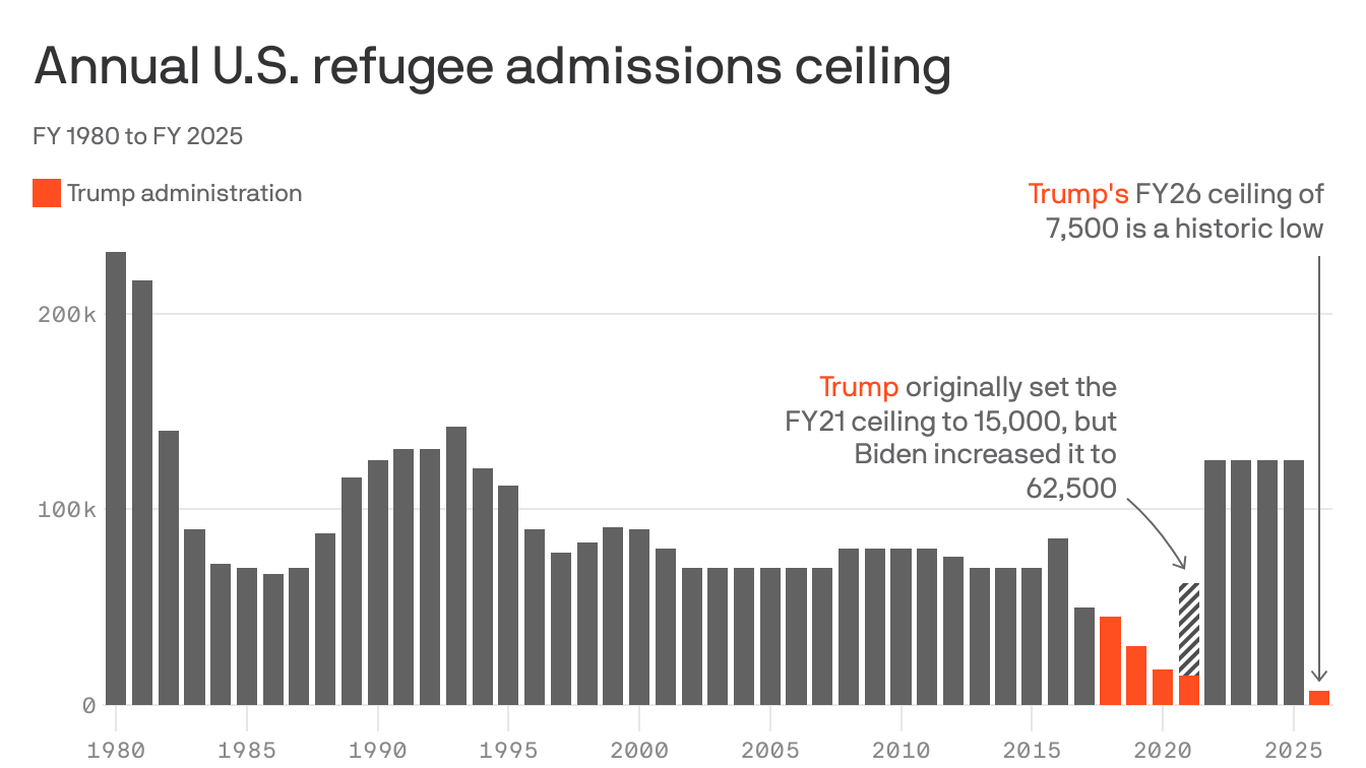
The Trump administration has announced a record-low refugee cap of 7,500 for FY2026, a drastic reduction from the Biden administration's 125,000, with a primary allocation for Afrikaners from South Africa. This policy, justified by claims of "unjust racial discrimination" against this group, represents a significant departure from historical U.S. refugee programs and signals a continued shift towards more restrictive immigration policies, potentially impacting international humanitarian efforts and diplomatic relations.
The Trump administration has announced a record-low refugee cap of 7,500 for Fiscal Year 2026, a significant reduction from the Biden administration's 125,000 and even below Trump's previous low of 15,000 at the end of his first term. This policy prioritizes Afrikaners from South Africa, citing "unjust racial discrimination" as justification, marking a substantial departure from historical U.S. refugee policies. The administration official stated that no refugees would be admitted in FY26 until appropriate consultations with Congress are held, which are currently on hold.
The primary allocation for Afrikaners is based on claims of discrimination, an allegation denied by South African President Cyril Ramaphosa and linked to broader "white replacement theory" narratives. This specific prioritization, coupled with the overall reduction, signals a continued shift towards highly restrictive immigration policies under a potential future Trump administration. The International Rescue Committee has expressed deep disappointment, highlighting concerns for vulnerable individuals and family separations.
While the immediate market impact is assessed as neutral, this policy reflects a significant political and social shift with potential long-term implications for international relations and humanitarian efforts. The policy aligns with themes of "Elections & Domestic Politics" and "Regulation & Legislation," indicating its roots in domestic political agendas and legislative changes.
AI-powered research, real-time alerts, and portfolio analytics for institutional investors.
Request DemoOverall Sentiment
neutral
Sentiment Score
0.00
