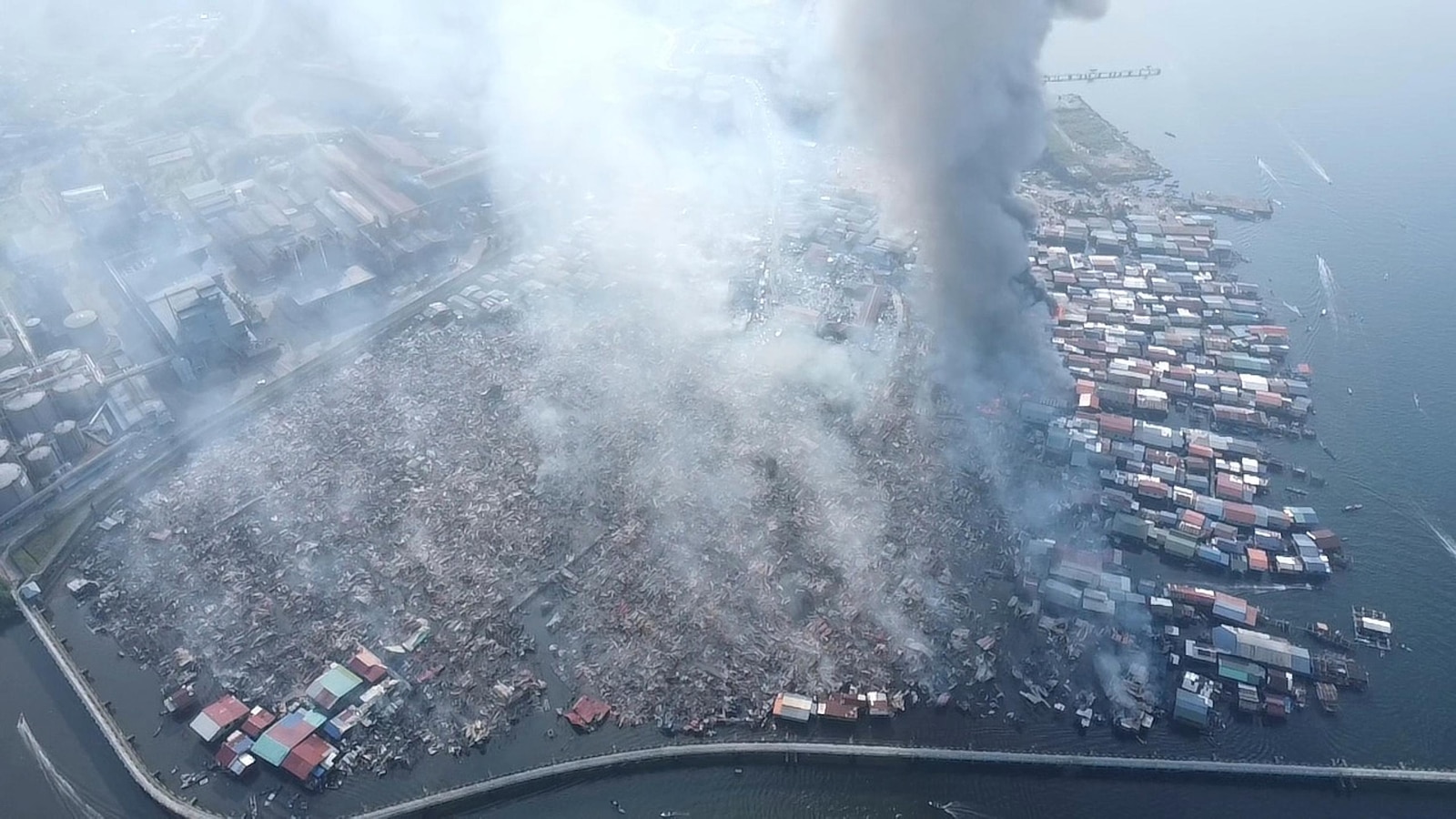
A fire destroyed about 1,000 homes in a coastal settlement in Sandakan, Sabah, displacing more than 9,000 people. No deaths have been reported, but strong winds, tightly packed wooden stilt houses, and difficult access conditions worsened the blaze. The event highlights ongoing fire risk in Sabah’s informal water villages and will likely require emergency relief rather than drive broad market moves.
This is not an event-driven equity story, but it is a reminder that low-capex housing markets in emerging coastal geographies carry recurring tail risk that tends to be systematically underpriced until a disaster forces disclosure. The immediate economic hit is concentrated in local consumption, microfinance repayment, and short-cycle replacement demand; the bigger second-order effect is a temporary labor shock if displaced residents are pulled out of nearby fisheries, retail, and port-adjacent informal work for weeks to months.
The important medium-term issue is policy repricing. Repeated fires in informal waterfront settlements usually accelerate municipal spending on access roads, water pressure, firebreaks, and resettlement, but those budgets often arrive late and unevenly. That creates a wedge: materials and contractors can see episodic demand spikes, while owners of legacy settlement land face pressure from redevelopment or regularization efforts over the next 6-24 months.
The contrarian angle is that the market often overfocuses on humanitarian headlines and underweights reconstruction as a localized stimulus. In Sabah specifically, rebuilding in combustible, stilted communities should be labor-intensive and logistics-heavy, which can lift demand for basic building inputs more than for premium construction products. The key risk is that if authorities use this as a catalyst for forced relocation rather than in-place rebuilding, the economic benefit shifts away from local merchants and toward larger contractors and public works spend.
From a portfolio perspective, the cleanest expression is not to trade the disaster itself, but to look for follow-on beneficiaries in regional construction materials, sanitation, and infrastructure contractors if tenders are announced within 1-3 months. The left-tail risk is another fire or prolonged displacement during the next dry season, which would extend the fiscal burden and delay normal commerce in the district.
AI-powered research, real-time alerts, and portfolio analytics for institutional investors.
Request DemoOverall Sentiment
strongly negative
Sentiment Score
-0.82
