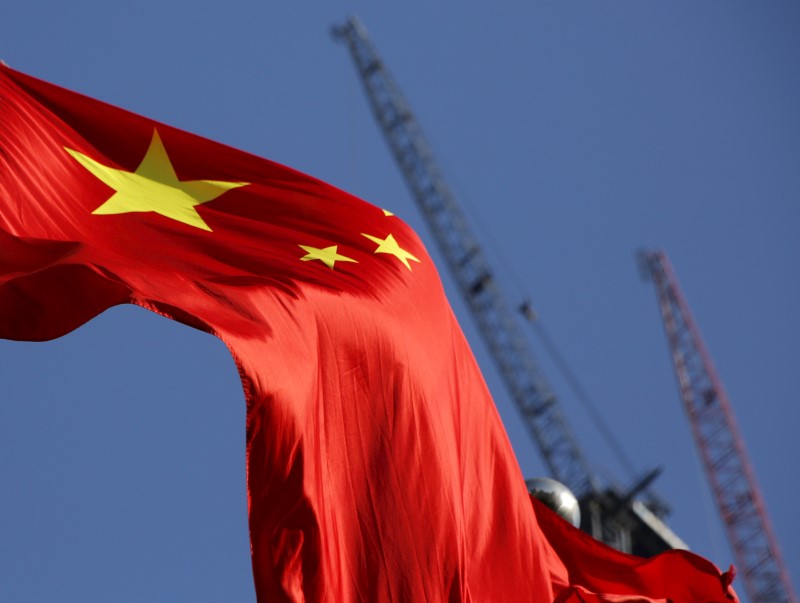
China added 20 more Japanese entities to its export control list, requiring exporters to seek Beijing approval and certify the goods will not support Japan’s military strength. The move escalates already elevated China-Japan tensions and could disrupt supply chains for subsidiaries of Mitsubishi, Fujitsu, and Komatsu, along with defense-related institutions. The article is primarily geopolitical, but the export restrictions are negative for affected companies and cross-border trade flows.
This is less about the named Japanese entities than about Beijing demonstrating it can turn export controls into a precision lever against upstream industrial ecosystems. The first-order hit is modest, but the second-order effect is more important: multinational suppliers will begin re-rating China-related revenue streams for policy risk, which should widen the valuation gap between globally diversified semis/industrial equipment names and firms with concentrated China exposure.
The market should also think in terms of substitution, not just disruption. If Japan-facing restrictions persist, procurement will migrate to Korean, Taiwanese, and U.S. alternatives where possible, which is constructive for non-China ex-China semiconductor toolchain and industrial automation suppliers over a 6-18 month horizon. That said, the near-term winners may be the most scarce inputs in defense and advanced manufacturing, because buyers will over-order inventory to hedge against further controls, creating a temporary volume tailwind.
The bigger risk is escalation into a broader licensing regime that hits more downstream categories, not just the current list. If Beijing broadens the scope to critical components or extends scrutiny to indirect re-export channels, the shock could move from symbolic to operational within one or two quarters. A de-escalation path exists, but it likely requires diplomatic signaling rather than market forces, so the base case is a higher geopolitical risk premium rather than an immediate earnings shock.
Consensus may be underestimating how asymmetric this is for companies with low-margin, just-in-time supply chains versus those with pricing power and inventory buffers. The move looks small in isolation, but it reinforces a regime where policy volatility becomes a permanent input into capital allocation, which should favor balance-sheet strength, domestic supply-chain localization, and defense-adjacent procurement themes.
AI-powered research, real-time alerts, and portfolio analytics for institutional investors.
Request DemoOverall Sentiment
mildly negative
Sentiment Score
-0.35
