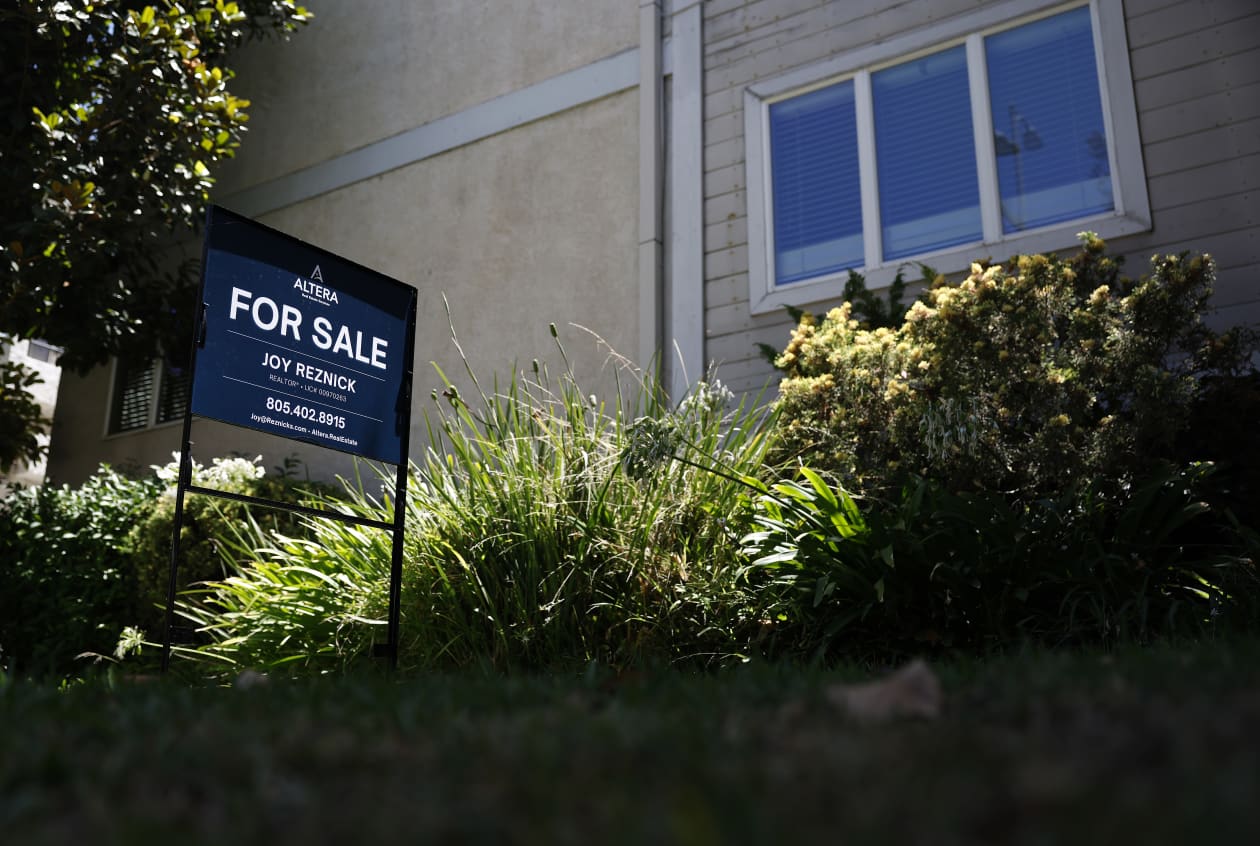
The 30-year fixed-rate mortgage edged up to its highest level of 2026, raising a fresh hurdle for home buyers. With mortgage rates at a new year high and the article flagging the risk of rates testing the 7% level, affordability is likely to tighten further. Net impact is a cautious read-through to housing demand as borrowing costs remain elevated.
This is a lagged affordability shock, not an instant housing crash signal. At current rate levels, every incremental move higher mostly hits transaction volume first: buyer qualification gets tighter, sellers delay listing, and builders lean harder on incentives to protect absorption. That means the near-term earnings risk is concentrated in order flow and gross margin, not just headline unit sales.
The second-order winners are the businesses that profit from people staying put. HD and LOW can see relative demand support as locked-in owners shift spend from moving costs to remodeling, while pure transaction-sensitive names such as ITB/XHB constituents face a more direct hit. Within financials, MSR-heavy lenders/servicers are less clean short candidates than pure originators because slower prepayment can cushion servicing asset values; the cleaner downside is in volume-dependent mortgage platforms and brokers.
The market may be underestimating timing. Housing usually reacts over 1-3 months through purchase applications, cancellations, and builder incentives, while price damage and inventory normalization take 6-18 months. The thesis breaks if inflation data or Fed rhetoric pulls the 10-year down and mortgage rates retreat back into the low-6s; it also weakens if builders keep using rate buydowns to manufacture demand, masking weakness until margins deteriorate later. A sustained 7% print is more bearish for turnover and construction than for immediate home prices.
AI-powered research, real-time alerts, and portfolio analytics for institutional investors.
Request DemoOverall Sentiment
mildly negative
Sentiment Score
-0.25
