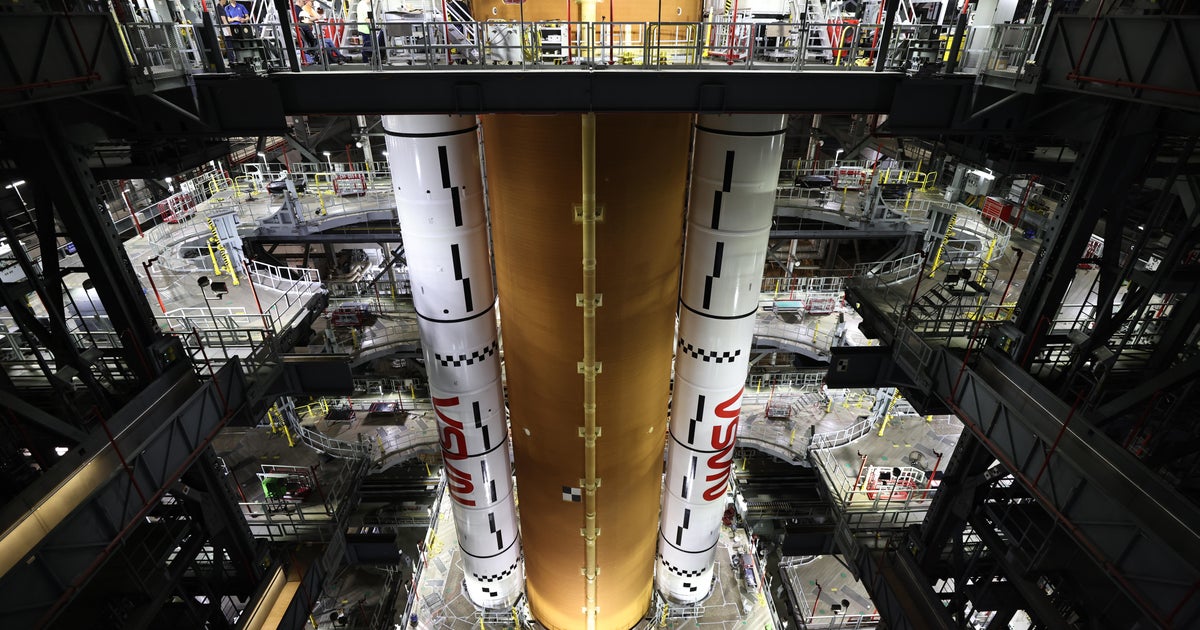
NASA is preparing to roll the upgraded 322-foot Space Launch System to Pad 39B and perform a fueling test that will load roughly 733,000 gallons of liquid hydrogen and oxygen ahead of the piloted Artemis 2 lunar flyby targeted for early February (with a likely slip to March if fueling issues arise). At the same time the agency is accelerating a Crew-12 launch (officially Feb. 15) to replace Crew-11 after a medical evacuation, creating the unusual operational challenge of supporting a deep-space crewed mission while launching a separate crewed flight to low-Earth orbit.
Market structure: NASA's parallel Artemis 2 and Crew 12 operations create near-term demand for prime contractors (Lockheed Martin LMT, Boeing BA, Northrop Grumman NOC, Raytheon RTX) and specialist suppliers (Maxar MAXR, L3Harris LHX), shifting incremental revenue toward government aerospace/defense capex over the next 6–24 months. Commercial launch providers (SpaceX/ULA, not directly public) remain competitively insulated, but supplier aftermarket and avionics vendors can see 1–3% revenue bumps tied to mission cadence and ISS sustainment contracts.
Risk assessment: Tail risks are binary and high-impact — fueling-test leaks, SLS launch slips beyond March, or ISS crew complications could trigger multi-week program delays, contract repricing, and margin compression for primes; assign ~15–25% probability to schedule slips that materially move stock reactions in the next 4–8 weeks. Hidden dependencies include Russian crew-exchange geopolitics and specialized supplier single-sourcing; catalysts are the fueling test (start of month) and Crew 12 target Feb 15 launch window.
Trade implications: Favor tactical long exposure to LMT and NOC via 1–3% long positions or sector ETF ITA (2–4%) ahead of a successful fueling test and Crew 12 launch, while shorting BA (1–2%) due to commercial airframe risks and program execution optics. Use 60–120 day call spreads 5–15% OTM on LMT/NOC around the fueling-test outcome to limit premium; consider buying 30–45 day straddles on ITA only if implied volatility is <25%.
Contrarian angles: Consensus likely underprices schedule risk and overweights program optics; a failed fueling test would create >10% downside in small/mid-cap space suppliers (MAXR, SPCE) but only transient dips in large primes. Historical parallels: Apollo-era dual operations increased contractor follow-on funding, but modern single-supplier, high-cost programs amplify downside on execution misses. Unintended consequence: accelerated ISS crew shuffles could force emergency procurements benefiting smaller suppliers but hurting large integrators if political scrutiny rises.
AI-powered research, real-time alerts, and portfolio analytics for institutional investors.
Request DemoOverall Sentiment
mildly positive
Sentiment Score
0.28
