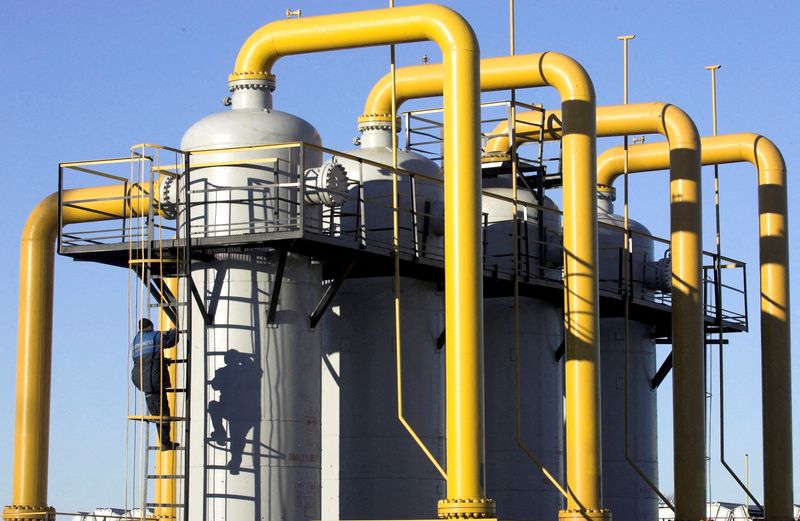
European gas prices rose 0.7% to 49.775 euros/MWh as traders weighed geopolitical risks tied to Iran and the Strait of Hormuz. Brent was trading above $105 a barrel versus about $70 before the conflict, while reports of stalled nuclear/peace negotiations kept markets in risk-off mode. Gains in gas were partly capped by easing Norwegian maintenance and warmer European weather.
The immediate market signal is less about the commodity move itself and more about the implied persistence of a higher-risk logistics regime. If the Strait remains constrained, the first-order winner is not just upstream energy but the entire pricing stack for insurance, freight routing, storage, and hedging activity — a setup that tends to lift exchange volumes and volatility-linked revenues before it fully feeds through to physical inflation. That matters because the market usually underestimates how quickly transportation bottlenecks become earnings revisions for industrials and semis via lead times, not just input costs.
For semis, the conflict creates a split-screen: higher energy prices are mildly inflationary, but the bigger issue is supply-chain fragility and capex reprioritization. NVDA’s valuation remains vulnerable because the market is already pricing uninterrupted hyperscaler demand and margin durability; any delay in data-center buildouts or power availability can compress multiple faster than consensus models allow. By contrast, SMCI and APP are more exposed to sentiment and order-timing risk: both can re-rate sharply on momentum, but they also tend to de-rate faster when customers defer purchases or ad budgets rotate defensively.
The contrarian read is that the move in energy may be over-owned and the second-order beneficiaries under-owned. If even partial reopening of shipping persists, crude can gap lower quickly, but insurers, commodity venues, and volatility-sensitive intermediaries may keep their gains longer than headline oil, because the market tends to chase the physical first and the plumbing second. The risk-reward favors expressing the thesis through relative value rather than outright beta: long complexity and disruption, short stretched duration assets whose earnings depend on smooth logistics and uninterrupted capex.
Near term, the key catalyst is any credible confirmation of transit normalization; that would likely hit energy prices first and unwind the risk-off trade in 1-3 sessions. The longer-tail risk is escalation that makes shipping disruption durable for weeks, which would raise the odds of supply-chain earnings warnings across hardware, electronics assembly, and ad-tech spend in the next 1-2 quarters.
AI-powered research, real-time alerts, and portfolio analytics for institutional investors.
Request DemoOverall Sentiment
mildly negative
Sentiment Score
-0.15
Ticker Sentiment
