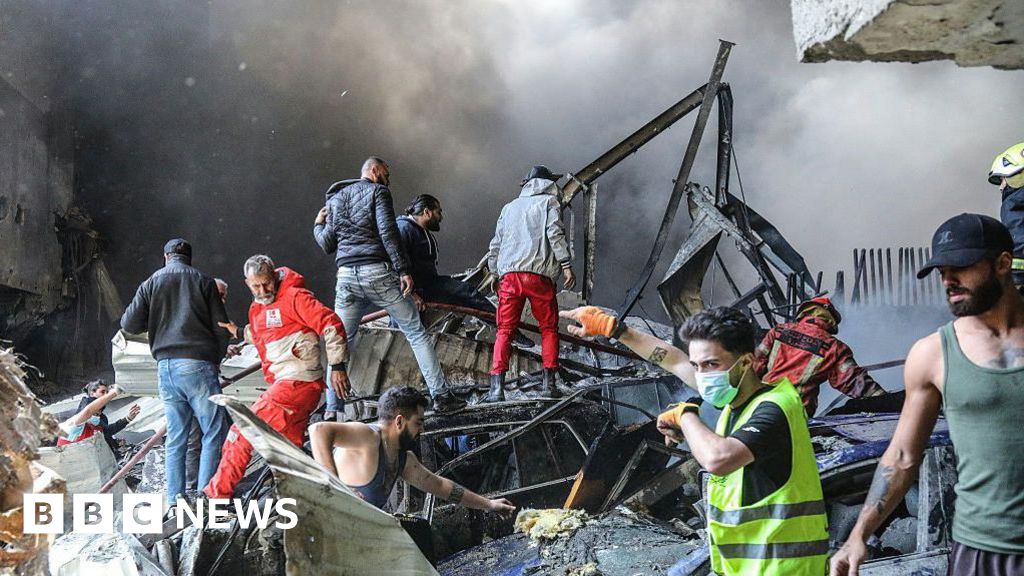
Israeli PM Netanyahu ordered direct talks with Lebanon focused on disarming Hezbollah, with negotiations reportedly to begin next week in Washington. The announcement follows a massive wave of Israeli strikes that killed 303 people in one day (1,150 wounded) and a total Lebanese death toll of more than 1,800, and has prompted Iran to halt shipping through the Strait of Hormuz and threaten retaliation. Lebanon called for a ceasefire before talks; Israel rejected a ceasefire and continues operations in southern Lebanon, while Lebanon’s government has limited weapons in Beirut to state institutions. Elevated geopolitical risk and disruption to shipping in the Hormuz corridor create significant regional downside risk for markets and energy prices.
Opening a direct Washington channel between Israel and Lebanon is a tactical attempt to manage the second front, not a structural resolution — that makes the next 7–21 days the highest-probability window for either a sharp de-escalation or a rapid escalation. If Iran or proxies respond to continued strikes by intermittently disrupting tanker traffic through Hormuz or attacking regional infrastructure, expect an immediate 3–8% jump in shipping war-risk premia and a $5–$12/bbl spike in Brent within days; conversely a credible temporary ceasefire announced during or after the talks could erase most of that premium in 48–72 hours.
Defense contractors and midstream energy producers are the primary beneficiaries of persistent risk-premia: incremental defense budget justification and longer-term procurement cycles create multi-quarter revenue visibility, while pipeline/terminal owners capture higher volumetric tolls as shippers reroute. The real second-order winners are selective US shale producers (fast-cycle spare capacity) and spot LNG suppliers who can flex volumes into Europe/Asia; losers are Mediterranean travel & logistics (cruise lines, ports, regional carriers), regional sovereign and bank credit in Lebanon/nearby states, and select insurers/reinsurers exposed to concentrated war-risk claims.
Key catalysts to monitor are: (1) Iranian tactical moves in the Strait, (2) timing/details of the Washington meetings next week, and (3) any unilateral Israeli operational pauses. Tail risks include escalation to direct Iran strikes or a broad shipping embargo — outcomes that would sustain energy and defense upside for quarters. The consensus is pricing elevated risk; but it underestimates a short-lived volatility regime: if the talks produce even a fragile, enforceable ceasefire, oil & risk premia will mean-revert rapidly, making short-dated volatility sells and convexity-structured longs effective hedge trades.
AI-powered research, real-time alerts, and portfolio analytics for institutional investors.
Request DemoOverall Sentiment
strongly negative
Sentiment Score
-0.75
