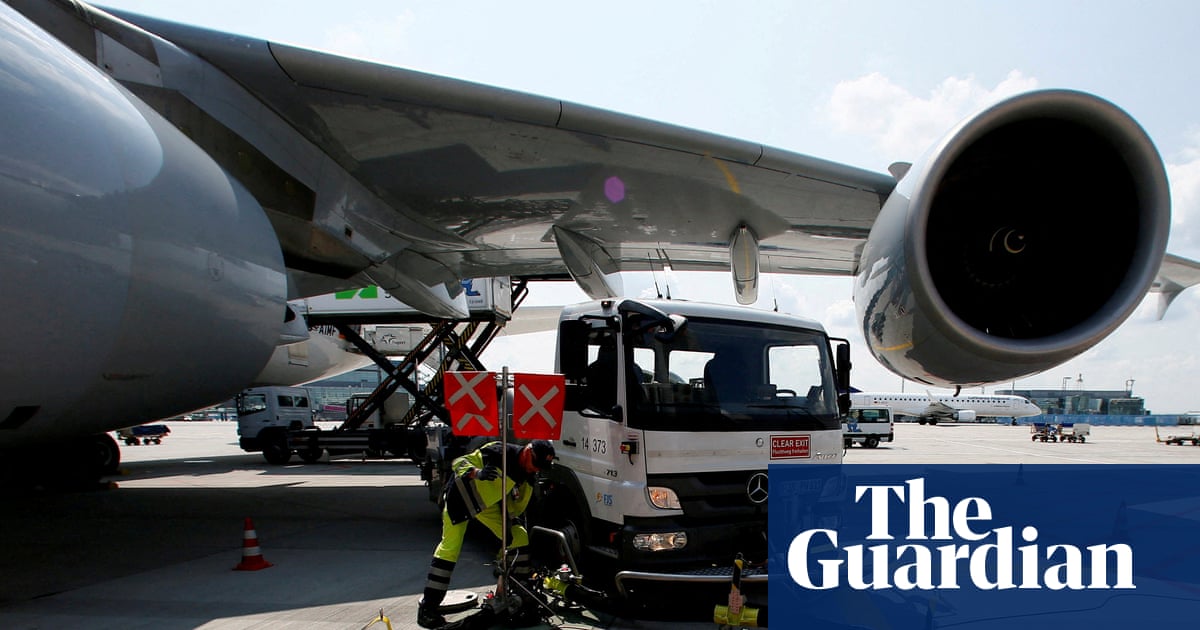
EU transport commissioner Apostolos Tzitzikostas said airlines that cancel flights due to jet fuel shortages this summer must still compensate passengers under EU law, as fuel prices and shortages do not qualify as extraordinary circumstances. The article also notes fuel prices have surged since the Iran war began, with Ryanair saying it has hedged 80% of jet fuel through March 2027 at $67 per barrel and does not plan summer schedule cuts. AirAsia separately announced a $19bn order for 150 Airbus A220-300 jets, potentially doubling the order and supporting Airbus and Belfast supplier output.
This is less a headline about near-term earnings leakage and more a credibility test for European carriers’ ancillary revenue model. If passenger compensation becomes mechanically triggered by fuel-driven cancellations, the economic pain shifts from the treasury line to the scheduling function: airlines with thin hedges or weak bunker access will be forced to choose between operating uneconomic flights or paying out claims, which is a much harsher margin trade-off than a normal fuel shock.
The key second-order winner is the airline with the cleanest hedge book and the most flexible capacity mix. That favors Ryanair relative to legacy peers because it can preserve published capacity while competitors absorb both higher fuel and consumer compensation costs; the market often underestimates how much route-share can be taken when rivals have to pre-announce cuts. For airport operators and lessors, the impact is mixed: fewer cancellations help throughput, but weaker network airlines may respond by shrinking marginal routes over the next 1-2 quarters, pressuring slot utilization and leasing demand on fringe aircraft.
The regulatory wrinkle creates a bifurcation between the UK and EU that could matter for booking behavior by late summer. If UK policy remains softer, airlines may optimize disruption into UK-originating itineraries while keeping EU exposures cleaner, effectively shifting cancellation risk rather than eliminating it. That creates a hidden short-term opportunity in travel insurers and payment processors exposed to compensation flows, but only if policy divergence persists beyond a few weeks.
Contrarian angle: the market may be overpricing the fuel shock as a pure cost story when the bigger risk is operational optionality. If fuel stays elevated but remains available, most carriers can pass through part of the cost via fares; what they cannot easily pass through is a compensation regime that penalizes cancellations, making schedule integrity the real scarce asset. That argues for monitoring load factors and on-time performance more than spot fuel headlines over the next 30-60 days.
AI-powered research, real-time alerts, and portfolio analytics for institutional investors.
Request DemoOverall Sentiment
neutral
Sentiment Score
-0.10
Ticker Sentiment
