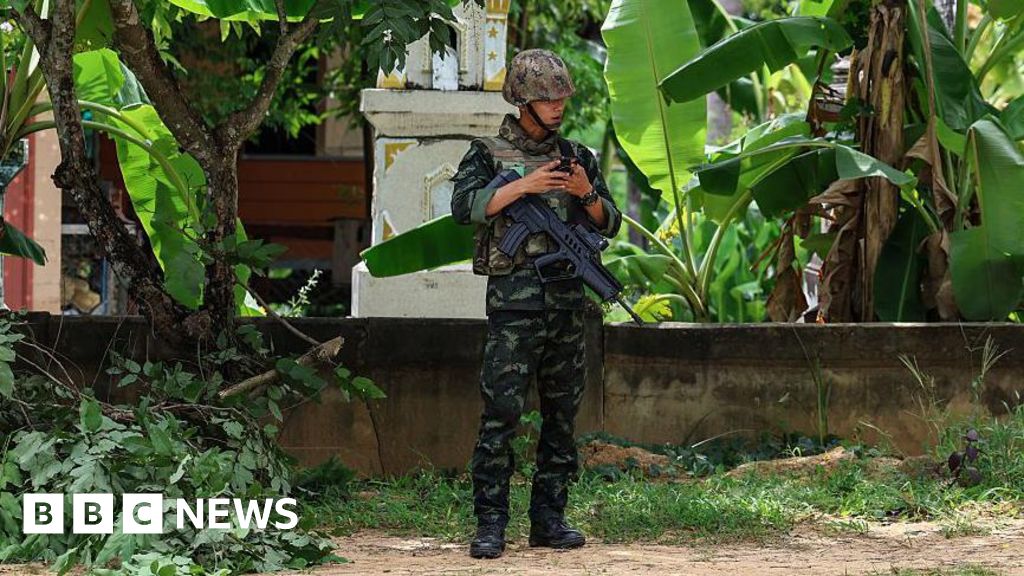
Intensifying cross-border conflict between Cambodia and Thailand has prompted Cambodia to call for an "immediate" and "unconditional" ceasefire, following two days of fighting that have resulted in at least 16 deaths and tens of thousands displaced. Thailand, however, has not publicly accepted the truce, instead declaring martial law in border areas and warning the use of heavy weapons could escalate the conflict "towards war," while rejecting international mediation. This ongoing dispute, rooted in a century-old border issue, signals heightened regional instability and potential for prolonged geopolitical risk in Southeast Asia.
The military conflict between Cambodia and Thailand has escalated significantly, marked by at least 16 fatalities, the displacement of tens of thousands, and the use of heavy weaponry across multiple border locations. Cambodia's call for an immediate and unconditional ceasefire has been met with a lack of public response from Thailand, which has instead declared martial law in eight border districts and warned of a potential escalation "towards war." This diplomatic impasse is critical, as Thailand's explicit rejection of third-party mediation from entities like ASEAN signals a hardened stance, increasing the risk of a prolonged engagement. The conflict, rooted in a century-old border dispute, is now at its most volatile point in over a decade. Accusations of targeting civilian areas and using banned cluster munitions further intensify the geopolitical risk, introducing significant instability into the Southeast Asian region that could disrupt local economies and regional supply chains.
AI-powered research, real-time alerts, and portfolio analytics for institutional investors.
Request DemoOverall Sentiment
extremely negative
Sentiment Score
-0.85
