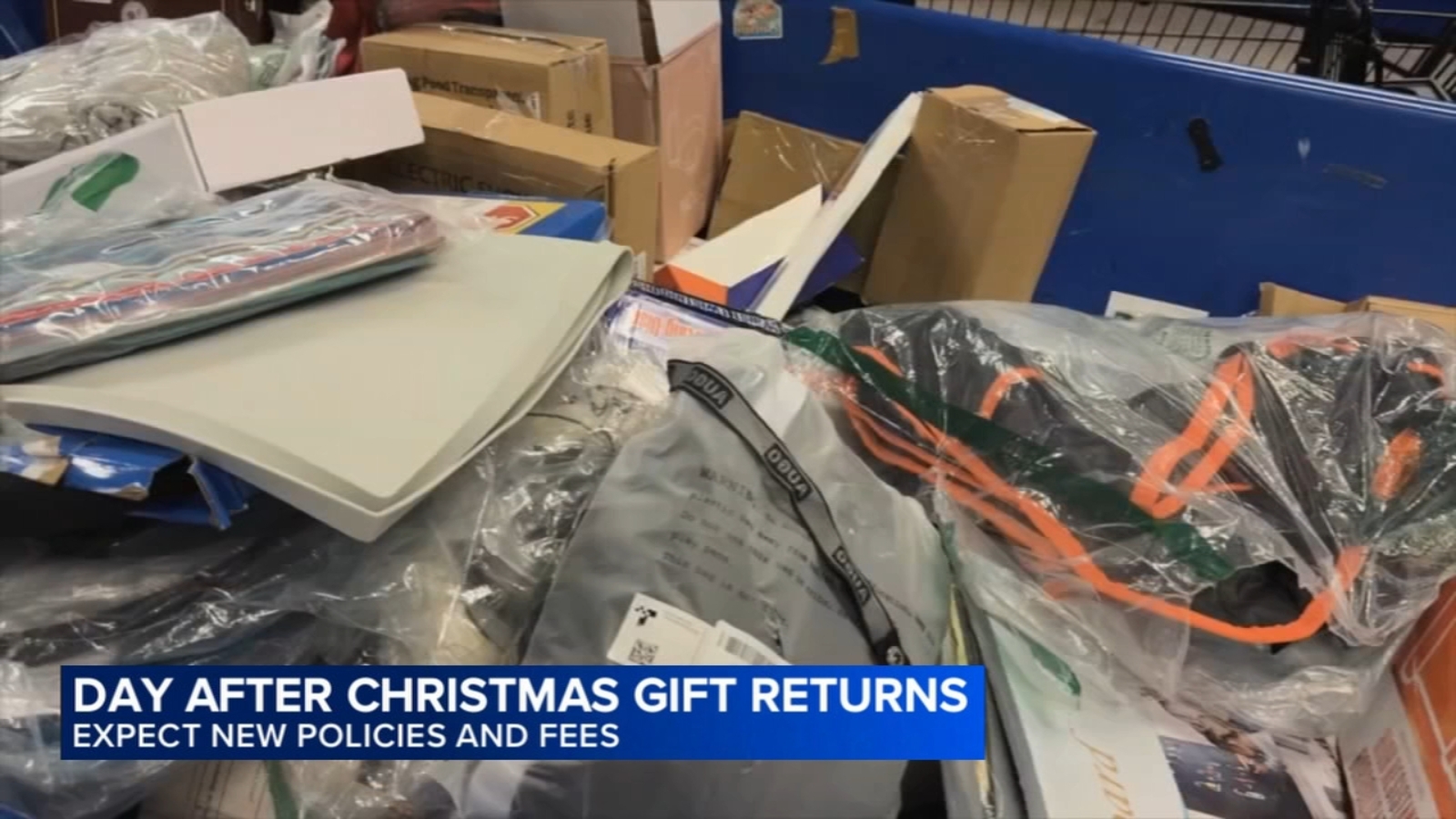
NRF forecasts about 17% of the roughly $1 trillion in holiday spending will be returned this season, and 72% of merchants report charging restocking fees (up from 66% last year), increasing direct costs to consumers and altering return economics for retailers. Retailers cite fraud and cost control for tighter policies and return fees, while the Better Business Bureau warns consumers to keep receipts and use gift cards promptly due to issuer insolvency risk; implications include heightened consumer friction, potential impacts on near-term discretionary spending, and modest margin relief for merchants that assess fees.
Market structure: The 17% return rate on ~$1T in holiday spending (~$170B) and a rise to 72% of merchants charging restocking/return fees shifts costs from retailers to consumers and fraudsters, tightening margins for apparel/department stores (M, KSS, JWN, GPS) while benefiting firms that monetize reverse logistics (UPS, FDX), resale marketplaces (EBAY, ETSY, TDUP) and payment processors that reduce gift-card friction (MA, V, PYPL). Pricing power tips toward low-return discounters (TJX, ROST) and vertically integrated e-commerce (AMZN) that control fulfillment and limits fraud exposure.
Risk assessment: Short-term (days–weeks) we expect elevated returns volume, higher chargebacks and margin hit in Jan–Mar earnings; medium-term (months) operational cost creep in reverse logistics; long-term (quarters) could compress retail margins by 50–200bps if policies remain stricter and fraud rises. Tail risks include state/federal regulation capping restocking fees or large retailer bankruptcies (gift-card losses) causing reputational contagion; catalyst watch: Q4 earnings (Jan–Feb), NRF return data releases, and major bankruptcy filings.
Trade implications: Favor 1–3% overweight in UPS/FDX and 2–4% long in TJX/ROST vs 2–3% underweight in M/KSS/GPS through Mar 2026; use short-dated options (30–90d) to capture volatility spikes around earnings. Pair trades: long logistics/resale (FDX/EBAY) vs short department stores (M/KSS) to isolate returns-driven margin divergence.
Contrarian angles: Consensus focuses on sales softness; miss is structural opportunity in reverse logistics and resale — returns create durable volume for carriers/resellers even as primary retail margins decline. The market may underprice commodity-like volume uplift to carriers (2–5% incremental parcel volume Jan–Mar); if regulators limit fees, short-position downside on retailers could be overstated, so hedge with call spreads on carriers.
AI-powered research, real-time alerts, and portfolio analytics for institutional investors.
Request DemoOverall Sentiment
moderately negative
Sentiment Score
-0.30
