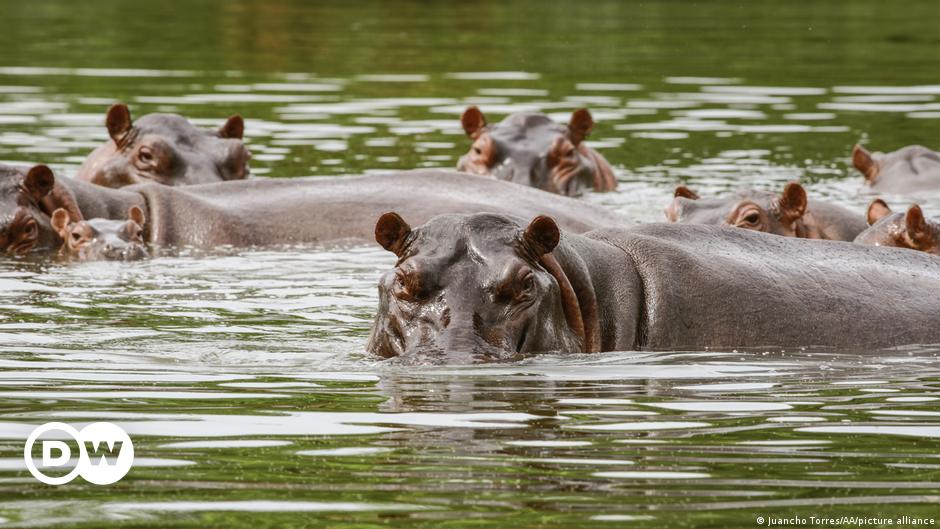
Colombia authorized a cull of up to 80 free-roaming hippos, backed by a 7.2 billion peso ($1.68 million) program slated to begin in 2H 2026. Officials say the herd, now about 200 strong in the Magdalena River basin, could grow to 1,000 by 2035 and is threatening communities and native ecosystems. The move is controversial for animal welfare reasons, but the article is primarily an environmental and regulatory update with limited direct market impact.
This is a small-budget policy action with outsized local externalities: the direct fiscal line item is immaterial, but the real economic variable is whether authorities can credibly shift from symbolic enforcement to durable population control. If they fail, the issue compounds nonlinearly over a multi-year horizon because large herbivores have low natural attrition and the marginal cost of containment rises faster than the herd itself, which argues for a policy path dependency similar to other neglected environmental liabilities.
The second-order beneficiary set is less about the park and more about adjacent tourism and infrastructure operators that can monetize a “managed wildlife” narrative if the government converts the site into a controlled attraction rather than an open ecological hazard. Conversely, local agriculture, inland logistics, and river-adjacent land values face a persistent risk premium until the state proves it can reduce encounters, because perceived safety incidents can have a much larger effect on behavior than the actual probability distribution suggests.
The market is likely underpricing the political optionality embedded here: animal-rights backlash can delay implementation, but delay is not neutral—it increases the eventual need for more expensive, more controversial measures. The key catalyst window is the second half of 2026; if relocation/sterilization again fails in the next 6–12 months, investor attention should shift from “ethics of cull” to “state capacity failure,” which would keep the problem elevated and make the eventual intervention harsher.
Contrarian view: the cull may be less economically negative than headline sentiment implies because it can reduce a latent tourism and liability overhang for the broader region, not just a narrow ecosystem issue. The bigger risk is reputational spillover for Colombia’s ESG narrative if the government is seen as improvising under pressure; that can matter more to foreign capital flows than the actual wildlife outcome.
AI-powered research, real-time alerts, and portfolio analytics for institutional investors.
Request TrialOverall Sentiment
mildly negative
Sentiment Score
-0.15
