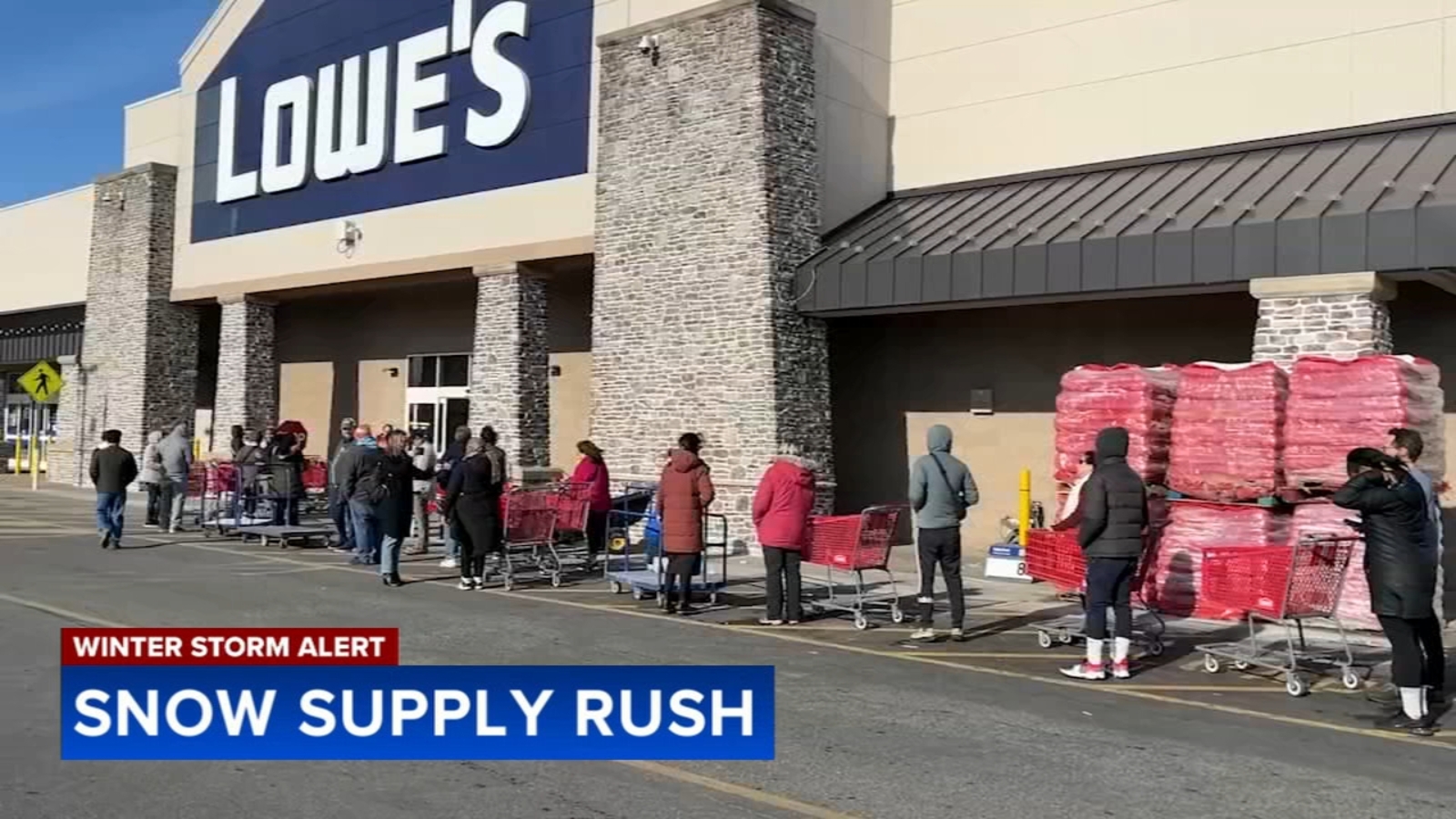
Hundreds of shoppers in the Philadelphia region lined up at a Havertown Lowe's for calcium chloride and other snow supplies ahead of a weekend storm, with roughly 450 customers served and a $25-per-bag salt offering selling out under a one-bag limit. Local hardware owners attribute the shortage to supply-chain and inventory decisions—winter items were de-stocked after weak demand earlier in the season—producing a localized retail squeeze but little expected broader market impact.
Market structure: Short, sharp weather-driven demand spikes favor upstream de-icing producers (public: Compass Minerals, CMP) and distributors with scale (HD, LOW, FAST) while hurting small independents (True Value franchises) that can't compete on freight or inventory. Pricing power is transitory — suppliers can lift spot prices for salt/calcium chloride in days, but national retailers will capture most volume if they can restock within 1–4 weeks.
Risk assessment: Tail risks include a multi-storm “blizzard run” that overwhelms distribution (days–weeks) producing double‑digit spot price moves and margin upside for producers, or conversely a warm spell that collapses demand and leaves inventories bloated (weeks–months). Hidden dependencies: trucking capacity, port/rail bottlenecks, and dealer ordering cadence create 1–6 week lags between spot demand and replenishment; catalysts are NOAA 7‑day model shifts, retailer inventory disclosures, and CMP production updates.
Trade implications: Tactical alpha lies in directional exposure to salt producers and convex option exposure around weather forecasts. Short-term (0–45 days) expect volatile order flow; mid-term (1–3 months) restocking should normalize volumes. Use size discipline (1–2% portfolio per idea) and event-based timing tied to weather-model confirmation.
Contrarian angles: Consensus underprices structural underinvestment in seasonal inventory by local suppliers — repeated small shocks can create recurring pricing tails rather than one-offs. Conversely, the panic-buy narrative overstates retail upside: anecdotal sell‑outs often shift demand earlier, not incrementally, so durable revenue upside for big-box retailers may be limited.
AI-powered research, real-time alerts, and portfolio analytics for institutional investors.
Request DemoOverall Sentiment
neutral
Sentiment Score
-0.10
