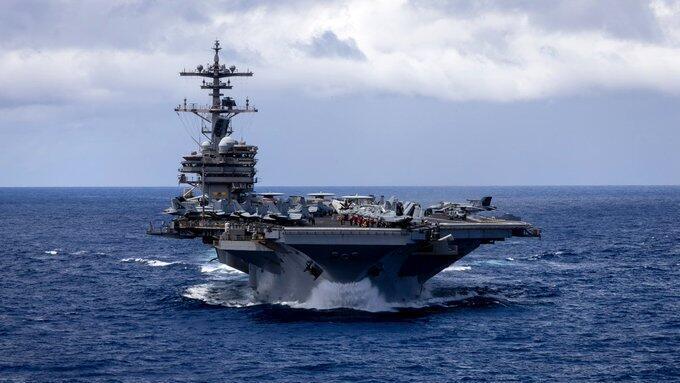
Reports of air defense activations and explosions in Tehran come amid heightened U.S.-Iran tensions, with Trump again threatening renewed war if talks do not progress and warning that "the clock is ticking." The U.S. is also reinforcing regional forces, with the USS George H.W. Bush now under CENTCOM responsibility and three carriers positioned in the broader area. Israeli Defense Minister Israel Katz escalated rhetoric further, saying Israel is awaiting a U.S. green light to resume the war and threaten Iranian leadership and infrastructure.
The market setup is less about any single strike and more about the probability distribution of miscalculation. When both sides are signaling while also denying action, the premium to hedge rises because a false alarm can still move oil, defense, and FX before confirmation arrives. The near-term winner is volatility itself: region-sensitive energy names, shipping insurance, and defense contractors get bid on any escalation headline, while the loser is risk assets that rely on stable Gulf flows and clean transit assumptions.
The second-order issue is that the U.S. force posture is now doing two jobs at once: deterrence and option value for rapid escalation. Three carriers in theater materially shorten response time and make a blockade/retaliation scenario more credible, which keeps front-end crude skew bid even if spot prices don’t immediately gap. That matters for refiners, airlines, and chemical producers: their earnings sensitivity is asymmetric because a 10-15% move in crude can hit margins quickly, while pass-through lag is measured in weeks to months.
The more interesting contrarian view is that the rhetoric may be doing part of the work of actual kinetic action. If leadership in Tehran is focused on internal consolidation and signaling unity, the immediate downside risk to markets is a visible but contained standoff rather than a broad regional war. That argues against chasing outright energy beta here; the better expression is owning convexity around a small base case of de-escalation and a fat-tail blowout scenario.
If this remains a warning cycle rather than a strike cycle, the main reversal catalyst is any credible pause in U.S. naval buildup or a verifiable diplomatic channel that extends the ceasefire beyond the current short window. Until then, the market should treat each headline as a trigger for higher implied volatility, not just higher spot prices.
AI-powered research, real-time alerts, and portfolio analytics for institutional investors.
Request TrialOverall Sentiment
strongly negative
Sentiment Score
-0.55
