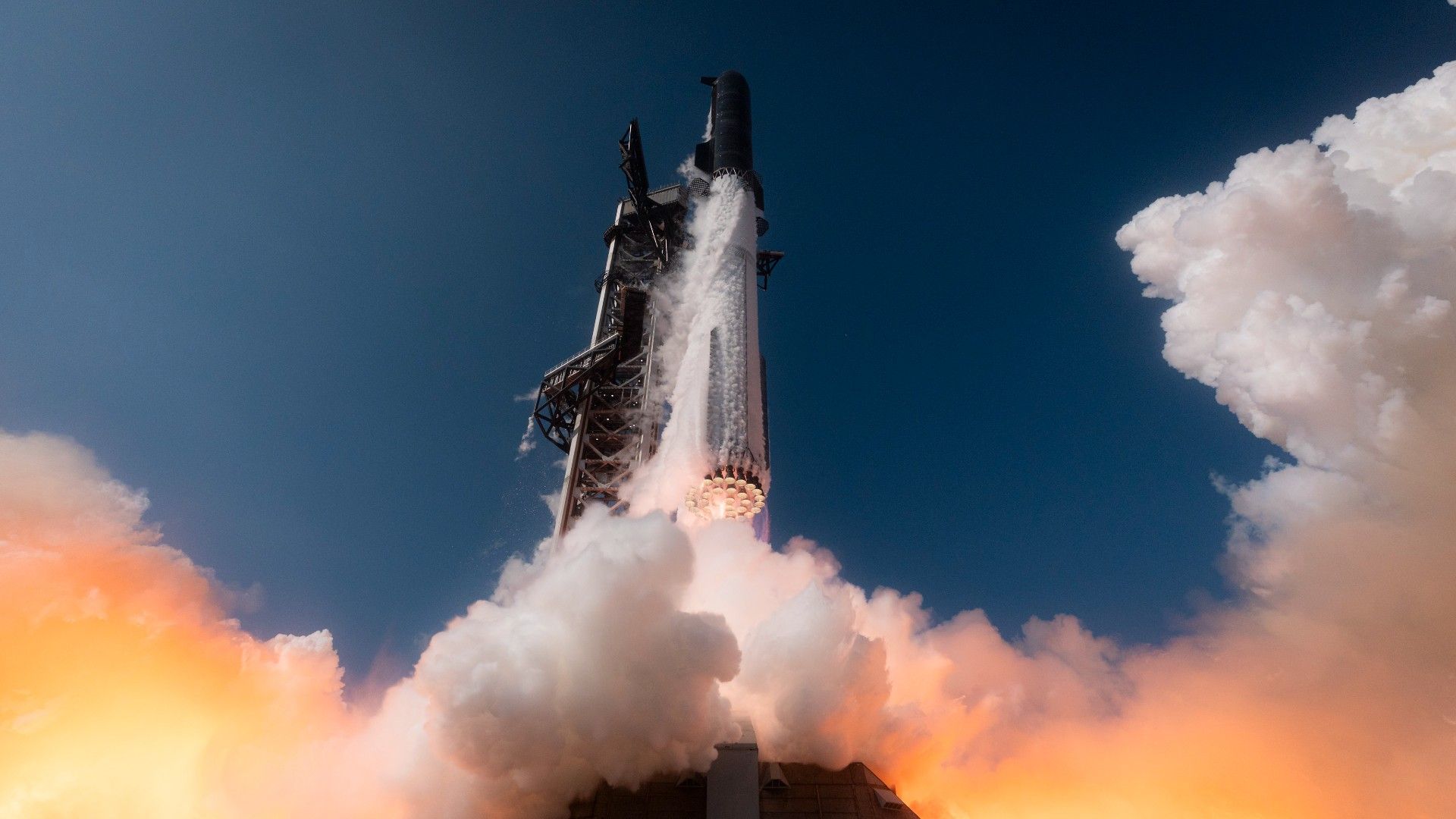
SpaceX's 408-foot Starship V3 completed its first launch on May 22, but the flight was only partially successful after engine glitches and a failed booster landing led the FAA to ground the vehicle pending an investigation. SpaceX still aims to use V3 for key milestones this year, including orbital propellant transfer tests and eventual readiness for NASA's Artemis 3 and Artemis 4 missions in 2027-2028. The company says its production pipeline could deliver about 10 more Starships and roughly half that number of boosters this year.
The key market implication is not the rocket itself, but the acceleration of an orbital refueling ecosystem. That shifts Starship from a pure launch vehicle story to a vertically integrated logistics platform, which should pressure the economics of incumbent launch providers once the cadence moves from sporadic tests to repeatable ops. The bottleneck is now less propulsion and more operational reliability, regulatory clearance, and pad throughput — a classic transition from engineering risk to execution risk.
Near term, the biggest beneficiaries are suppliers and contractors with exposure to high-spec propulsion, materials, avionics, and ground systems, while legacy launch competitors face a longer-duration threat to pricing power if reusability and tanker economics start compounding. The second-order effect is on defense and national-security launch procurement: if SpaceX can demonstrate higher launch frequency and cheaper delivered mass, the government may consolidate even more volume around the same vendor, creating a winner-take-most dynamic. That can be bullish for the ecosystem but bearish for any aerospace prime with low launch differentiation.
The biggest risk is timeline slippage. The path to meaningful commercial or lunar monetization still requires several failure-prone milestones: orbital endurance, propellant transfer, reentry reuse, and then human-rating integration. If the next 2-3 flights expose persistent engine or landing instability, the market will likely re-rate Starship-related optimism downward for 6-12 months, and competitors get a temporary breathing window.
Consensus is probably underestimating how much of the value chain accrues before the vehicle is fully operational. Even without a successful lunar mission, the test cadence itself can pull forward spending on ground infrastructure, component suppliers, and adjacent space infrastructure names. The overdone part of the narrative is assuming a straight-line path to massive launch economics; the underdone part is that a high-frequency test program can already reshape procurement and supplier mix long before full certification.
AI-powered research, real-time alerts, and portfolio analytics for institutional investors.
Request DemoOverall Sentiment
neutral
Sentiment Score
0.15
Ticker Sentiment
