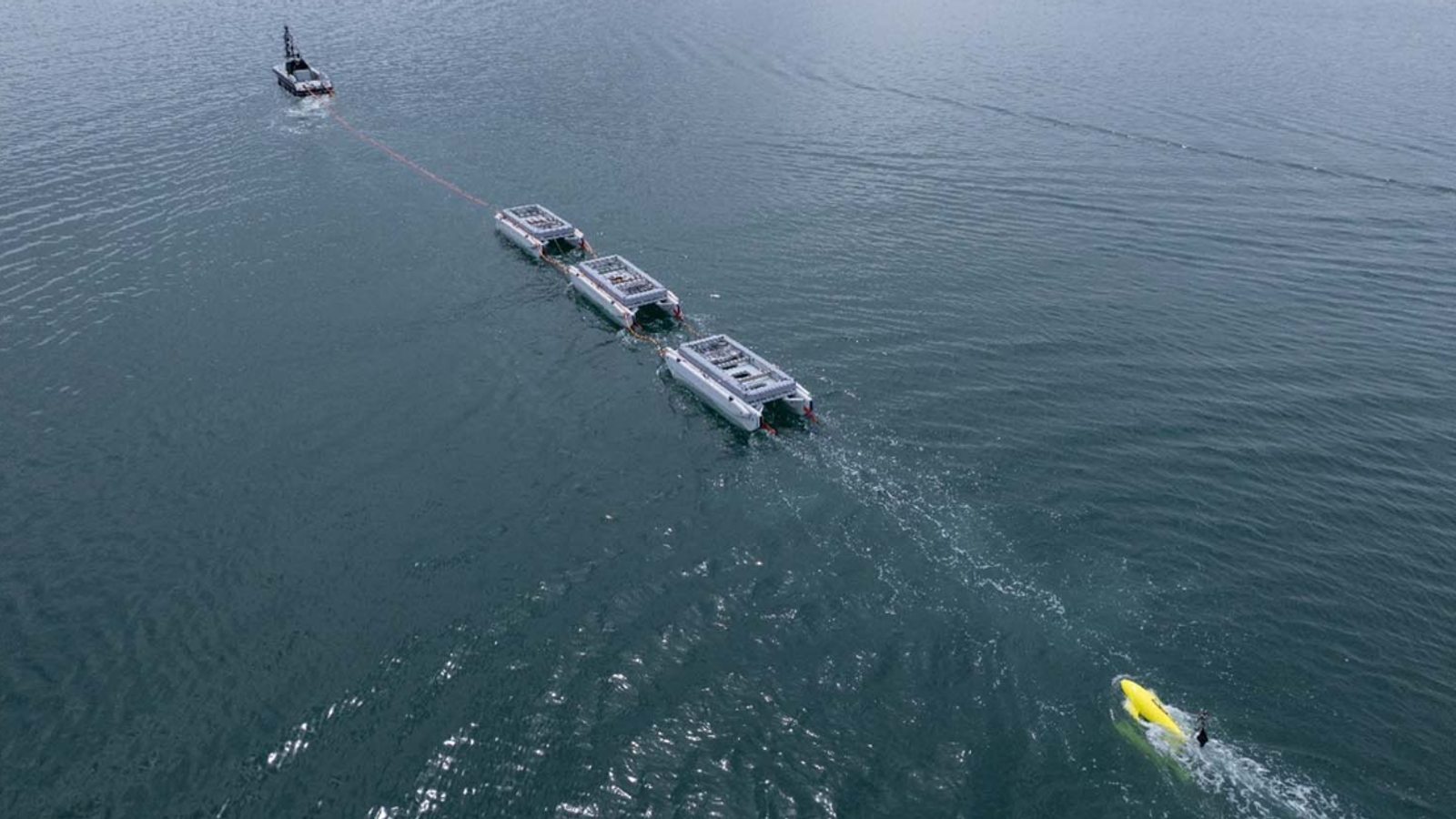
Iran's closure of the Strait of Hormuz has prompted the UK to consider deploying mine-hunting drones and interceptor 'Octopus' drones to the Middle East to help secure shipping; oil prices have spiked. Mine-hunting systems (Sweep, SeaCat, MMCM, Wilton) can search seabeds to ~1,000ft/304m and replicate ship signatures to safely detonate mines; Octopus interceptors can reach ~186mph/300kmh and operate to ~14,800ft/4,500m, while Shahed drones are estimated at up to £36,000 and interceptors are reported to cost <10% of that. Deployment could materially affect regional security and energy routes but risks diverting drones from Ukraine (analyst cites potential reallocation of 20k–30k units).
The UK's willingness to field both interceptor and mine-countermeasure drones shifts the marginal defense-dollar from large platform buys toward autonomy, sensors, propulsion and payload specialists. That favors firms that can rapidly scale production of small airframes, guidance suites, EO/IR cameras, and compact sonar/UUV stacks — lines that move orders in the low‑hundreds of millions short-term and could aggregate to low‑single‑digit billions if allies join, over 12–24 months.
A critical second‑order tension is supply diversion: routing interceptor capacity to the Gulf will directly compete with Ukraine replenishment and expose fragile supplier lead times (weeks to months) for rotors, batteries and semiconductors. Operational constraints — basing, sustainment, rules of engagement and attrition rates — mean effectiveness is front‑loaded (weeks) while procurement impact is medium term (3–12 months); markets will reprice on visible order announcements or signs of sustained attrition.
Tail risks skew to escalation and adaptation: Iran can cheaply counter with decoys, shallow/anchors mines, or swarm tactics that degrade drone efficacy and raise mission costs, pushing operators to higher‑end kinetic options. Conversely rapid diplomatic relief or a successful, low‑cost technical mitigation (e.g., jamming suites) would undo much of the premium priced into defense suppliers and energy/shipping risk premia within 30–90 days.
Practical read: watch procurement timelines, replenishment flows to Ukraine, insurance premium moves, and tanker spot rates as leading indicators. The near‑term playbook is to overweight suppliers with modular autonomous stacks and logistics moat, tactically express upside via concentrated option exposure on high‑beta drone suppliers, and use short‑dated shipping/energy hedges to capture volatility while keeping horizon risk sized to geopolitical binary outcomes.
AI-powered research, real-time alerts, and portfolio analytics for institutional investors.
Request DemoOverall Sentiment
mildly negative
Sentiment Score
-0.35
