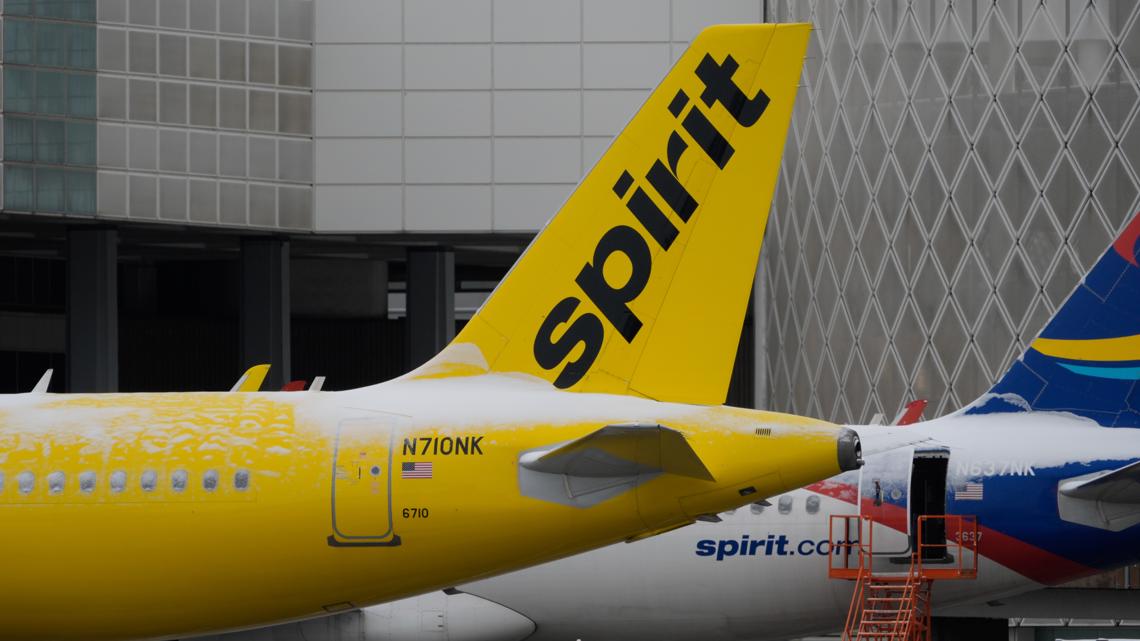
Spirit Airlines is reportedly seeking an emergency federal bailout as it faces potential liquidation and struggles to exit a second bankruptcy. President Trump said he would like someone to buy Spirit and suggested the federal government may need to help, while the carrier battles high fuel costs, mounting debt, and reduced visibility on its future. The airline had already lost more than $2.5 billion since the start of 2020, underscoring severe balance-sheet stress.
The important market read-through is not Spirit-specific; it is that the administration is signaling a willingness to socialize downside for a politically sensitive, high-employment service business. That raises the odds of a broader “too visible to fail” playbook for weak transportation credits, which compresses downside optionality for equity holders but can also keep unsecured debt trapped in a long restructuring stalemate. The immediate winner is likely Spirit’s less-levered competitors, which could inherit displaced demand if Spirit is forced into capacity cuts rather than a clean liquidation.
Second-order, liquidation would be a supply shock at the margin: a small but meaningful chunk of low-fare capacity disappears right as consumers remain price-sensitive. That should support unit revenues for ULCC/low-cost peers and, paradoxically, improve pricing power for network carriers on overlapping leisure routes. The flip side is that a bailout or rescue merger would delay that re-pricing benefit and may invite antitrust scrutiny if a strategic buyer emerges, limiting the set of credible acquirers and increasing execution time from days to months.
The credit signal is more important than the equity headline. If the government is perceived as willing to backstop one distressed carrier, lenders may get less aggressive on other stressed airlines and transport operators, but they will still demand collateral and tighter covenants in the next refinancing wave. The contrarian angle is that the move may be overdone on the downside for the industry if liquidation is the base case being priced in; a disorderly shutdown is hard to execute quickly, so the market may need to wait through a prolonged restructuring process before real capacity exits the system.
AI-powered research, real-time alerts, and portfolio analytics for institutional investors.
Request TrialOverall Sentiment
strongly negative
Sentiment Score
-0.82
