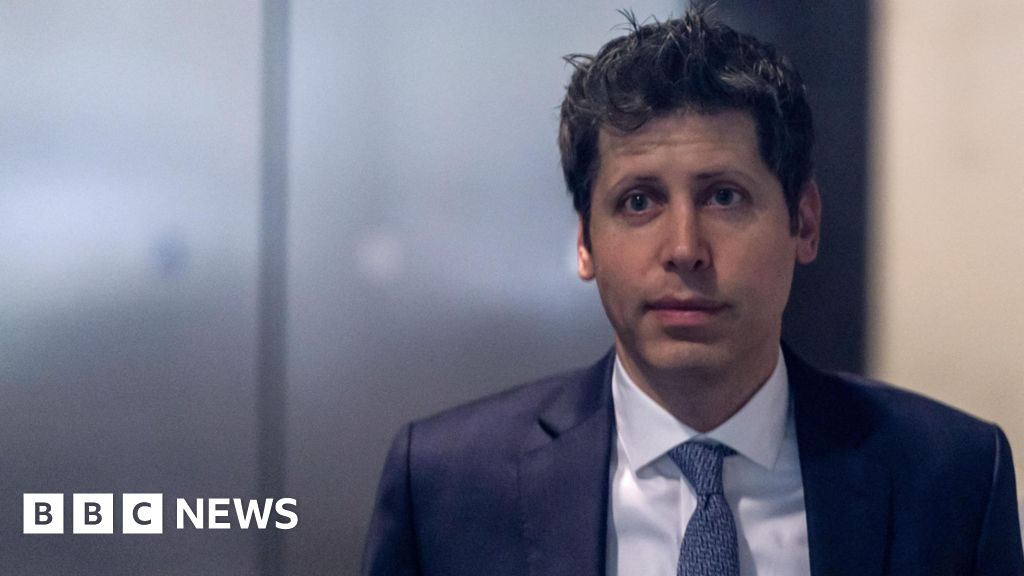
Sam Altman testified that Elon Musk sought long-term control of OpenAI, including suggesting the company could pass to Musk's children and even become a Tesla subsidiary. Altman said Musk pushed for more board seats and a CEO role, but OpenAI's founders rejected handing him control in exchange for financing. The article is primarily legal and governance-related, with limited direct near-term market impact.
The market implication is less about the courtroom narrative and more about governance discount on TSLA as a financing and AI-control proxy. Any evidence that Musk prioritizes control over economic value increases the probability that capital allocation at Tesla is subordinated to his broader ecosystem ambitions, which matters because TSLA increasingly trades on AI optionality rather than auto fundamentals. That should keep a lid on multiple expansion unless investors can underwrite a cleaner separation between Tesla's operating cash flows and Musk's external ventures.
Second-order, the OpenAI dispute reinforces a structural benefit to independent AI platforms and their capital providers: the market is likely to assign a higher premium to companies where management, board control, and IP ownership are not personality-dependent. That is bullish for arms-length AI infrastructure beneficiaries versus single-founder-controlled platforms, because enterprise customers and strategic capital tend to prefer governance stability when model spend is measured in multi-year commitments. It also raises the odds that competing AI labs use the controversy to market themselves as the safer counterparty for large enterprises.
For TSLA, the near-term risk is not verdict day but drip risk over weeks to months: more testimony that frames Musk as a control-first operator can widen the “founder premium” discount and re-open concerns about distraction, board independence, and related-party capital decisions. The upside reversal would require either decisive legal exoneration or a new catalyst that shifts the narrative back to vehicle margins, autonomy execution, or a credible governance reset. Absent that, the stock likely remains hostage to headline volatility rather than fundamentals.
The contrarian angle is that this may be modestly over-discounted for Tesla because markets already price Musk as a dominant, quasi-controlling figure; incremental bad governance facts may not move the stock much unless they create a tangible financing conflict. The bigger mispricing may sit in adjacent AI infrastructure names that could benefit from a stronger preference for independent, institutionally governed AI platforms. In other words, the event is more negative for TSLA’s narrative multiple than for its near-term earnings power.
AI-powered research, real-time alerts, and portfolio analytics for institutional investors.
Request DemoOverall Sentiment
neutral
Sentiment Score
-0.10
Ticker Sentiment
