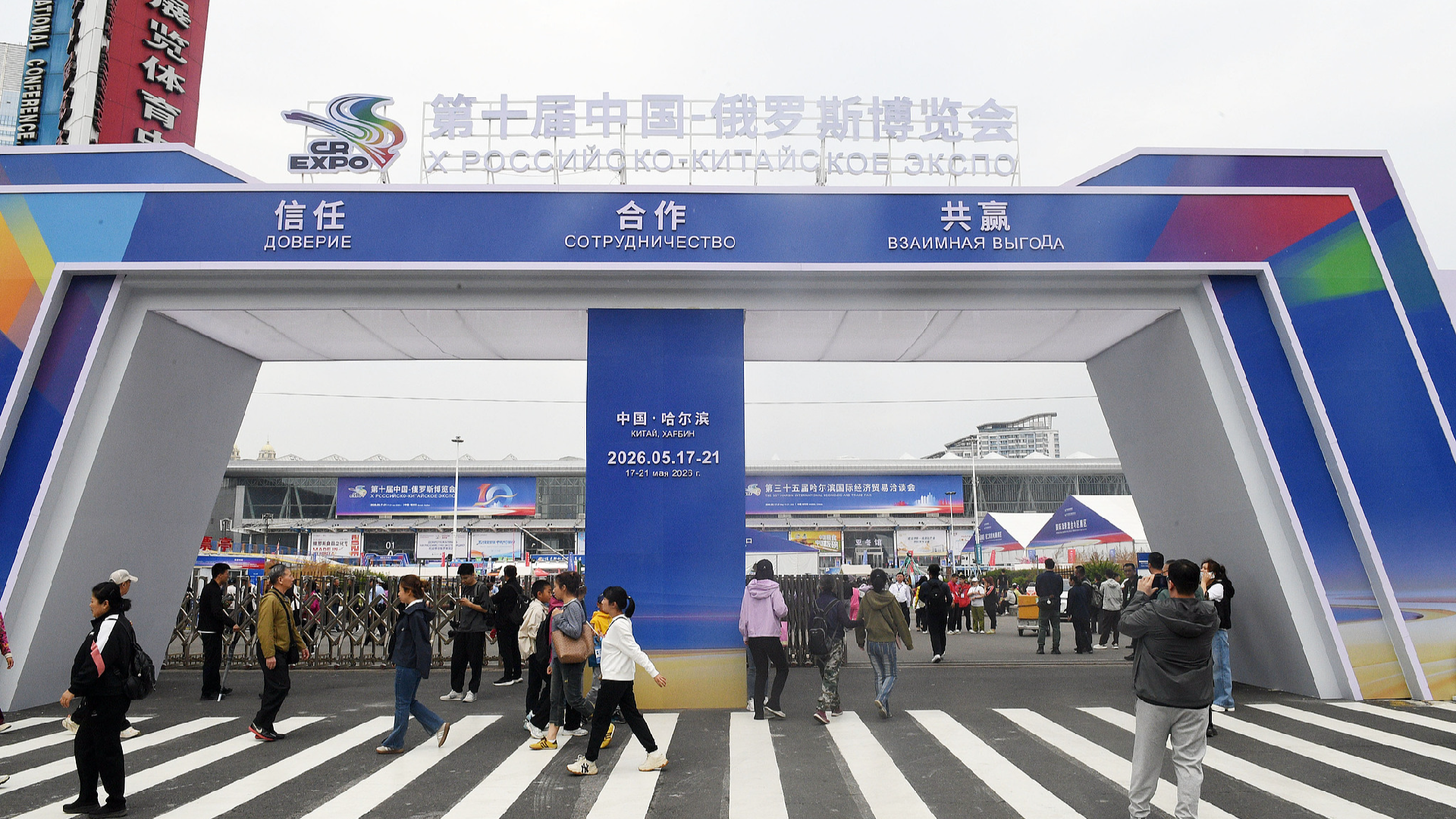
China and Russia used the 10th China-Russia Expo in Harbin to highlight continued cooperation across multiple fields, with Vice Premier Zhang Guoqing and Deputy Prime Minister Yury Trutnev reaffirming support for bilateral and regional cooperation mechanisms. The article is largely diplomatic and procedural, with no specific economic figures, policy changes, or market-moving announcements. It suggests ongoing coordination rather than an immediate shift in trade or investment conditions.
This reads less like a headline event and more like a signal that the China-Russia economic corridor is being operationalized around the Far East rather than through large, sanction-sensitive national champions. That matters because the easiest tradeable beneficiaries are often not the obvious energy majors but regional logistics, port handling, rail equipment, ag-input, and construction names that can monetize incremental cross-border flows with lower sanctions friction and faster revenue recognition.
The second-order effect is a re-routing story: if bilateral trade deepens, the marginal winner is infrastructure tied to inland-to-port freight and cold-chain transport, while the marginal loser is any carrier or intermediary dependent on Europe-facing transshipment. Over 6-18 months, this can also tighten certain commodity corridors—especially fertilizers, timber, metals, and food inputs—creating localized price support in northeastern China and the Russian Far East even if headline trade volumes look stable.
The market is likely underpricing the policy durability of this channel because it is framed as regional cooperation, which tends to survive broader diplomatic noise better than national-level announcements. The main reversal risk is not rhetoric; it is enforcement pressure on banks, insurers, and dual-use logistics, which could bottleneck settlement and insurance within weeks if Western secondary-sanctions scrutiny intensifies. Near term, the best setup is to express the theme through assets with existing export/logistics leverage rather than high-beta Russia exposure, because the latter carries much worse tail risk-to-upside asymmetry.
AI-powered research, real-time alerts, and portfolio analytics for institutional investors.
Request DemoOverall Sentiment
neutral
Sentiment Score
0.05
