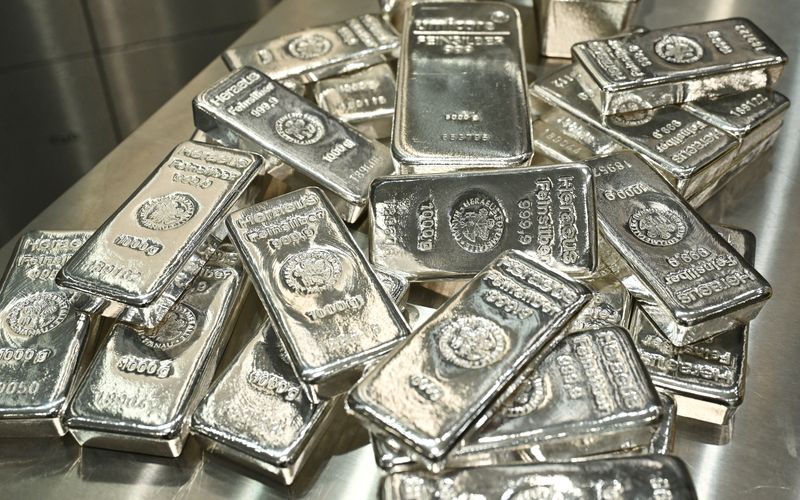
UBS cut its silver price forecasts across the curve, lowering June-end silver to $85 from $100, September to $85 from $95, December to $80 from $85, and March 2027 to $75 from $85. The bank now sees the 2026 silver deficit narrowing to 60–70 million ounces from about 300 million, driven by weaker investment demand, softer photovoltaic and jewelry consumption, and higher mine supply near 850 million ounces. UBS also reduced its full-year investment demand estimate to 300 million ounces from above 400 million and said it prefers selling volatility rather than holding long positions.
The main read-through is that the market is moving from a shortage narrative to a “good enough supply” narrative, which is a material change for anyone long silver beta through miners, royalty streams, or leverage vehicles. The bigger signal is not the forecast cut itself; it is the collapse in expected deficit size combined with waning ETF and futures support, which typically removes the marginal buyer that keeps breakouts alive. In that setup, rallies become mean-reversion events rather than trend continuation, especially when real rates stay restrictive and silver’s industrial story is no longer strong enough to offset investor de-grossing.
Second-order effects matter more than the outright price target. If photovoltaic demand is being capped by elevated input costs, the pain lands on the weakest parts of the solar value chain first: downstream module installers, thin-margin distributors, and non-integrated manufacturers that cannot pass through metal costs quickly. That should also modestly benefit copper- and aluminum-substitution efforts in some applications, but the bigger near-term loser is the “scarcity premium” embedded in silver’s volatility surface and in high-beta proxies that trade like leveraged spot.
The contrarian point is that this is still not a bear thesis on silver so much as a lower-volatility, range-bound one, which makes the risk-reward unattractive for unhedged longs but potentially attractive for structured short-vol positions. Gold acting as an anchor implies silver may not break down sharply unless macro growth weakens enough to hit industrial demand more broadly; absent that, the path of least resistance is sideways with lower realized volatility. For the next 1-3 months, the trade is more about harvesting carry and selling complacency spikes than making a directional call on a large commodity move.
Among equities, the most exposed names are not the obvious miners alone but the high operating leverage producers and option-heavy retail products that have benefited from momentum flows. If silver stabilizes near current levels, those vehicles can still underperform because they reprice more on implied volatility contraction than on spot drift. The key catalyst to reverse this view would be a renewed ETF inflow wave or a macro shock that pushes investors back into monetary hedges; otherwise, the market likely grinds lower on enthusiasm, not fundamentals.
AI-powered research, real-time alerts, and portfolio analytics for institutional investors.
Request DemoOverall Sentiment
mildly negative
Sentiment Score
-0.35
Ticker Sentiment
