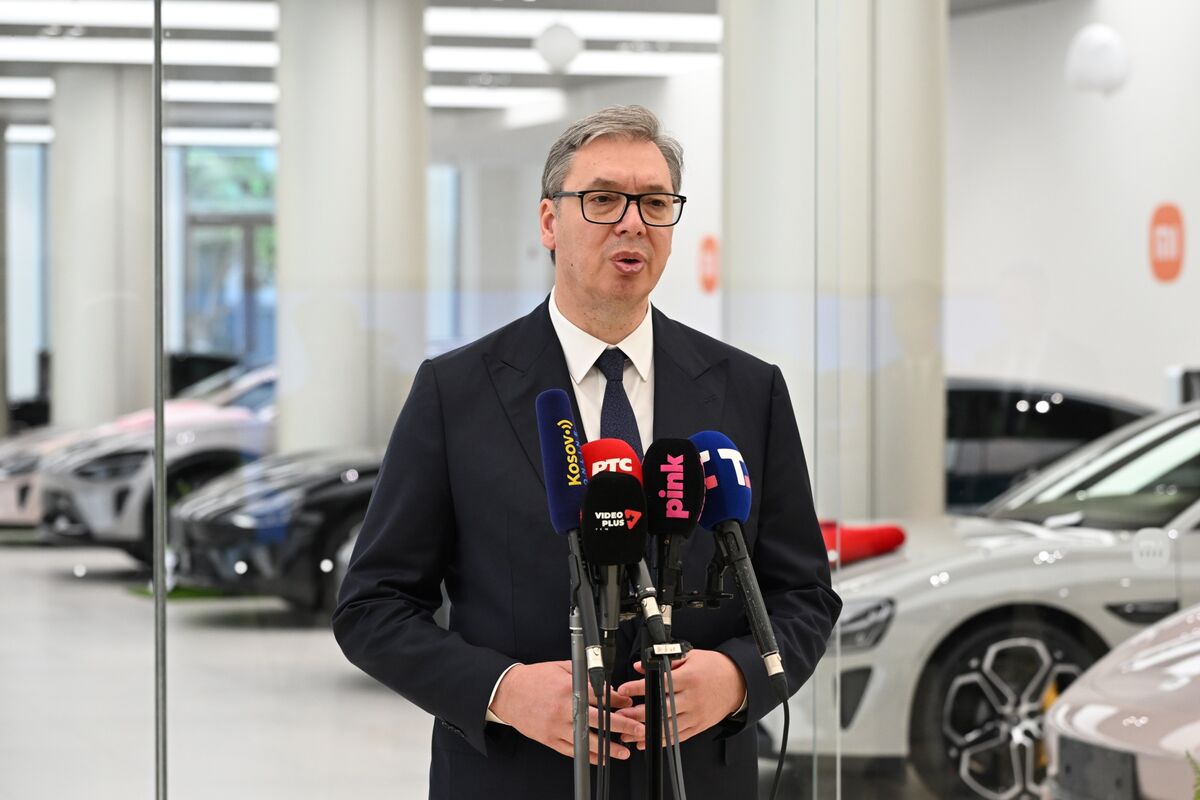
Chinese companies will invest an additional €940 million ($1.1 billion) in Serbia, with funds directed toward auto parts, humanoid robots, energy and artificial intelligence projects. The announcement signals a meaningful foreign investment boost for Serbia’s economy and expands China’s industrial footprint in the country. The money is expected to start flowing from July.
The incremental capital matters less for Serbia’s GDP than for the industrial ecosystem it helps hard-wire into a China-led supply chain. The real second-order effect is that Serbia becomes a low-cost execution hub for labor-intensive EV/auto components and applied AI hardware, which can pressure nearby CEE manufacturing clusters on wage arbitrage while improving Chinese firms’ optionality around EU market access through a non-EU base.
For investors, the cleanest beneficiaries are not the obvious Chinese state names but regional industrial suppliers, logistics, and power infrastructure enablers with Serbian/Western Balkans exposure. Expect a medium-term capex pull-through in grid equipment, construction, and transport services first; humanoid robotics and AI projects are longer-dated and likely more headline than earnings in the next 6-12 months. The near-term market read-through is modestly positive for “friend-shoring” in the Balkans, but negative for incumbent Central European contract manufacturers that compete on cost rather than scale or technology.
The main risk is policy friction: Brussels can tolerate trade links, but if the investment base looks like a backdoor assembly platform for Chinese exports into the EU, scrutiny around subsidies, customs, and public procurement can rise quickly. That would likely show up over months, not days, via permitting delays, tighter screening, or softer follow-on commitments. A second risk is execution—robotics/AI projects often convert into press releases before they convert into revenue, so the market may be pricing a capex cycle that only partially monetizes.
The contrarian view is that the headline is directionally bullish but likely underestimates how selective the beneficiaries will be. This is not a broad EM risk-on signal; it is a niche industrial-policy story where the winners are local infrastructure and utility names, while the broader “China in Europe” complex could remain range-bound if geopolitical friction offsets the capex impulse.
AI-powered research, real-time alerts, and portfolio analytics for institutional investors.
Request DemoOverall Sentiment
moderately positive
Sentiment Score
0.55
