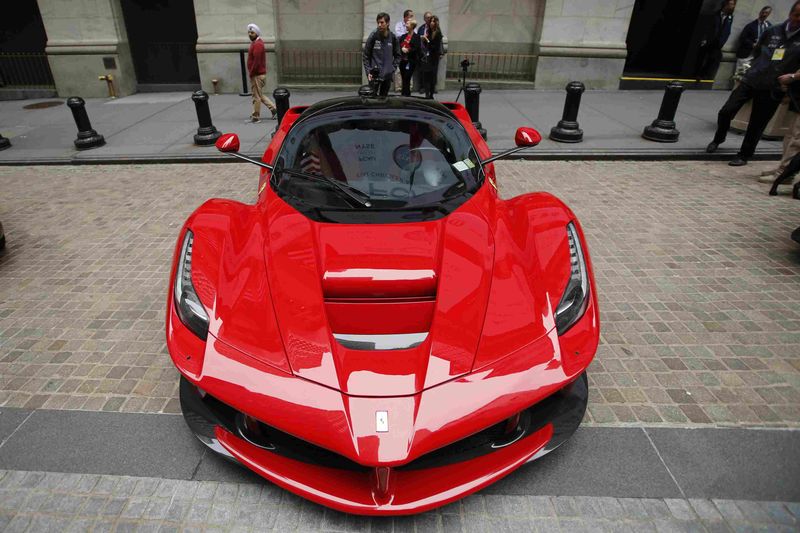
Ferrari is preparing to unveil its first fully electric model, the Luce, with pre-orders opening in March after very positive client feedback. The company has steadily built its electrification strategy since introducing hybrid technology in Formula One in 2014 and launching its first mass-produced hybrid in 2019. Ferrari now targets a 2030 lineup mix of 20% EVs, 40% hybrids and 40% ICE models, underscoring a slower but still constructive transition to electrification.
Ferrari is signaling that electrification is now a margin-protection exercise, not just a product strategy. The key second-order effect is that it can preserve scarcity pricing by making EV adoption look deliberate and premium, while slowing the cadence avoids being forced into a segment where performance EV demand is still unproven. That should support RACE’s gross-margin resilience versus OEMs that are pushing volume EVs into a price war.
The biggest beneficiary outside Ferrari may be the specialized high-performance EV supply chain: power electronics, thermal management, lightweight materials, and premium interior/software vendors. STM is a quieter angle here because Ferrari’s credibility in electrification depends on reliable control systems and semiconductor content per vehicle rising faster than unit volume, which can support content growth even if the company sells fewer EVs than originally planned. A more subtle winner is AAPL-adjacent design and UX spend: the Jony Ive tie-up suggests the EV is being positioned as a luxury tech object, not a pure drivetrain story.
The market is likely underestimating the risk that Ferrari’s EV could become a halo product with limited follow-through, which would make the 2030 mix targets look more like a branding tool than a real volume shift. If early client feedback is strong, the stock can re-rate on optionality; if orders are merely aspirational and second EV timing slips again, investors may fade the electrification premium. Over the next 3-6 months the main catalyst is pre-order conversion versus teaser hype; over 12-24 months the real test is whether Ferrari can maintain exclusivity while scaling software, battery, and service economics.
Contrarian view: the move may be less bullish than the headlines imply because Ferrari is effectively admitting high-performance EV demand is too weak to justify aggressive rollout. That is positive for brand integrity, but it also caps the pace of addressable-market expansion and reduces the probability of an immediate multiple expansion from EV optionality alone. In other words, the right reaction may be to buy the execution story on dips, not chase the announcement.
AI-powered research, real-time alerts, and portfolio analytics for institutional investors.
Request DemoOverall Sentiment
mildly positive
Sentiment Score
0.35
Ticker Sentiment
