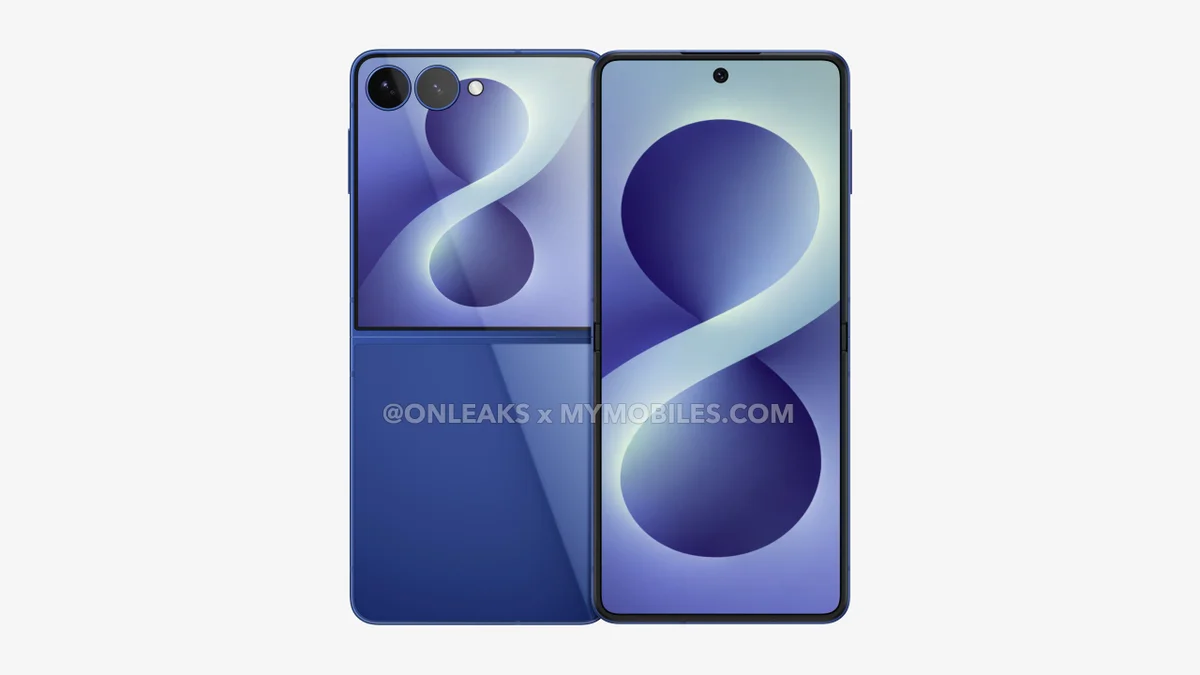
Samsung's Galaxy Z Flip 8 is rumored to be an iterative update with only minor changes, while a Weibo tipster claims the company may not be actively developing a Flip 9. The article cites rising costs, design stagnation, and shifting consumer preference toward larger foldables as reasons Samsung could eventually discontinue its clamshell lineup. Near-term impact is limited, but the report is modestly negative for Samsung's foldable product narrative.
If Samsung is truly de-emphasizing clamshell foldables, the first-order loser is not just the handset itself but the ecosystem built around a broad, annually refreshed SKU stack. That likely means lower attach for display components, hinge subsystems, camera modules, and premium-memory suppliers that have been leveraging foldables as a mix-up market; the more important second-order effect is a reduced cadence of launch-driven promotions that have historically pulled forward upgrade demand. For GOOGL, the near-term read is modestly positive but not transformative: if Gemini becomes the main software differentiator, Samsung is implicitly outsourcing part of the hardware value proposition to Google, which supports Android ecosystem stickiness but also commoditizes the device layer further.
The key risk is time horizon mismatch. Over the next 1-2 quarters, the market may underreact because this is still framed as rumor, but the real signal would be if Samsung materially shifts capex, supplier orders, or launch messaging by the next two product cycles. If that happens, the bearish read extends beyond one form factor: it suggests foldables are becoming a niche premium category rather than a mass-market replacement cycle, which would pressure the entire Android hardware premium segment and weaken the bull case for continued multiple expansion on "innovation" alone.
Contrarianly, the consensus may be over-indexing on product fatigue and underestimating segmentation economics. A smaller clamshell can remain profitable even with limited volume if it serves as a halo device that supports the broader Galaxy franchise and carrier promotions; discontinuing it would only make sense if the margin stack is deteriorating faster than expected or if inventory turns are structurally poor. The better trade is not to short Samsung-related hardware indiscriminately, but to watch for evidence that larger foldables are absorbing premium demand without cannibalizing tablets or ultra-flagships; that would shift the whole TAM narrative, but it likely takes 6-12 months to confirm.
AI-powered research, real-time alerts, and portfolio analytics for institutional investors.
Request DemoOverall Sentiment
mildly negative
Sentiment Score
-0.20
Ticker Sentiment
