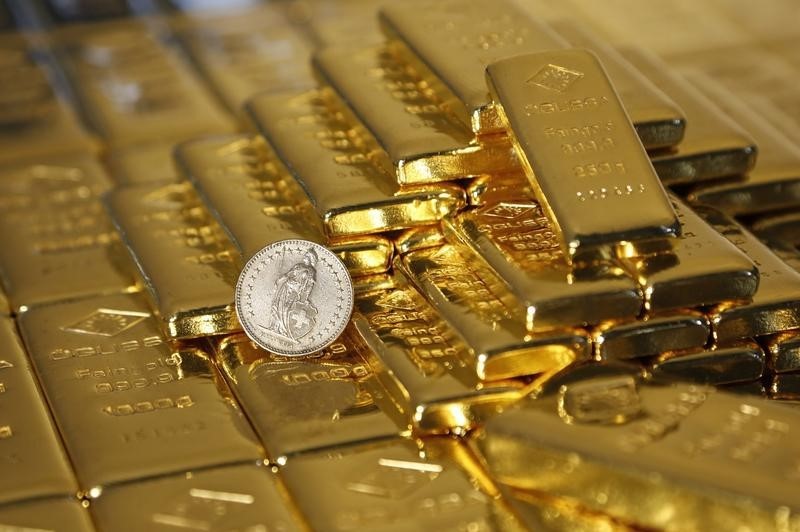
Gold fell 1.2% to $4,452.24/oz and gold futures slipped 1.1% to $4,483.55/oz as the dollar firmed and markets weighed conflicting reports on U.S.-Iran peace talks. Oil declined on expectations that shipping through the Strait of Hormuz could normalize, while the White House denied claims of a draft MoU; the Strait handles about one-fifth of global oil and gas flows, making the situation a major market-wide geopolitical risk.
The market is treating this as a fast unwinding of a geopolitical scarcity premium, but the bigger signal is that the risk distribution in energy has become more bimodal: a credible de-escalation path can knock spot crude down sharply in days, while any renewed disruption can reprice the whole forward curve and logistics stack. The first-order loser is upstream energy, but the more interesting second-order winner is anything with high input-cost beta to crude and freight — chemicals, airlines, trucking, and broad cyclicals — because even a modest fade in tanker-risk premia can improve margins faster than consensus models reflect. The strait dynamic matters less for absolute barrels than for insurance, rerouting, and inventory behavior. If shipping resumes normally, expect a rapid collapse in war-risk surcharges and a normalization of voyage times, which is bearish for ocean freight and supportive for refiners outside the region that have been paying up for displaced feedstock flows. A lot of the inflation impulse that pushed rates higher can also unwind with a lag, which is relevant for duration-sensitive assets: lower energy prints can ease breakeven inflation expectations and remove a key excuse for central banks to stay tighter for longer. The contrarian angle is that the market may be overestimating how fast physical flows can normalize even if headlines improve. Partial reopening still leaves a structural tail risk around sabotage, inspections, and carrier behavior, so the curve may remain backwardated longer than spot traders expect; that favors owning optionality over linear directional exposure. In other words, the easy trade is not a huge outright short in energy, but a time-bound fade of the geopolitical premium paired with protection against a headline reversal. One underappreciated beneficiary is gold's correlation regime: if oil disinflation lowers real-rate fears, the metal can remain vulnerable even if geopolitics stays noisy, because the market has been anchoring on stagflation hedging. That creates a narrower setup where gold rallies need a fresh escalation shock, not just uncertainty, and that makes near-dated upside less attractive than before.
AI-powered research, real-time alerts, and portfolio analytics for institutional investors.
Request DemoOverall Sentiment
neutral
Sentiment Score
-0.10
