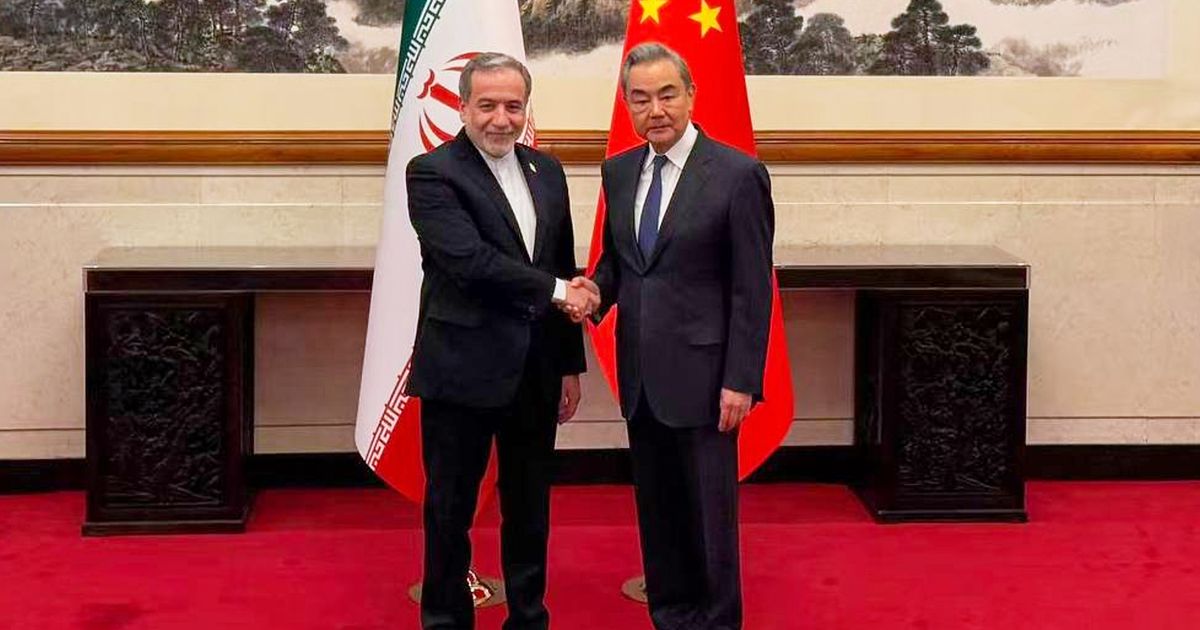
China called for an immediate comprehensive ceasefire in the war involving Iran, the U.S. and Israel, with Foreign Minister Wang Yi saying a resumption of hostilities is not acceptable. The meeting in Beijing marks the first visit by Iran’s foreign minister to China since the conflict began on Feb. 28. The remarks underscore elevated geopolitical risk and could support safe-haven sentiment across markets.
A public Chinese push for a ceasefire is less about immediate conflict resolution than about repositioning Beijing as a price-setter in any post-war settlement. The second-order market effect is a lower probability of a rapid escalation path that would force emergency shipping, insurance, and industrial rerating across the Gulf corridor; that should modestly cap tail-risk premia in defense-adjacent and energy-sensitive baskets over the next few weeks.
The bigger beneficiary is not any single equity but the entire non-U.S. “stability trade” proxy set: regional infrastructure rebuild names, EM credit, and hard-asset exporters that are currently priced off a prolonged disruption regime. If diplomatic signaling from China creates even a 10-15% higher odds of de-escalation, the move in risk assets can be faster than the fundamental improvement because positioning remains defensive and underowned.
The key risk is that this is only messaging, not enforcement. If talks fail, Beijing’s credibility is unchanged but markets may have already faded some war-premium into shipping and defense multiples, creating a short-term squeeze higher in crude, tanker rates, and missile/air-defense beneficiaries. Time horizon matters: the immediate trading window is days, while any real relief to supply chains, rerouting costs, and reconstruction demand is months to years.
Consensus may be underestimating how much China prefers a contained conflict rather than an outright peace dividend. That means the most likely outcome is not a clean normalization but a lower-volatility stalemate, which is bearish for volatility sellers in defense and energy and mildly bullish for cyclicals that hate headline risk. In other words, the article is less about a directional catalyst than a cap on the left-tail scenario.
AI-powered research, real-time alerts, and portfolio analytics for institutional investors.
Request DemoOverall Sentiment
mildly negative
Sentiment Score
-0.35
