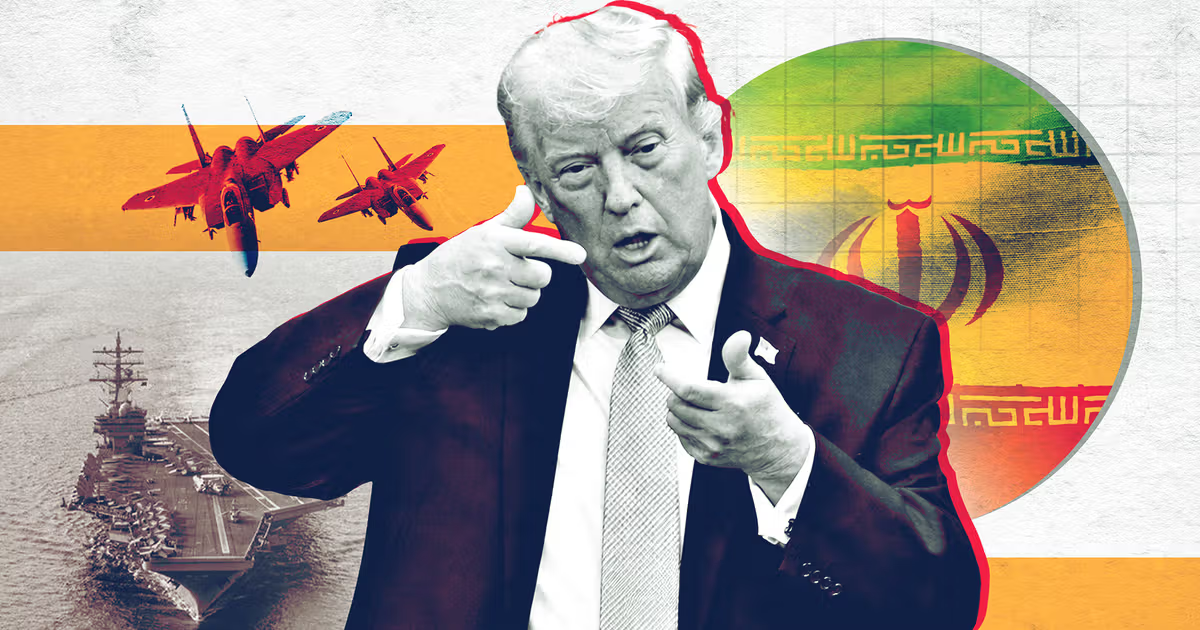
The article says it is too early to tell who is winning the US-Iran confrontation, despite reports that Trump expects a deal within 1-2 days and claims Iran agreed to halt uranium enrichment. US pressure on Iran’s oil exports and the Strait of Hormuz is real, but experts say the economic impact will take weeks to months to show, with Iran still selling oil from cargoes already at sea. The nuclear and regional security implications remain unresolved, keeping geopolitical risk elevated for energy and shipping markets.
The market is underpricing the lag structure of coercive energy shocks. Even if the blockade stays partial, the first-order effect is not immediate supply destruction but a slower tightening of prompt cargo availability, insurance, and routing optionality; that means the most exposed assets are not crude outright first, but freight, marine insurance, regional refiners, and EM importers with thin inventories. If the pressure campaign persists for several weeks, the second-order effect is a widening spread between headline oil prices and delivered-cost inflation in Asia, especially for India, Korea, and China-facing traders that depend on workaround logistics.
The bigger mistake would be to assume “deal close” equals de-escalation. A partial agreement that preserves some enrichment pathway or leaves sanctions architecture intact could actually prolong uncertainty, keeping risk premia embedded while not fully restoring flows. That is bearish for Iranian revenue over months, but bullish for volatility because the regime retains enough operational capacity to keep the shadow system alive and force repeated market repricings.
The contrarian read is that the current move may be more durable than consensus expects, but less immediately explosive than headline traders want. The real winner in the near term may be non-Iranian incremental barrels and shipping substitutes: US Gulf export infrastructure, non-sanctioned Middle East producers, and ocean transport firms with cleaner compliance profiles. The loser set also expands beyond Iran to any asset reliant on cheap, reliable Strait passage — that includes certain EM FX pairs, regional airlines, and import-dependent industrials — but the pain should show up in earnings before it shows up in GDP.
Catalysts are split by horizon: days for headline-driven crude spikes, weeks for freight and insurance repricing, and 1-3 months for actual cargo displacement and revenue attrition. The key reversal trigger is either a genuine enforcement rollback or a credible naval deconfliction framework; absent that, every new seizure, sanction update, or negotiating leak keeps the option value of higher energy prices alive.
AI-powered research, real-time alerts, and portfolio analytics for institutional investors.
Request TrialOverall Sentiment
neutral
Sentiment Score
-0.10
