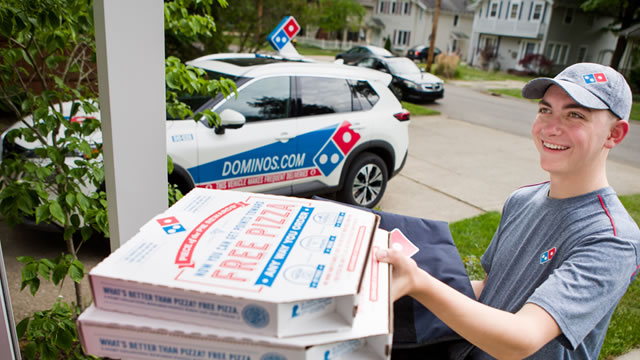
UBS expects Domino’s (DPZ) to report weaker-than-expected US same-store sales for Q2 ahead of the July 20 earnings release, citing macroeconomic pressure, heavier category promotions, and tougher year-over-year comparisons. The note suggests investors will focus on management’s sales initiatives and the company’s outlook for 2H, implying near-term earnings risk tied to traffic and pricing.
The important issue is not one soft quarter; it is whether DPZ can keep a premium growth multiple when the category is leaning on discounts to defend traffic. For a franchisor, weaker same-store sales are less about immediate margin and more about whether franchisees can still earn acceptable returns after higher promo spend, because that determines new unit openings, refranchising quality, and eventually royalty growth. In other words, the first derivative hits the quarter, but the second derivative hits the valuation.
This likely pressures the whole pizza value stack, not just DPZ. If Domino’s leans harder into offers, Papa John’s and regional delivery players are forced to match, which supports order count but compresses franchisee economics across the industry. A second-order winner could be lower-priced frozen/private-label pizza at grocery if households keep trading down, while third-party delivery platforms only see partial benefit because a larger share of the traffic is being defended through owned channels rather than incremental marketplace demand.
The catalyst path is very front-loaded: July 20 for the print, then 1-3 months for whether management can prove the sales initiatives are working. A clean guide-down would likely trigger multiple compression well beyond the earnings day move, because the market is paying for mid-single-digit comp stability; a vague second-half recovery without evidence is less supportive than usual in this tape. The contrarian risk is that consensus may be overreacting to promo noise and underestimating how much the brand can protect traffic without destroying unit economics, especially if management shifts mix toward digital and value bundles that preserve order frequency.
What would falsify the bearish view: a positive inflection in US comps in the next quarter, or explicit evidence that franchisee margins and store-level economics are stabilizing despite heavier discounts.
AI-powered research, real-time alerts, and portfolio analytics for institutional investors.
Request DemoOverall Sentiment
mildly negative
Sentiment Score
-0.25
Ticker Sentiment
