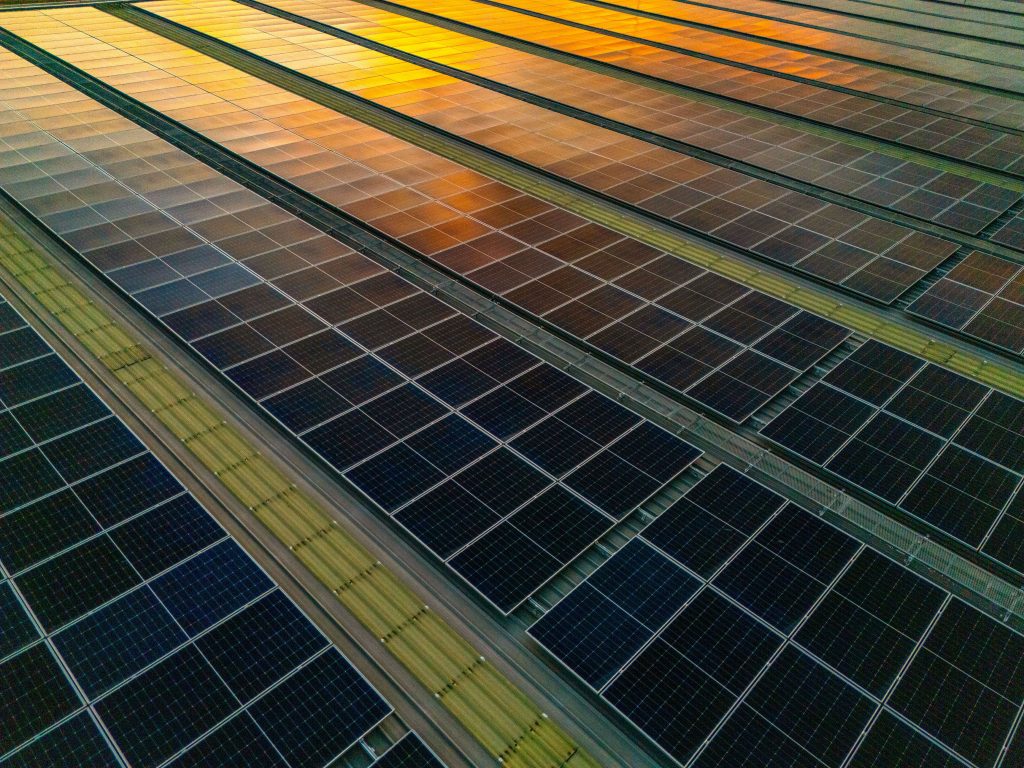
BloombergNEF projects continued, if uneven, progress in the energy transition: global solar and wind installations topped ~800 GW in the prior year and 4.5 TW of new wind+solar are expected over 2026–2030 (a 67% increase versus the previous five years), with the U.S. still set to add ~336 GW of wind, solar and storage in 2026–30. Battery storage installations should exceed 100 GW annual in 2026 and move toward 200+ GW over the decade as equipment costs fall to ~$117/kWh; EVs are now >25% of global car sales and forecast to reach 40% by 2030 (China >50%), driving an earlier oil-demand peak (BNEF base case: 2032). Policy fragmentation and geopolitics (US energy/AI priorities, EU CBAM, China carbon market/hydrogen push) create execution and regulatory risk for hard-to-abate sectors, but the outlook implies investment opportunities in renewables, storage, EV supply chains and low-carbon industrial technologies.
Market structure: Winners are utility-scale renewables, battery storage OEMs and Chinese EV OEMs (XPEV-style players) as cost curves and demand drivers produce 4.5 TW of new wind+solar 2026–30 and storage >100 GW in 2026; losers are incumbent ICE-focused OEMs and energy suppliers exposed to falling oil demand (BNEF peak oil ~2032). Renewables’ falling LCOE and storage at ~$117/kWh (current survey) compress merchant power prices but increase volume capture for storage players, shifting pricing power toward low-marginal-cost generation plus storage providers. Risk assessment: Tail risks include abrupt policy shifts (US re-engagement/exit dynamics, punitive trade sanctions, or a poorly implemented EU CBAM) and a battery-metal supply shock that would spike EV/storage costs; monitor EU CBAM text in next 60–90 days and China export/tariff moves. Time horizons split: immediate (30–90 days) political/policy moves, medium (6–24 months) battery cost curves and EV share trends, long (3–8 years) structural oil demand decline and industrial decarbonization rollout. Trade implications: Tactical set-ups favor long exposure to XPEV and selective exposure to Stellantis (STLA) JV-led EV projects, plus allocations to battery-metal miners and storage integrators. Use asymmetric options to limit downside (6–12 month call spreads on XPEV) and covered calls on STLA to harvest yield while participating in EV upside; size trades 1–4% of portfolio with 15–25% stop-loss bands and add-on triggers tied to volume and policy milestones. Contrarian angles: The market underestimates storage deflation and emerging-market EV adoption — look for outsized returns in storage integrators and Chinese OEMs selling outside China (XPEV) that currently trade below fair-cycle multiples. Conversely, shorting oil long-term is likely premature given AI/data-center-driven fuel demand; a staggered short starting after 2028 (if oil demand trends toward 2032 peak) avoids being crushed by near-term LNG/oil tightness driven by geopolitics.
AI-powered research, real-time alerts, and portfolio analytics for institutional investors.
Request DemoOverall Sentiment
mildly positive
Sentiment Score
0.25
Ticker Sentiment
