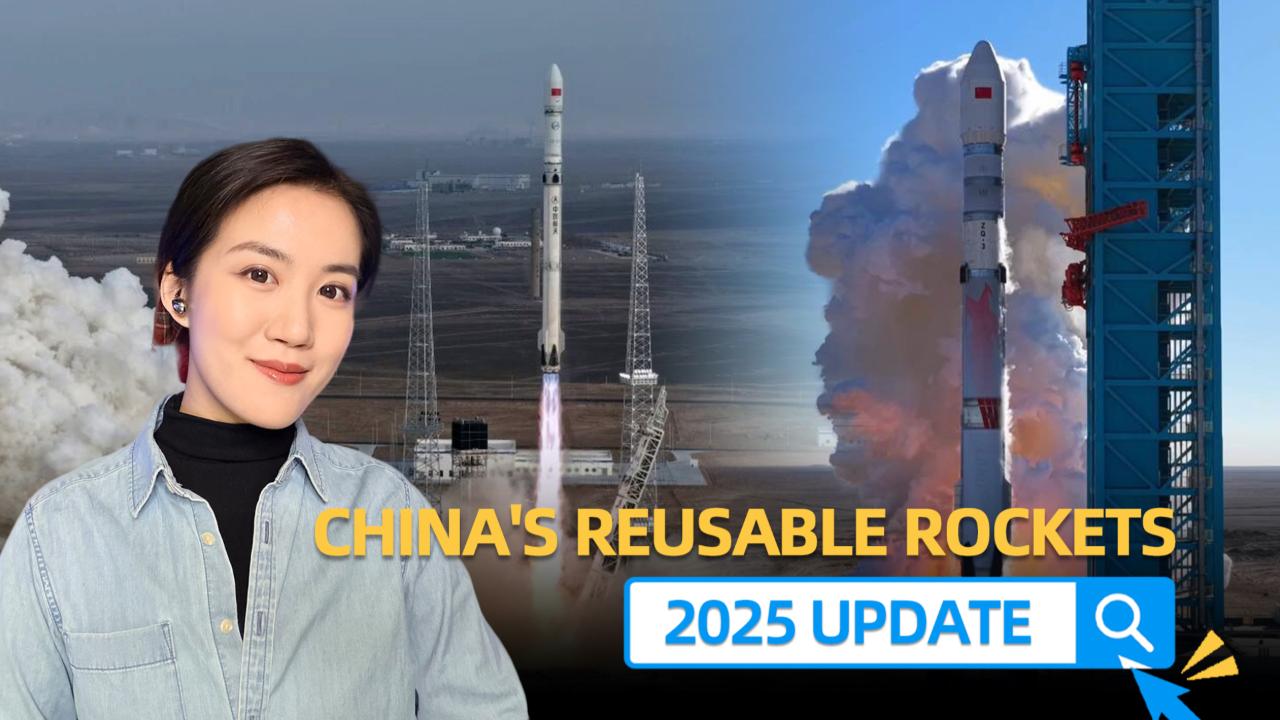
China's reusable-rocket efforts accelerated in December as LandSpace's Zhuque-3 and the state-backed Long March-12A completed maiden satellite deliveries but failed booster recoveries; Zhuque-3 is a 66 m, ~570 tonne, two-stage stainless-steel vehicle using liquid methane/oxygen that achieved controlled descent and engine reignition but not a clean landing. The industry view is bullish on cost disruption if rapid reuse is achieved (company target ~3,000 USD/kg at three launches per month), while global peers — Blue Origin's New Glenn reuse success, Japan's vertical-landing test and Indian spaceplane efforts — broaden competition with multiple Chinese reusable attempts slated for 2026.
Market structure: Successful reuse at scale (targeting ~3 launches/month and ~$3,000/kg) would materially shift pricing power from legacy national launcher consortia toward agile private providers, increasing supply elasticity and likely cutting commercial LEO launch prices by 30–50% over 2–4 years. Winners: satellite-constellation sponsors, avionics/propulsion suppliers, launch-platform manufacturers that prove reusability; Losers: high-cost incumbents and one-off rideshare integrators whose unit economics rely on higher margins.
Risk assessment: Tail risks include major recovery failures (single catastrophic loss could set back investor appetite by 6–12 months), tightened export controls or sanctions against cross-border tech transfer, and Chinese state-subsidized price dumping compressing global margins. Time buckets: immediate market noise around each maiden/recovery (days-weeks), medium-term adoption and pricing changes (6–24 months), and structural consolidation or defense-policy adjustments (2–5 years). Hidden dependencies: insurance premium cycles, ground-infrastructure bottlenecks, and satellite manufacturing capacity—not just launch availability.
Trade implications: Expect volatility spikes around scheduled 2026 reusability attempts; tactical option strategies to express asymmetric upside around those dates are preferred to outright equity levered bets. Cross-sector rotation should favor satellite ops/products, avionics suppliers, and defense primes with space budgets (LHX, LMT, NOC, MAXR) while trimming pure-play small launchers that burn cash absent repeatable landings.
Contrarian view: The market often underestimates the multi-year engineering curve — SpaceX took ~8–10 years to make routine reuse; Chinese and new entrants’ maiden successes likely overstate near-term cost parity. Mispricings: satellite manufacturers with recurring O&M and component suppliers may be underpriced for a gradual surge in launch cadence; conversely, early-stage launch equities may be overvalued on PR rather than sustained unit economics.
AI-powered research, real-time alerts, and portfolio analytics for institutional investors.
Request DemoOverall Sentiment
mildly positive
Sentiment Score
0.28
