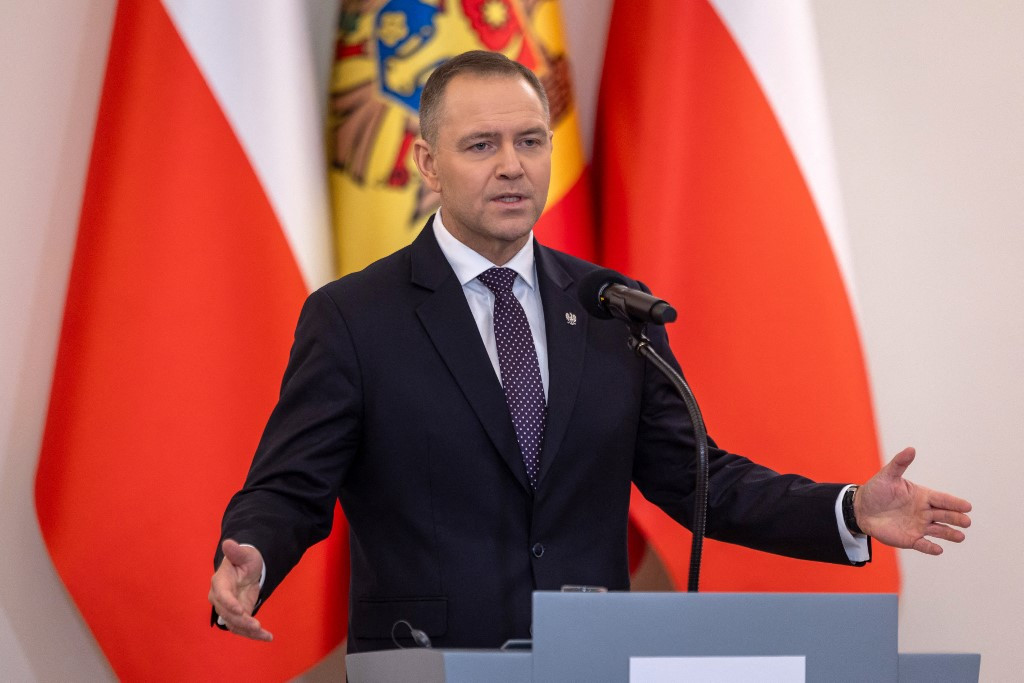
Poland’s president said he will seek to revoke Volodymyr Zelensky’s Order of the White Eagle after Kyiv honored a Ukrainian unit with a UPA-linked title, escalating an already sensitive historical dispute. Poland’s foreign ministry also criticized the move, saying it hurts the memory of victims and undermines bilateral dialogue. The issue is politically charged but appears more diplomatic than market-relevant, with limited direct price impact.
This is less about an immediate balance-sheet impact on KYIV and more about a slow-burn deterioration in coalition quality around Ukraine. The market-relevant channel is not sanctions or funding today; it is the marginal erosion of Polish political cover for transit, logistics, and labor-market support that Ukraine has relied on since 2022. If the dispute broadens, the first-order effect is a higher probability of noisy border politics and a lower ceiling on how quickly European support can be coordinated through Warsaw.
The second-order risk is that historical disputes get absorbed into domestic election incentives on both sides, making compromise asymmetrical: any Ukrainian concession can be framed domestically as weakness, while Polish politicians gain votes by hardening rhetoric. That dynamic tends to produce intermittent escalation rather than a clean break, which is bad for sentiment because it creates recurring headline risk without necessarily changing battlefield fundamentals. For defense and reconstruction-linked assets, that means timing matters more than thesis; the near-term price action can decouple from the longer-run aid pipeline.
The contrarian angle is that these disputes are often overread in the moment. Poland’s strategic incentive to keep Ukraine functional as a buffer against Russia remains strong, so the probability of an actual policy rupture is low unless the rhetoric spills into border access or aid coordination. In other words, the headline is negative for diplomatic optionality, but unless it translates into concrete logistics restrictions over the next 2-8 weeks, the selloff in Ukraine-exposed sentiment names should fade.
The cleanest market expression is via relative trade, not outright directional bets: Ukraine-risk premium can rise even as broader European defense spend remains intact. The most important catalyst to watch is whether other EU capitals echo Warsaw; if this becomes a regional narrative, the repricing window extends from days into months. If it stays bilateral, it is likely a tradeable headline with limited medium-term asset impact.
AI-powered research, real-time alerts, and portfolio analytics for institutional investors.
Request DemoOverall Sentiment
mildly negative
Sentiment Score
-0.20
Ticker Sentiment
