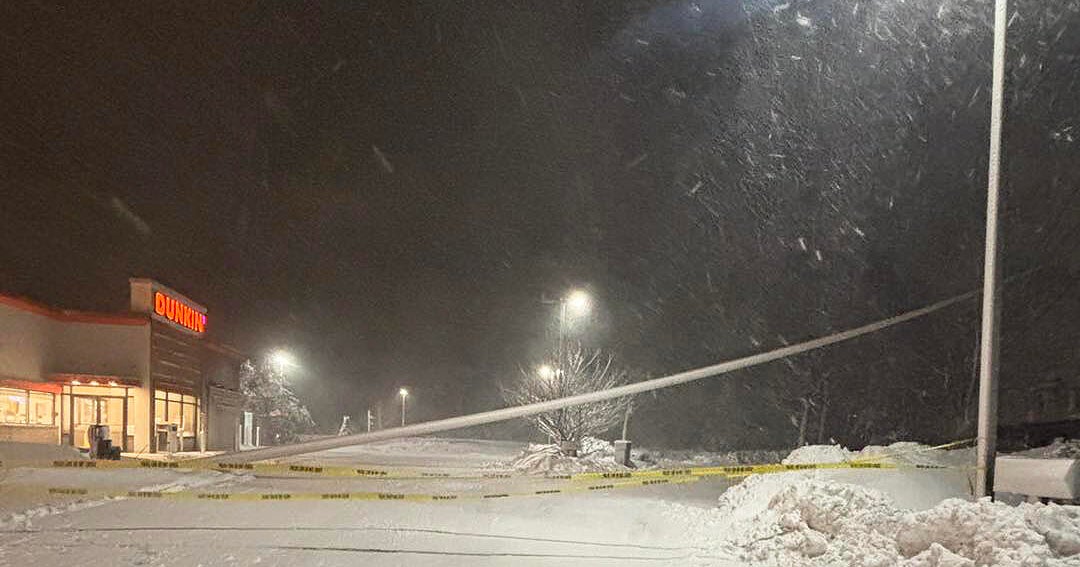
A nor'easter swept through Massachusetts causing more than 59,000 utility customers to lose power as of 6 a.m., with Hamilton, Essex, Wenham and Scituate hardest hit. Sustained high winds—gusts of 55–70 mph along the southeastern coast and 40–55 mph inland—combined with heavy, wet snow have the potential to down trees and power lines, creating localized infrastructure disruptions and short-term operational risk for utilities, regional businesses and emergency services.
Market structure: Near-term winners are utility contractors and grid-equipment suppliers (e.g., Quanta Services PWR, Eaton ETN, ABB ABB) and retail generators/home-improvement (Home Depot HD, Lowe’s LOW) because outage repair demand is immediate and has inelastic supply; losers are local electric utilities (Eversource ES, National Grid NGG) and regional insurers (TRV, ALL) facing outage costs and claims. Pricing power shifts to contractors due to limited outage-response capacity and long lead times for transformers (months), supporting 5–15% margin expansion for execution-focused names over 1–3 months.
Risk assessment: Tail risks include a severe multi-week grid collapse in SE Massachusetts or cascading transformer failures that trigger state-level regulatory freezes or fines (high impact, low prob <5%); FEMA/state aid or mutual assistance deployment within 7–30 days is a binary catalyst that materially changes cash flows. Immediate window (days): retail generator and fuel demand spikes; short-term (weeks–months): contractors win revenue; long-term (quarters–years): regulatory-driven hardening programs may reallocate utility capex and alter ROI profiles.
Trade implications: Favor tactical long exposure to PWR (2–3% portfolio) and ETN (1–2%) for 1–3 month windows; pair with a 1–2% short on ES or NGG to hedge market beta and capture relative service revenue upside. Use options: buy 1–2 month PWR or ETN call spreads (tight debit, 30–50% upside target) and purchase 1-month NYMEX Henry Hub call spread (expect 5–15% spot move) sized to 0.5–1% of portfolio.
Contrarian angles: Consensus will focus on utility blame and insurer losses; the market underprices contractor backlog and long transformer lead times that create multi-quarter revenue visibility for specialist service providers—Sandy precedent shows ~+20–40% out-year contract flow for contractors. Watch for overreaction: a small stock dip in PWR/ETN on headlines is a buying opportunity; conversely, utilities may recover quickly if regulators allow pass-through of storm costs within 30–90 days.
AI-powered research, real-time alerts, and portfolio analytics for institutional investors.
Request DemoOverall Sentiment
mildly negative
Sentiment Score
-0.25
