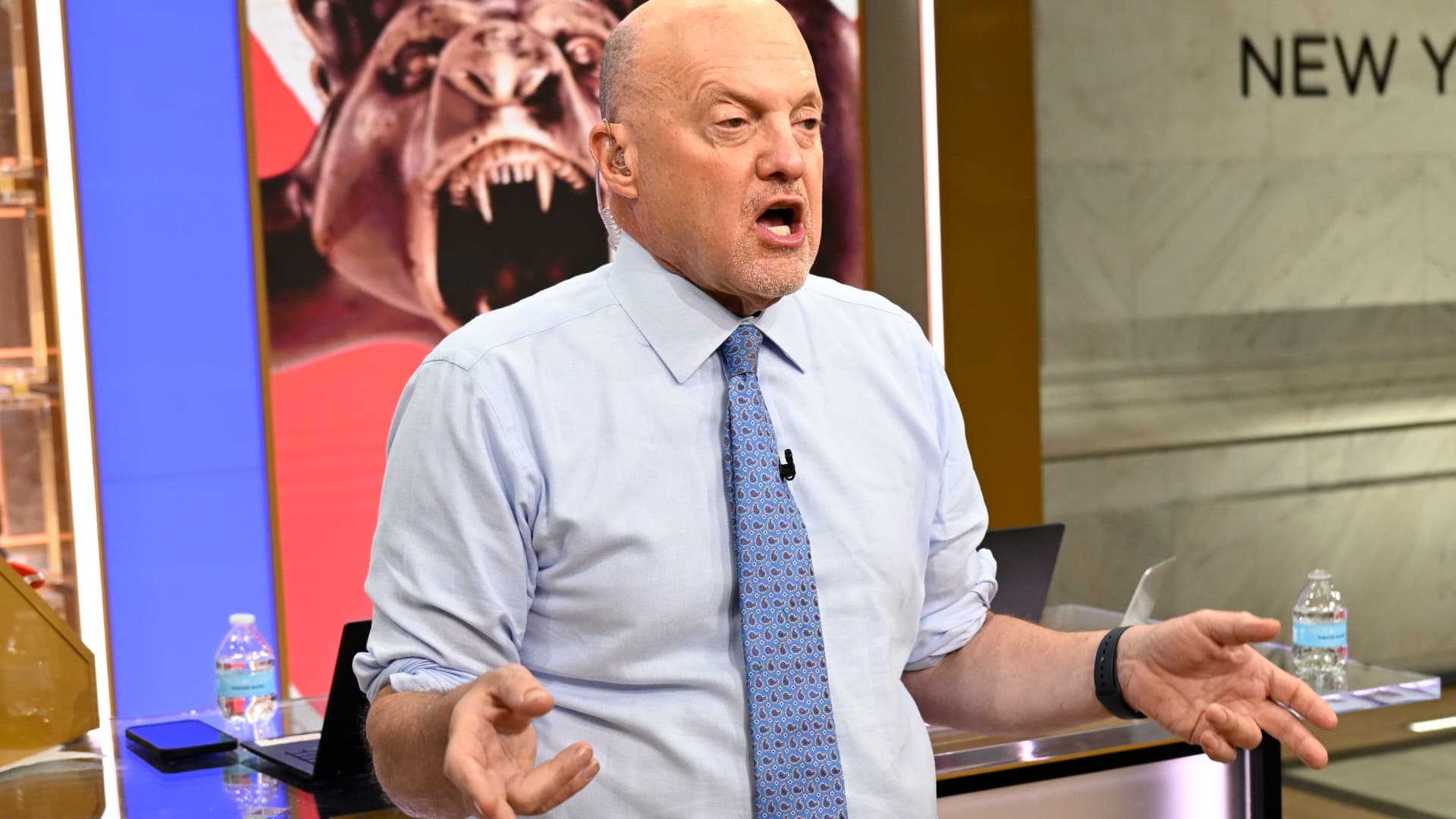
The Dow rose 874 points, or 1.7%, to a record high while the S&P 500 gained 0.4% and the Nasdaq fell 0.09%, signaling broad risk appetite despite earnings and credit-market concerns. Cramer said investors shrugged off disappointing reactions to Broadcom and CrowdStrike, embraced Quantinuum’s IPO, and ignored Blackstone’s private credit fund redemptions as financial, healthcare, and transportation stocks joined the rally. The session suggests resilient market breadth and continued willingness to buy dips.
The key signal is not that risk assets rallied, but that the market is still buying duration, leverage, and optionality after a series of headline risks that would normally trigger de-grossing. That tells us positioning is likely less fragile than feared: systematic flows are probably still underallocated to equities, and the buy-the-dip reflex is being reinforced by a narrow but important improvement in breadth. When financials, healthcare, and transports join the tape, it usually means investors are willing to extend beyond the obvious AI winners and accept lower-quality cyclical exposure, which tends to support index-level upside for days to weeks.
For the named stocks, the second-order effect is that the market is rewarding “good enough” on earnings and punishing only true breakage. That is favorable for AVGO and CRWD if management can keep guiding conservatively enough to preserve upside asymmetry, but it also means the bar for subsequent reactions is higher: any genuine deceleration in bookings or billings could gap the stocks down hard because the market is now explicitly pricing in resilience. HON is more of a tell on industrial breadth than a direct beneficiary; if transports and cyclicals continue to confirm, it supports the view that the rally is becoming self-reinforcing rather than purely AI-driven.
Private credit and IPO digestion are the two latent risk buckets. The fact that the market shrugged off stress in a flagship private credit vehicle does not remove the issue; it likely just postpones it. Over the next 1-3 months, the real test is whether secondary-market discounting starts to bleed into funding costs and new deal terms for BX, KKR, and ARES — if so, the current “ignore it” stance can flip quickly because the asset class relies on confidence more than daily price discovery.
The contrarian takeaway is that the best short may not be the obvious high-beta tech names; it may be the complacency trade itself. If breadth improvement stalls or an IPO/credit hiccup lands while indices are near highs, crowded longs in momentum and private-markets proxies could unwind faster than the market expects. Conversely, if breadth keeps expanding, this tape can grind higher even without leadership from mega-cap tech, which argues for buying dips selectively rather than chasing breakouts.
AI-powered research, real-time alerts, and portfolio analytics for institutional investors.
Request DemoOverall Sentiment
moderately positive
Sentiment Score
0.45
Ticker Sentiment
