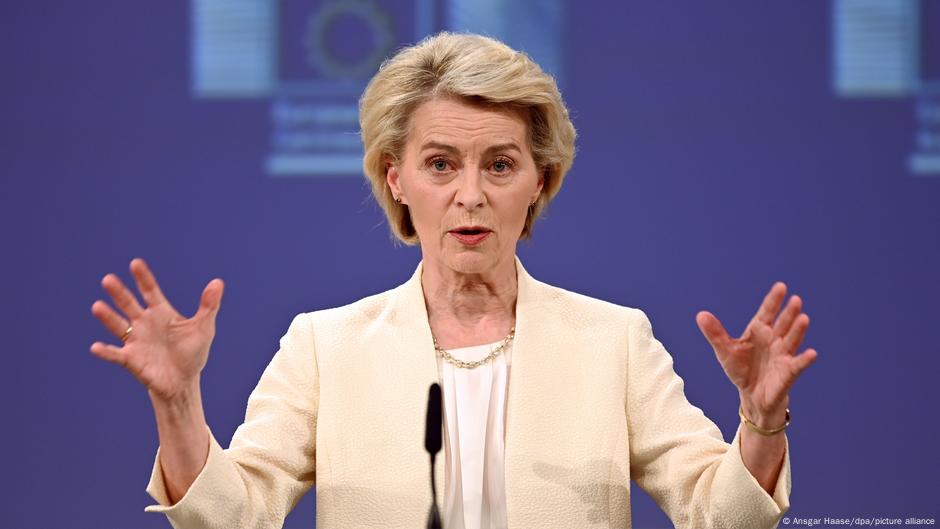
European Commission President Ursula von der Leyen's recent plane diversion due to suspected GPS sabotage, which Bulgarian authorities link to Moscow, underscores escalating geopolitical tensions and Russia's ongoing, systematic smear campaign against her. This campaign, involving high-level Russian officials and state media, aims to undermine EU leadership and unity, particularly given von der Leyen's pivotal role in strengthening EU defense capabilities and support for Ukraine. The sustained information warfare tactics signal continued geopolitical friction and potential impacts on EU policy cohesion.
The suspected GPS sabotage of European Commission President Ursula von der Leyen's aircraft, which Bulgarian authorities attribute to Russia, signals a potential escalation in hybrid warfare tactics targeting senior EU officials. This event is contextualized within a broader, systematic Russian smear campaign involving high-ranking officials like Dmitry Medvedev and Sergey Lavrov. The campaign utilizes derogatory and sexist rhetoric to undermine von der Leyen's credibility and, by extension, the EU's institutional strength. Expert analysis cited in the article suggests the primary objectives are to sow division within the EU, weaken its support for Ukraine, and discredit its leadership. Von der Leyen is a specific target due to her hawkish stance on Russia, her instrumental role in Ukraine's EU candidacy, and her push to strengthen the bloc's defense capabilities. The sustained nature of this information warfare underscores the persistent geopolitical friction between the EU and Russia, representing an ongoing risk factor for European political stability and policy cohesion, even if the immediate market impact of this single event is assessed as low.
AI-powered research, real-time alerts, and portfolio analytics for institutional investors.
Request DemoOverall Sentiment
neutral
Sentiment Score
0.00
