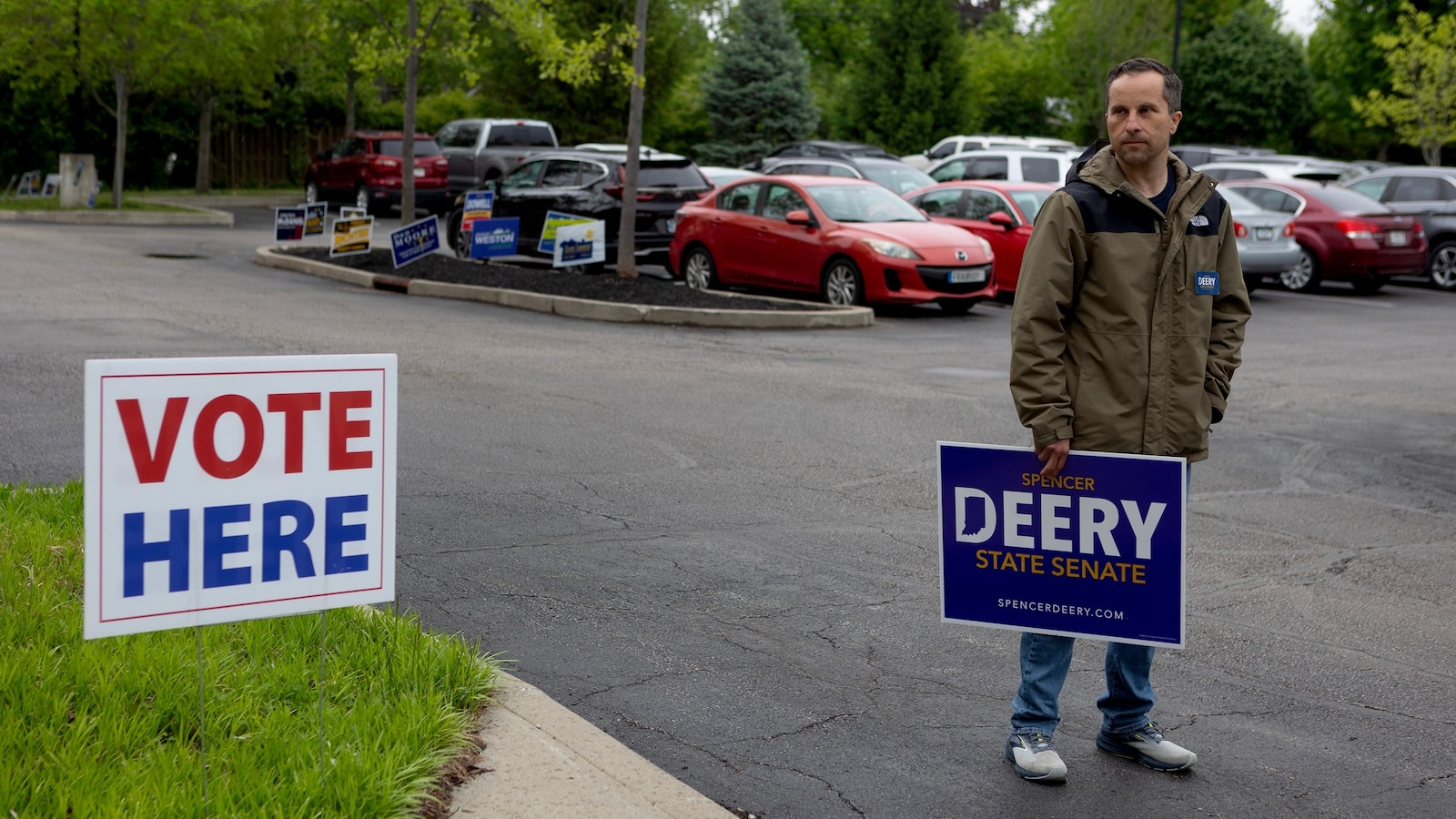
Indiana Republican primaries showed that crossing President Trump can carry real political cost: at least five of seven GOP state senators who opposed mid-decade redistricting efforts lost to Trump-backed challengers, with one incumbent surviving and another race still too close to call. The outcome highlights Trump’s continued influence over Republican primaries and signals risk for other lawmakers, including Sen. Bill Cassidy and Rep. Thomas Massie, who have also broken with him. The broader implication is for redistricting fights in Republican-controlled states ahead of the midterms.
The immediate market read is not about Indiana itself; it’s about the proof-of-force dynamic inside the Republican coalition. A leader willing to spend political capital to enforce discipline lowers the expected payoff for local incumbents who might otherwise resist controversial federal-state initiatives, which raises the odds of faster legislative alignment on redistricting, taxation, and regulatory rollbacks in GOP-controlled states over the next 3-9 months.
The second-order effect is on process risk: when personnel turnover is driven by loyalty tests rather than district fundamentals, policy becomes more binary and less negotiated. That increases headline volatility around state-level legislative actions in Texas, Florida, Louisiana, and Kentucky, and it can compress the timeline for map changes or other governance moves ahead of the midterms. For investors, the relevant implication is not direct sector exposure but a higher probability of abrupt political interventions that affect local utilities, insurers, REITs, and gaming assets via permitting, taxation, and zoning decisions.
The contrarian angle is that this may actually reduce uncertainty in the near term: once the dominant faction demonstrates it can punish dissent, marginal lawmakers have stronger incentives to conform, which can make redistricting outcomes more predictable than the consensus expects. The market may be overpricing the durability of holdout resistance; the more important risk is a backlash in a few heavily personal-brand races where the Trump endorsement becomes a negative outside deep-red districts. That suggests the regime effect is strongest over months, while the reputational backlash risk is more relevant into the 2026 cycle.
Tail risk is that overreach creates anti-establishment counter-mobilization, especially if primary voters view these contests as insider vendettas rather than policy fights. If that happens, the discipline effect weakens and the market gets a second wave of uncertainty around legislative control and map design. Near term, the base case remains higher GOP cohesion; the reversal case requires visible losses in races where Trump’s intervention is seen as gratuitous rather than strategic.
AI-powered research, real-time alerts, and portfolio analytics for institutional investors.
Request DemoOverall Sentiment
neutral
Sentiment Score
-0.05
