

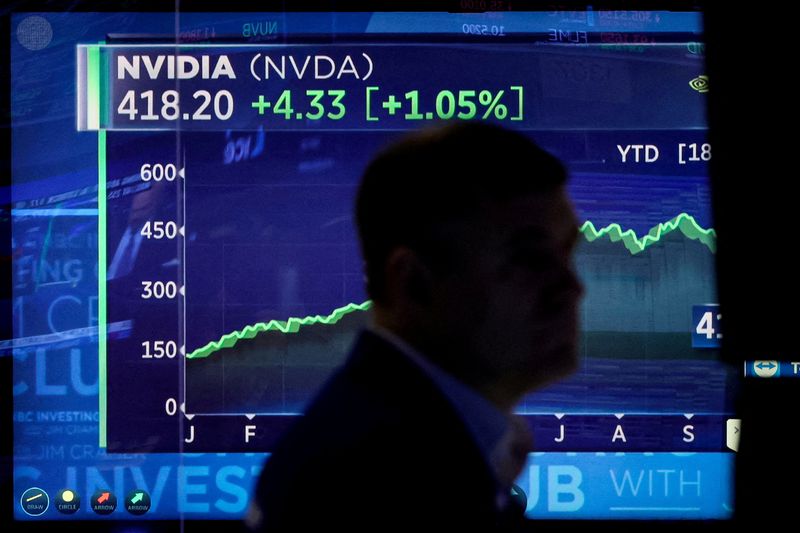
NVIDIA launched Ising, its first open AI model family for quantum computing, prompting sharp gains across quantum stocks: Rigetti rose 12%, IonQ 14%, D-Wave Quantum 11%, and Quantum Computing 9%. The models aim to improve quantum processor calibration and error-correction decoding, with NVIDIA saying the technology is up to 2.5x faster and 3x more accurate than traditional approaches. IonQ is already using Ising Calibration, and the announcement reinforces momentum in the quantum computing sector.
This is less a pure “quantum hype” trade than an endorsement of NVIDIA as the toll collector on the sector’s engineering bottleneck. If AI-driven calibration and error correction really compress development cycles from months to weeks, the beneficiaries are the platforms with the deepest integration path to CUDA-Q, QPU-GPU interconnects, and enterprise workflows; that favors the best-capitalized names with credible technical teams, while smaller pure-plays risk becoming optionality vehicles rather than standalone platforms.
The second-order effect is a widening moat for the ecosystem leader and a widening dispersion inside quantum equities. Names with existing commercial relationships and better balance sheets should capture more of the incremental spend, while companies that are still mostly story stock may see multiple compression once the initial event-driven move fades. The market is likely underestimating how much of quantum’s near-term economics shifts from “build a machine” to “sell control software and infrastructure,” which is structurally more favorable to NVIDIA than to the hardware-only stack.
The main risk is time horizon mismatch: the market is pricing a real strategic advance, but revenue conversion likely lags by quarters to years. If follow-on benchmarks show limited improvement outside NVIDIA’s demo environment, the sector could give back a large portion of today’s move quickly, especially in the higher-beta names. For the broader AI complex, this is mildly supportive of NVDA positioning because it reinforces the narrative that AI remains the enabling layer across adjacent frontier compute markets, not just a datacenter GPU story.
AI-powered research, real-time alerts, and portfolio analytics for institutional investors.
Overall Sentiment
strongly positive
Sentiment Score
0.72
Ticker Sentiment
