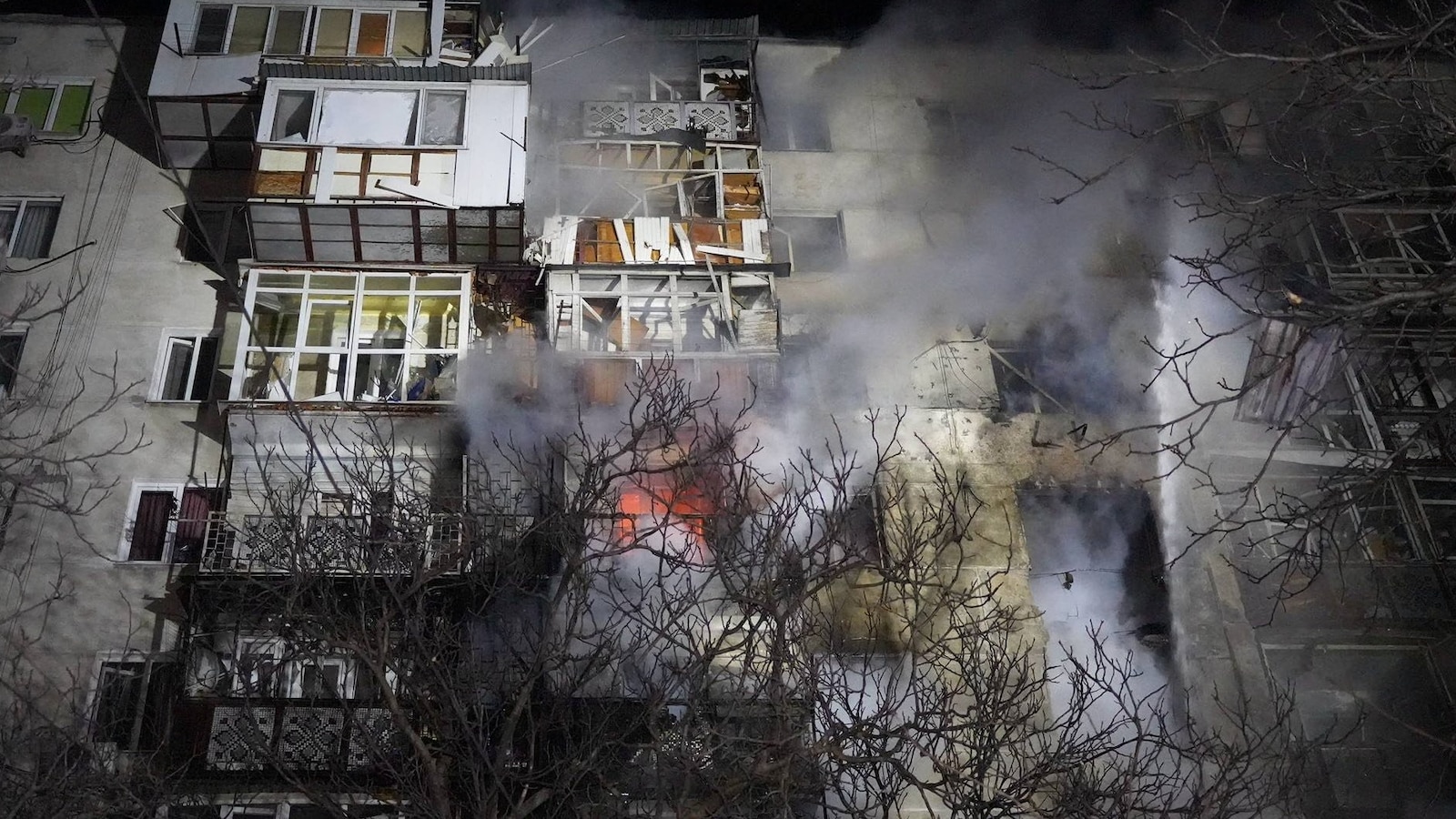
Ukrainian President Volodymyr Zelenskyy invited U.S. President Donald Trump to visit Kyiv as part of ongoing peace negotiations and said discussions include the possibility of a U.S. troop presence as a post-war security guarantee; Zelenskyy met Trump in Florida to discuss a 20-point plan and reported ongoing daily contacts with U.S. negotiators. Trump also spoke with Vladimir Putin around the meeting; Moscow accused Kyiv of a drone attack without providing evidence. Concurrently, Ukraine reported a heavy Russian drone barrage—127 drones launched overnight with 101 shot down and 20 impacts across 11 locations—causing civilian injuries and damage to residential buildings and energy infrastructure (including multiple substations), a dynamic that keeps geopolitical risk and energy/defense sector exposures elevated for investors.
Market structure: A credible near-term ceasefire (symbolic Trump visit, Jan 3–6 meetings) would be positive for Europe/EM cyclicals and negative for oil/gas and spot-priced defense demand. Direct winners if war persists remain large defense primes (RTX, LMT, NOC) and oil majors (XOM, CVX); reconstruction winners over 12–36 months are heavy equipment and materials (CAT, VMC, CRH). Cross-asset: peace -> USD/CHF/JPY down ~1–3% risk-on move, core bond yields +10–30bp, Brent downside 5–15% in 1–3 months; opposite if talks collapse.
Risk assessment: Tail risks include talks collapsing or deliberate escalations (energy grid strikes) producing oil/gas spikes >15–25% and equity risk-off; domestic US political shifts can flip guarantees quickly. Timeframes: immediate (days) = headline-driven volatility; short (weeks) = repricing of defense/energy; long (quarters–years) = reconstruction capex. Hidden dependencies: US troop basing requires domestic/Coalition buy-in and sanction rollbacks; sanctions geometry and covert attacks are second-order drivers. Key catalysts: Jan 3 advisers’ meeting, Jan 6 leaders’ meeting in France, Trump–Putin calls, and nightly drone salvo counts.
Trade implications: Tactical barbell: short-dated bearish bets on energy if ceasefire probability rises, and long-duration reconstruction exposure if peace holds. Example trades: buy a 2–3% notional 3-month put spread on XLE (targeting 8–15% downside), allocate 2% long CAT for 12–36 months, and finance by a 1% short in ITA or single-stock shorts in RTX (near-term). Hedge tail-risk with 0.5–1% in VIX call spreads (60–120 day) through Jan 15.
Contrarian angles: Consensus may underprice persistent asymmetric attacks on energy infrastructure — if nightly drone counts remain >50 for a week, energy downside is replaced by upside and defense rerating; conversely, a symbolic Trump visit could trigger >5% risk-on in EU equities within 48 hours. Historical analog: post-conflict reconstruction in Iraq produced multi-year outperformance in CAT/VMC vs defense primes. Hard thresholds to act: if Jan 6 joint statement contains a ceasefire clause, close XLE puts and rotate +1–2% into VGK/EEM within 3 trading days; if oil >$95 or drone sorties >100/night for 3 consecutive nights, increase energy longs by +1–2% and buy additional VIX protection.
AI-powered research, real-time alerts, and portfolio analytics for institutional investors.
Request DemoOverall Sentiment
mildly negative
Sentiment Score
-0.25
