


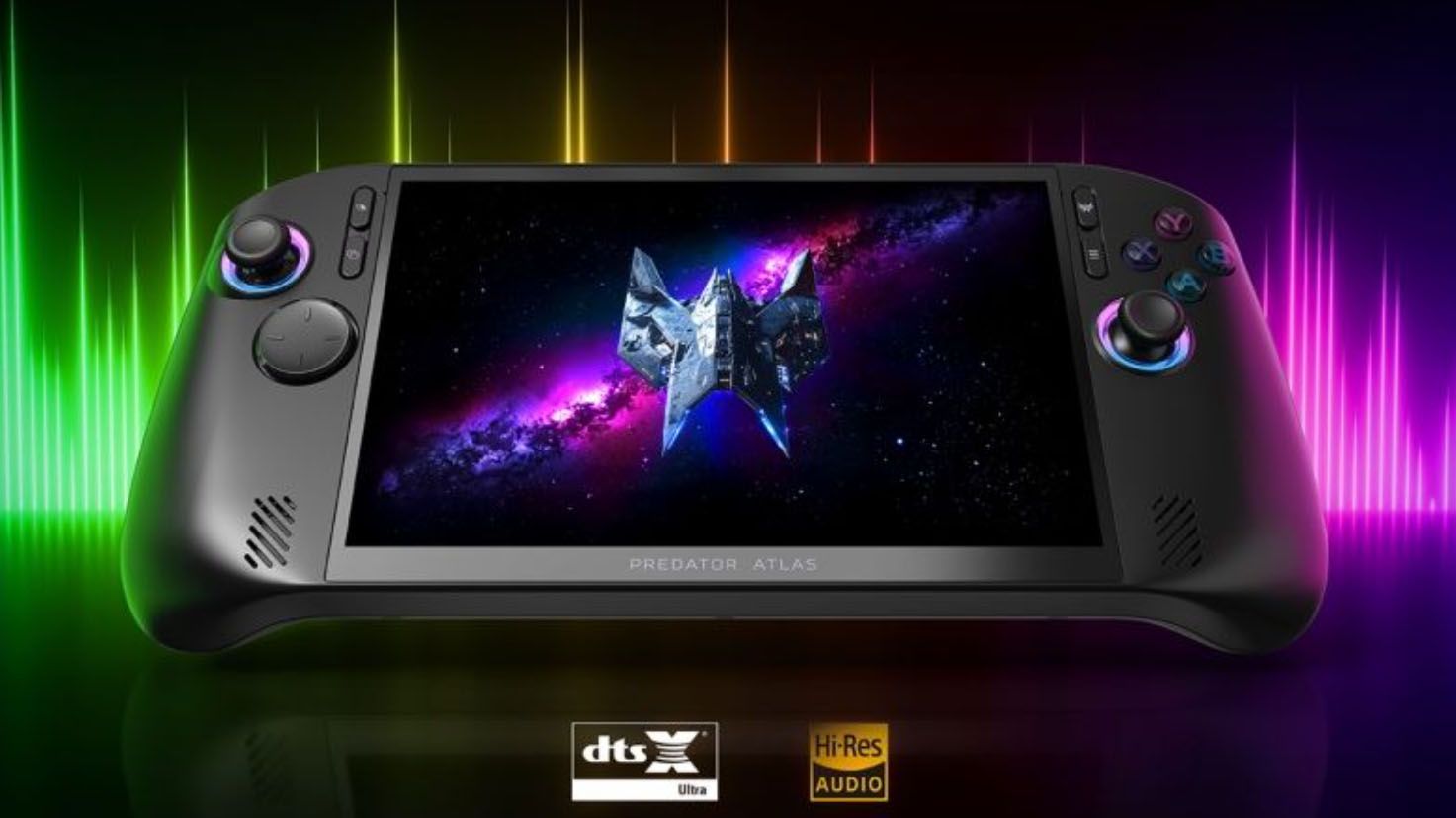
Acer unveiled the Predator Atlas 8 gaming handheld, highlighted by Intel Arc B370/B390 graphics, an 8-inch 120 Hz 500-nit display, up to an 80 Wh battery, and dual Thunderbolt 4 ports. The device is positioned as a premium competitor to AMD-based handhelds, with claims of up to 10% better cooling from a segment-first metal fan and included Xbox Game Pass subscriptions. Pricing is still undisclosed, and Acer expects availability in North America, Europe, the Middle East, Africa, and Australia in October.
This is a symbolic win for Intel more than an immediate unit-volume catalyst. In handhelds, design wins matter because they can validate an iGPU roadmap to OEMs and retailers, and even a modest share gain can create a perception loop that helps Intel in adjacent thin-and-light notebooks and entry gaming laptops over the next 2-4 quarters. The key second-order effect is that Intel is now competing on a total-platform story—graphics, thermals, AI-ish software layer, and connectivity—rather than on CPU performance alone, which is where AMD has been structurally stronger.
For AMD, the near-term financial risk is probably limited, but the narrative risk is real. AMD’s handheld franchise has benefitted from being the default choice for performance-per-watt; if Intel’s first credible premium handheld lands with acceptable battery life and fewer thermal compromises than expected, OEM channel managers may diversify away from AMD on future SKUs. That would matter most in 2026 refresh cycles, not this launch window, because handheld buyers are still early-adopter driven and software support/adoption will determine whether this is a one-off showcase or a repeatable platform.
The contrarian angle is that the market may be overestimating how much this changes the competitive landscape. A premium handheld is a great marketing vehicle, but it is not yet evidence of broad consumer pull-through for Intel graphics, and pricing sensitivity is likely to be severe if memory and SSD inflation persists. If launch pricing comes in 10-15% above comparable AMD devices, the product could become a technology demo rather than a volume threat, which would cap any medium-term share gains.
From a supply-chain perspective, the more interesting beneficiary may be component vendors tied to premium thermals, high-speed connectivity, and higher-capacity batteries rather than the handheld OEM itself. If this class of devices continues to push 80 Wh batteries and dual-port Thunderbolt designs, it supports demand for advanced power management and thermal materials, while also making BOM inflation a recurring risk that can compress OEM margins. That sets up a scenario where consumer enthusiasm is good for Intel branding, but not necessarily for handheld profitability unless pricing power improves.
AI-powered research, real-time alerts, and portfolio analytics for institutional investors.
Request TrialOverall Sentiment
mildly positive
Sentiment Score
0.15
Ticker Sentiment
