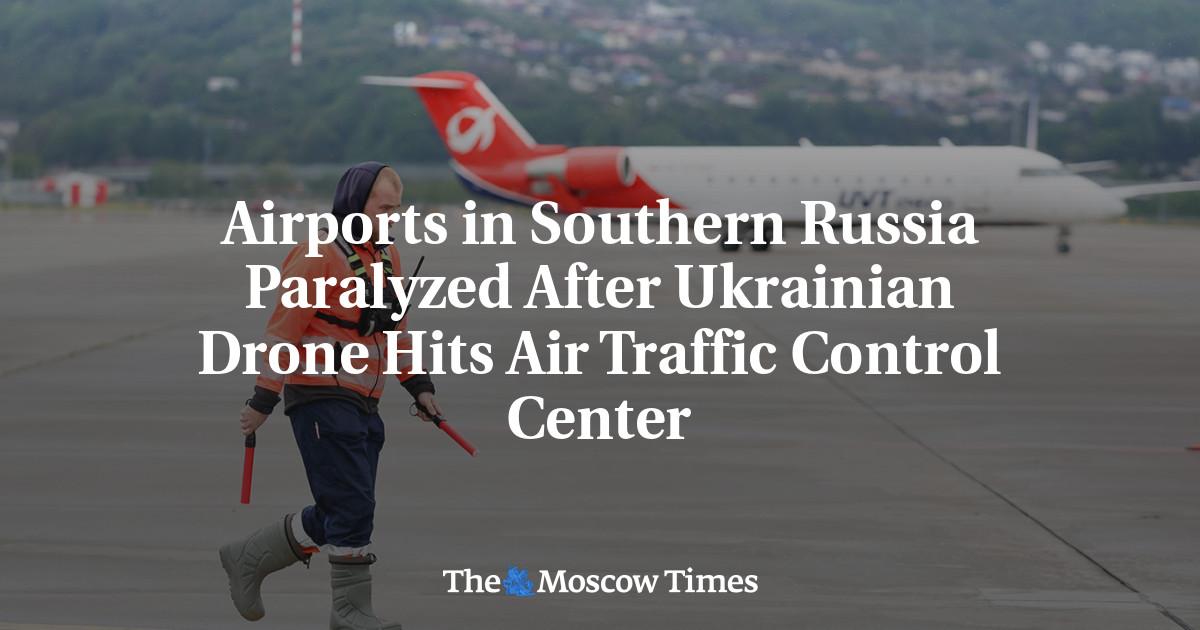
More than a dozen airports in southern Russia suspended operations after a Ukrainian drone hit the Rostov-on-Don air traffic control center, triggering widespread flight cancellations and delays. At least 14,000 passengers were affected, and major carriers including Aeroflot, Pobeda, Nordwind and Rossiya adjusted schedules. The incident adds to wartime disruption risk across Russian transport and aviation infrastructure.
This is a near-term operational shock, but the real market implication is not just aviation disruption; it is evidence that Russia’s internal logistics stack is becoming a recurring target. The highest-probability second-order effect is a temporary re-routing of passenger volume into rail, highway coaches, and regional ground transport, which benefits state-linked rail capacity and creates spillover congestion for broader freight scheduling in the south. Airlines with weaker domestic scheduling flexibility will see the greatest margin pressure because disruption costs are concentrated into a short window while ticket refunds and reaccommodation costs hit immediately.
The more important medium-term signal is that repeated drone penetration deep into Russian industrial and transport nodes raises the insurance and operating-risk premium for energy and industrial infrastructure in the interior. That matters for energy markets because it increases the chance of intermittent outages and logistics interruptions without needing outright destruction of production capacity; that usually keeps a bid under refined products and regional power/transport bottlenecks, even if headline crude moves only modestly. The fact that the event coincides with a fragile ceasefire narrative also raises the probability of asymmetric retaliation, which tends to widen geopolitical risk premia for 1-3 sessions rather than months.
The market is likely underpricing the duration of disruption costs versus the visibility of the attack itself. Consensus may focus on airlines, but the more durable beneficiaries are rail and bus operators able to absorb stranded demand, while the more vulnerable names are leisure/travel exposures with high Russia-dependent booking flows and limited pricing power. If this becomes a pattern rather than a one-off, expect a step-up in military and infrastructure security spending, which is a slow-burn positive for defense suppliers with drone interception, radar, and counter-UAS exposure.
AI-powered research, real-time alerts, and portfolio analytics for institutional investors.
Request DemoOverall Sentiment
strongly negative
Sentiment Score
-0.55
