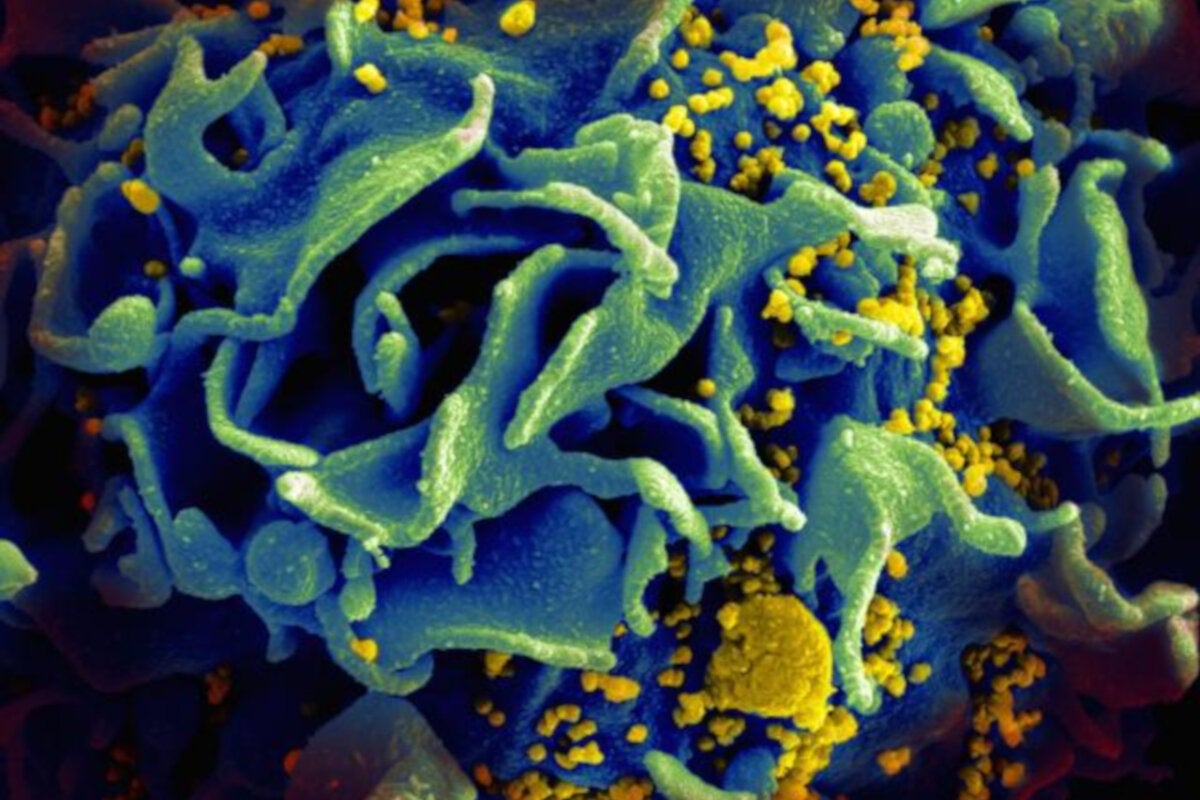
An HIV patient in Oslo has remained in remission for five years after a stem cell transplant from a brother carrying the rare CCR5Δ32/Δ32 mutation, adding what researchers say may be only the tenth known HIV cure case. The study found no integrated HIV DNA, no replication-competent virus across more than 65 million immune cells, and no detectable HIV-specific T-cell responses. While this is not a practical treatment for most patients, it could help identify biomarkers for long-term HIV remission.
This is directionally bullish for the “functional cure” thesis in HIV, but the investable implication is not a broad healthcare basket move — it is a validation event for a very narrow set of enabling technologies. The real beneficiaries are gene-editing, cell-therapy, and transplant-enabling platforms that can show they can replicate the biology without the toxicity and logistics of allogeneic transplant. In other words, the market should think less about HIV and more about whether durable receptor knockout plus full immune reconstitution can become a template for other viral reservoirs and hematologic malignancies. The second-order effect is on the competitive map for long-duration cure research: this strengthens programs built around CCR5 disruption, stem-cell engineering, and reservoir eradication biomarkers, while modestly pressuring conventional lifelong antiretroviral management narratives at the margin. The commercial opportunity is not immediate patient volume; it is platform credibility, partner interest, and trial design de-risking. Expect the most meaningful read-through to show up over 6–24 months in licensing deals, faster enrollment for curative studies, and higher option value assigned to gene-editing names that can plausibly target immune cells ex vivo. The contrarian risk is that investors over-extrapolate a single-case biological proof into an addressable-market story. This remains a boutique procedure with extreme donor constraints, transplant morbidity, and cancer-only justification today; if safety concerns emerge around off-target editing or incomplete reservoir clearance, enthusiasm can reverse quickly. The key catalyst to watch is whether any next-wave study demonstrates the same remission signature without myeloablative transplant — that would be the inflection point that turns this from a scientific curiosity into a platform re-rating. Consensus is likely underweighting the biomarker angle: the most immediate value may come from tools that predict remission durability, not from cure delivery itself. If researchers can define a reproducible signature of sustained remission, that creates a diagnostics and trial-enrichment layer that can shorten development timelines across multiple programs. That is the cleaner near-term trade than betting directly on an HIV cure market that is still years away from being economically relevant.
AI-powered research, real-time alerts, and portfolio analytics for institutional investors.
Request DemoOverall Sentiment
strongly positive
Sentiment Score
0.75
