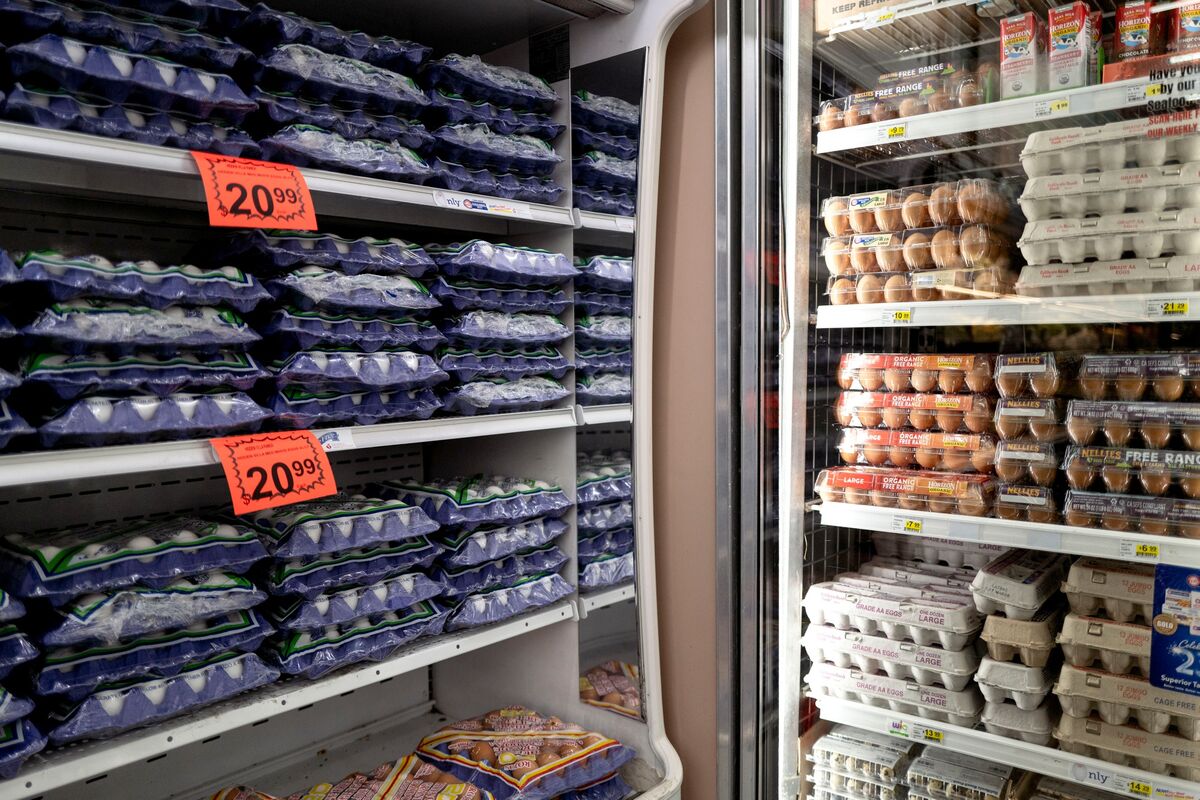
US egg prices fell 11% in May, reaching their lowest level since December, according to the Bureau of Labor Statistics. The average price for a dozen grade A large eggs was $4.548, marking the second consecutive monthly decline driven by weak consumer demand following earlier bird flu outbreaks that had caused record price surges. Despite the recent drop, retail egg prices remain nearly double their levels from a year ago.
US retail egg prices for a dozen grade A large eggs decreased by 11% month-over-month in May to an average of $4.548, marking the lowest price point since December and the second consecutive monthly decline, according to the US Bureau of Labor Statistics. This recent moderation in prices, which now stand approximately 27% below the March record, is attributed to lackluster consumer demand following earlier periods of sharp price escalations driven by bird flu outbreaks. Despite this easing, egg prices remain substantially elevated, nearly double the levels observed a year ago, indicating persistent inflationary pressures within this specific commodity, even as immediate supply-demand imbalances begin to correct. The data reflects a partial unwinding of extreme price spikes in a key food staple, offering some relief to consumers, but underscores the lingering impact of supply shocks on overall food inflation and consumer purchasing behavior.
AI-powered research, real-time alerts, and portfolio analytics for institutional investors.
Request DemoOverall Sentiment
mildly positive
Sentiment Score
0.25
