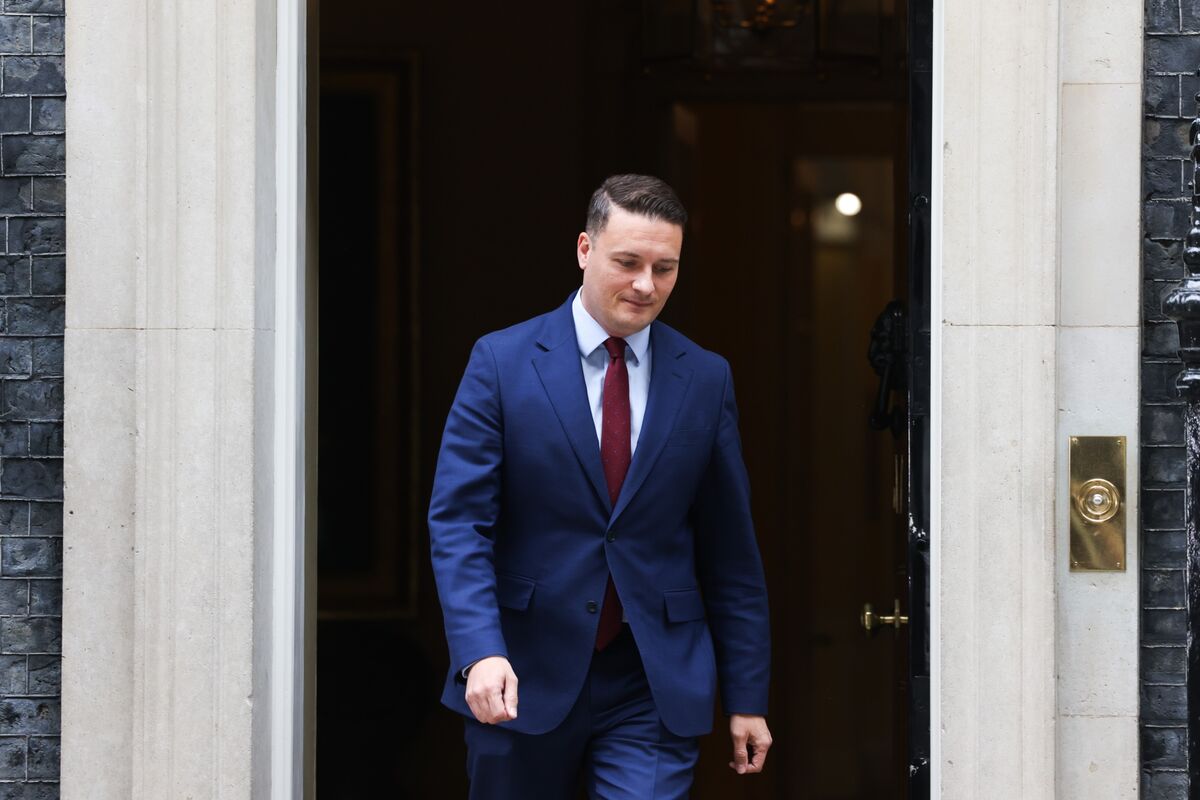
UK Prime Minister Keir Starmer is facing an internal leadership challenge from Health Secretary Wes Streeting, while also unveiling a security-focused King’s Speech agenda that includes tighter migration rules and closer EU ties. Separately, Reform UK leader Nigel Farage is under parliamentary standards inquiry over an alleged failure to declare £5 million from a crypto investor. The article also notes Iranian oil export disruption, with Kharg Island jetties empty for a fourth straight period amid renewed Trump threats toward Iran.
The near-term market read-through is not about ideology; it is about policy latency. A leadership challenge in Westminster raises the probability of a multi-week decision vacuum, which typically widens UK risk premia first in sterling rates and domestically exposed equities before it shows up in macro data. The biggest second-order effect is that regulatory and fiscal initiatives with low implementation tolerance—planning reform, migration policy, NHS restructuring, and EU alignment—become negotiating chips, which tends to compress the market’s confidence in 6-12 month UK growth forecasts.
The cleaner winner is volatility, not direction. If the leadership contest drags on, gilts can rally on a growth-deterioration impulse even as the front end sells off on fiscal slippage risk; that curve dislocation is often the best expression of political stress. UK domestically oriented sectors with policy sensitivity—housebuilders, banks, small-cap consumer, and transport—are the most exposed because they need credible execution more than they need headline-friendly rhetoric.
On geopolitics, the empty export jetties at Iran’s main terminal matter less as a supply event than as a signaling event: it raises the probability that market participants price a larger, slower re-entry of barrels rather than a clean restart. That supports a higher geopolitical risk premium in crude, but the market may be underweighting the lag between rhetoric and actual physical disruption; if exports stay constrained for several weeks, refiners will feel it in prompt spreads before benchmark prices fully catch up.
The contrarian angle is that political theater can be more bullish for UK assets than feared if it forces a centrist consolidation that de-risks policy drift and improves governance credibility. Likewise, crude could fade if diplomacy turns into a de-escalation channel quickly, especially given how much risk premium is already embedded after repeated threat headlines. The tradeable edge is therefore to express uncertainty through options and relative value rather than outright directional exposure.
AI-powered research, real-time alerts, and portfolio analytics for institutional investors.
Request DemoOverall Sentiment
neutral
Sentiment Score
-0.05
